What Are the 10 Best Miniature Circuit Breakers?

Choosing a miniature circuit breaker is not a beauty contest. The right device must match the circuit, expected load, fault level, and installation conditions. A compact breaker may look similar to another, yet differ in rated current, trip curve, breaking capacity, or pole configuration. Those details matter when a motor starts, a workshop tool runs, or several appliances share one circuit.

Electrical safety author John Cadick’s work supports a careful, hazard-based approach. Paraphrased, its practical message is: “Choose protection for the circuit, not just the label on the box.” That is a useful starting point—not a verbatim quotation. This guide compares ten miniature circuit breakers by key specifications, application fit, build quality, and ease of sourcing. It also flags where published information is limited. Some listings provide polished product photos but sparse technical data. Look closely.

No single model suits every panel or load. A residential lighting circuit, a small commercial installation, and a control cabinet may need different characteristics. The “best” choice depends on verified ratings and the system it will protect. Always check the manufacturer’s datasheet and have a qualified electrical professional confirm suitability. A ranking can guide research. It cannot replace design review, compatibility checks, or sound installation practice. Expect trade-offs, too: a lower price may mean fewer documented details, while a premium brand may not offer the ideal trip curve for your specific circuit. That is worth questioning.
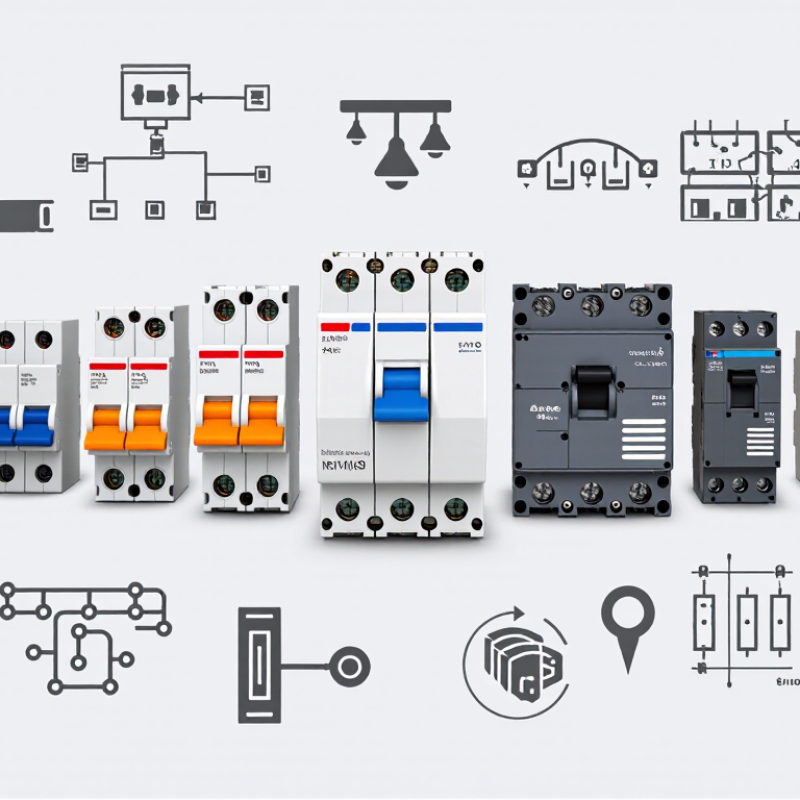
What Are the 10 Best Miniature Circuit Breakers?

What a Miniature Circuit Breaker Is and What It Protects

A miniature circuit breaker (MCB) is a resettable switch that disconnects a circuit when current becomes dangerously high. Its thermal mechanism responds to sustained overloads; its magnetic mechanism reacts quickly to short circuits. In a panel, a tripped breaker may leave one room’s lights off while other circuits remain live. That visible switch is useful, but it does not identify the fault. An MCB mainly protects wiring from overheating and damage, not people from every electrical hazard.

The NFPA report Home Fires Involving Electrical Failure or Malfunction estimates that U.S. fire departments responded to an average of 46,700 home structure fires involving electrical failure or malfunction each year from 2015 to 2019. These fires caused an estimated 390 deaths and 1,330 injuries annually. Those figures describe electrical fires, not fires prevented or caused by MCBs; that distinction matters.

An MCB cannot replace safe wiring, and it generally does not detect small leakage currents or all arc faults. Those hazards may require other protective devices. Correct breaker selection also matters: the rating and trip characteristics must suit the circuit conductors and expected load. A higher rating is not a harmless upgrade. If a breaker trips repeatedly, resetting it without finding the cause can hide a serious problem.

How Miniature Circuit Breakers Detect and Interrupt Faults

Miniature circuit breakers detect faults through thermal and magnetic mechanisms. During a sustained overload, excess current heats a bimetal strip inside the breaker. The strip bends, releases a latch, and opens the contacts. This process takes time, allowing brief surges—such as a motor starting—to pass without an unnecessary trip. A short circuit rises much faster. It creates a strong magnetic field in a coil, which drives the trip mechanism almost instantly. Different jobs.

When the contacts separate, an electrical arc can form between them. Internal arc chutes divide and cool that arc, helping it extinguish safely. The circuit then stays disconnected until someone identifies the cause and resets the breaker. In practice, fault conditions are not always as neat as diagrams suggest; repeated trips deserve investigation, not repeated resets.

To compare the ten best miniature circuit breakers for a particular panel, check rated current, voltage, breaking capacity, and trip curve against the circuit and local requirements. A breaker that fits physically may still be unsuitable electrically.

Small details matter.

Key Ratings, Types, and Standards for Comparing MCBs

Miniature circuit breakers protect circuits from overloads and short circuits, but the ampere rating is only a starting point. Match rated current to conductor size, installation method, and expected load. An oversized breaker can leave wiring inadequately protected. Numbers matter. Check rated voltage and frequency, too. Breaking capacity must exceed the prospective fault current at the installation point; a panel label alone may not reveal that value.

Trip curves help compare how quickly a breaker responds to higher currents. Type B is commonly used for resistive loads, while Type C can suit circuits with moderate starting surges, such as some small motors. Type D is intended for larger inrush currents, but it is not a general upgrade. The installation’s fault current and wiring conditions still matter. Choose the number of poles to match the circuit and isolation needs. A narrow panel crowded with conductors also makes terminal access and heat dissipation worth checking.

Standards clarify intended use. IEC 60898-1 generally applies to household and similar installations; IEC 60947-2 covers low-voltage circuit breakers used in broader industrial settings. Confirm the applicable standard, markings, and local requirements for the installation. On a real panel, conductor capacity, ambient temperature, and available fault current can change the choice. A comparison table can miss those details. Recheck the device against the circuit design, and have a qualified electrician verify uncertain ratings.

What Are the 10 Best Miniature Circuit Breakers? — Key Ratings, Types, and Standards for Comparing MCBs

This chart compares the standardized instantaneous tripping ranges for common B, C, and D curve MCBs, expressed as multiples of rated current (In). These ranges are not a ranking: choosing an MCB also depends on rated current, breaking capacity, poles, voltage, and the installation. Refer to the applicable standard and manufacturer’s time-current curves for selection.

Ten Miniature Circuit Breakers Compared by Design and Performance

Comparing ten miniature circuit breaker designs means looking beyond size. Single-pole units suit many simple branch circuits, while two- and three-pole versions disconnect multiple conductors together. That changes panel space and installation needs. The right choice depends on the circuit, not the label.

Trip curves shape response to temporary current surges. A B-curve breaker responds quickly to modest surges; C-curve models tolerate higher starting currents, while D-curve models suit some heavy inrush loads. High-breaking-capacity designs can interrupt greater fault currents, but only within their stated ratings. DC-rated breakers are built for direct-current circuits. Current-limiting designs can reduce let-through energy. Auxiliary-contact versions provide status signals, and compact modular units help in crowded enclosures. Small details matter.

Performance should be compared using rated current, voltage, pole count, breaking capacity, trip curve, and temperature limits. Check the panel’s available space and the conductor requirements too. A breaker that fits may still be unsuitable. There is no universal winner, and catalog figures do not replace a qualified assessment of the actual installation. I would recheck the fault-current rating before comparing prices; it is easy to overlook.

How to Choose an MCB for a Specific Electrical Application

What Are the 10 Best Miniature Circuit Breakers?
How to Choose an MCB for a Specific Electrical Application

The best MCB matches the circuit, cable, and expected fault current—not simply the largest available rating. Start by checking the load’s normal current and the cable’s allowable current. The breaker must protect the cable without tripping during ordinary operation. Fit matters. A motor, LED driver, and general lighting circuit can behave differently at startup.

Next, choose a trip curve suited to inrush current. Type B commonly suits resistive lighting; motors may need a curve that tolerates higher starting current. Check the prospective short-circuit current against the MCB’s breaking capacity, then confirm voltage, pole count, and enclosure conditions. IEC 60898-1:2015 covers household-type AC breakers up to 440 V, 125 A, and 25 kA rated short-circuit capacity. Those are standard limits, not suggested ratings. For industrial systems, IEC 60947-2 is also relevant. The IEA’s Global EV Outlook 2024 projected over 17 million electric-car sales that year, highlighting the need to size charging circuits for sustained loads. Still, a headline load estimate cannot replace site measurements. That step is easy to overlook. A qualified electrician should verify coordination and local installation requirements before selection.

What Are the 10 Best Miniature Circuit Breakers? - How to Choose an MCB for a Specific Electrical Application

These are general-purpose MCB selection profiles, not a ranking of specific products. Current ratings and trip curves below are illustrative starting points; the final choice depends on the load, conductor size, installation conditions, prospective fault current, and local electrical rules.

No. Typical application Illustrative rated current Typical trip curve Poles Breaking capacity to consider Selection notes
1 Residential LED lighting circuit 6–10 A B 1P or 1P+N, as required locally Commonly 6 kA; verify fault level Check driver inrush current and conductor ampacity; use a higher curve only if the design supports it.
2 General-purpose socket circuit 16–20 A B or C 1P or 1P+N, as required locally 6 kA or higher, based on measured/calculated fault current Choose the rating to suit the circuit wiring and applicable socket-circuit rules, not just the expected appliance load.
3 Dedicated small water heater or fixed heater 16–25 A B or C 1P or 1P+N, as required locally 6 kA or higher, as required by fault level For a mainly resistive load, curve B is often suitable; confirm the appliance rating and cable installation conditions.
4 Domestic oven or cooking appliance circuit 20–32 A B or C 1P, 1P+N, or 2P as required 6 kA or higher, as required by fault level Use the appliance nameplate and local demand/diversity rules to determine the circuit rating.
5 Air conditioner or small refrigeration compressor 10–25 A C; D only when justified by starting current 1P or 1P+N for single-phase equipment 6 kA or higher, as required by fault level Check manufacturer instructions and starting current. A less sensitive curve must still provide required fault protection.
6 Small single-phase pump 10–20 A C; D may be considered for high inrush 1P or 1P+N, as required locally 6 kA or higher, as required by fault level Consider motor starting, cable length, and voltage drop; an MCB does not replace dedicated motor overload protection where required.
7 Small three-phase motor feeder Typically 6–25 A, selected from motor data C or D, subject to coordination design 3P 6 kA or higher, based on installation fault level Coordinate with a motor overload device and check starting current, fault protection, and the motor manufacturer’s recommendations.
8 Small three-phase distribution or fixed load circuit 16–40 A B or C, according to load characteristics 3P 6 kA or 10 kA where the prospective fault current requires it Confirm phase load, cable capacity, and the short-circuit rating at the installation point.
9 Small commercial lighting or electronic equipment circuit 10–20 A B or C 1P, 1P+N, or 3P according to supply 6 kA or 10 kA, verified against fault level Account for power-supply inrush and harmonics where relevant; distribute loads to avoid excessive neutral current.
10 Three-phase feeder requiring switched neutral 16–63 A, subject to circuit design B or C, according to load characteristics 4P where neutral switching is required 6 kA or 10 kA, verified against fault level Use a four-pole device only when the system design and local rules call for neutral switching; verify pole configuration and neutral protection requirements.

Key checks: Select an MCB rated for the system voltage and applicable standard (commonly IEC 60898-1 for household and similar installations); ensure its rated current protects the conductors, its breaking capacity meets or exceeds the prospective short-circuit current, and its trip curve suits the load. Typical IEC curve ranges are B: 3–5 × rated current, C: 5–10 ×, and D: 10–20 ×; always confirm the device’s declared characteristics and local requirements. Installation and final selection should be verified by a qualified electrical professional.

Blogs