10 Best Home Circuit Breakers for Global Buyers

A home circuit breaker protects wiring and equipment by interrupting current during overloads or short circuits. Choosing one is not just a matter of matching a price or a familiar brand. Voltage, current rating, pole count, interrupting capacity, and panel compatibility all matter. So does the environment: a breaker for a compact apartment panel may not suit a workshop or a humid coastal home.

Safety data underline why careful selection matters. NFPA analysis of 2015–2019 U.S. fire data estimated an average of 46,700 reported home structure fires annually involving electrical failure or malfunction. A breaker cannot prevent every electrical fire, but correctly specified protection is an essential part of a safer installation. Standards also differ across markets. IEC 60898-1 covers circuit breakers for household and similar installations, while buyers should confirm which standards and approvals apply in their own country.

This guide compares 10 home circuit breaker options for global buyers, focusing on ratings, protection features, compatibility, and practical purchasing checks. It is a shortlist, not a substitute for a qualified electrician’s assessment. Even a strong product can be wrong for a particular panel. That part is easy to overlook.NFPA figures describe U.S. fires, not worldwide risk, and product availability can vary by region. We’ll flag the details worth verifying before purchase, including the breaker’s exact model and the panel manufacturer’s compatibility guidance.
10 Best Home Circuit Breakers for Global Buyers

How Home Circuit Breakers Protect Residential Electrical Systems

10 Best Home Circuit Breakers for Global Buyers

How Home Circuit Breakers Protect Residential Electrical Systems

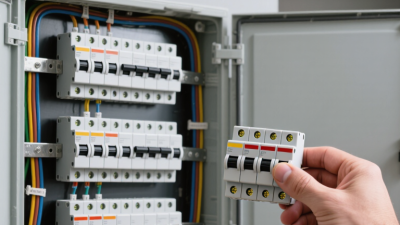
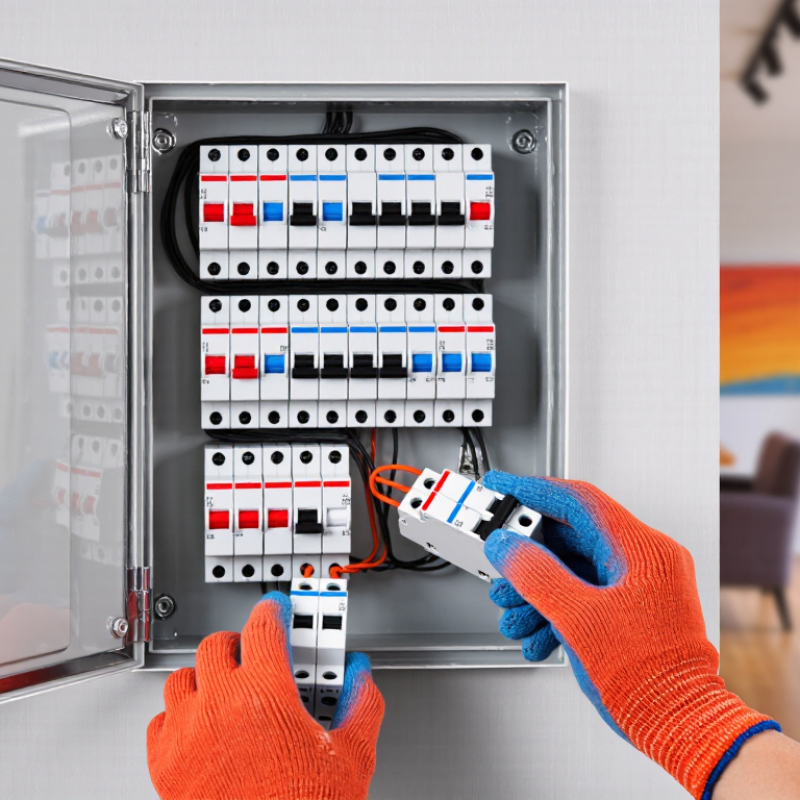
A home circuit breaker monitors the current flowing through a circuit. If an overload or short circuit causes current to rise too high, it trips and interrupts the flow. This helps limit overheating in wires hidden behind walls and reduces fire risk. The sudden click and darkened kitchen can be inconvenient, but the interruption is the protection working.

Choose a breaker that matches the electrical panel, circuit wiring, and intended load. A breaker rated too high may fail to protect the wire properly. Standard breakers also do not detect every hazard, such as all forms of electric shock or arcing. Separate protective devices may be needed for those risks. For global buyers, check the required voltage, frequency, pole configuration, interrupting capacity, and compatibility with the specific panel. Similar-looking breakers are not always interchangeable. That detail is easy to miss.

Which Standards and Ratings Matter Across Global Markets

Global buyers should compare circuit breakers against the standard required in the destination market, not just a familiar label. Household miniature circuit breakers may follow IEC 60898-1, while equipment for industrial applications may use IEC 60947-2. North American projects often require compliance with UL 489; these standards are not automatically interchangeable. Check that certificates and test documentation match the exact product type and intended market. Labels can mislead.

Ratings matter just as much. Confirm the rated voltage, current, frequency, number of poles, and short-circuit breaking capacity against the installation design. A breaker marked 6 kA, for example, must be suitable for the prospective fault current at its installation point. Trip curves also affect whether brief motor-starting surges cause unwanted trips. Small details matter. Verify ambient-temperature limits and conductor sizes, since both can affect performance. Residual-current protection may be required separately, depending on the application and local rules. A recurring purchasing mistake is treating a higher current rating as a safer choice; it can leave wiring inadequately protected. When specifications are unclear, ask a qualified electrical professional to review the system before ordering.

What Types of Home Circuit Breakers Are Available

10 Best Home Circuit Breakers for Global Buyers
What Types of Home Circuit Breakers Are Available

Home circuit breakers serve different purposes. A miniature circuit breaker (MCB) trips when overloads or short circuits create excessive current. An RCCB, also called an RCD in many markets, detects current leakage and helps reduce electric-shock risk, but does not usually protect against overloads by itself. An RCBO combines both functions. Not interchangeable. Arc-fault circuit interrupters (AFCIs), used in some markets, detect certain dangerous electrical arcs. Main breakers disconnect power to a home or panel.

The choice matters. NFPA’s 2022 Electrical Fires report estimated an annual average of 31,647 U.S. home structure fires involving electrical failure or malfunction during 2015–2019. That figure covers many kinds of electrical problems; it does not mean a breaker alone can prevent every fire. Buyers should check rated current, voltage, pole count, trip curve, and compatibility with the distribution board. IEC 60898-1 covers many household MCBs, while IEC 61009-1 addresses RCBOs.

Tips: Match the breaker to the wiring and local supply system, not just the appliance label. A 30 mA residual-current device is common for additional shock protection in many applications, but local requirements differ. The labels are easy to misread. Ask a qualified electrician to verify the panel, earthing arrangement, and required certifications before installation. Small detail, big consequence.

10 Best Home Circuit Breakers for Global Buyers: What Types Are Available?

Compare common residential breaker types by the protection functions typically built into each device. A value of 1 means the function is provided; 0 means it is not. Availability and requirements vary by country and electrical code.

MCBs protect against overloads and short circuits. RCCBs (also called RCDs) detect residual-current leakage but require separate overcurrent protection. RCBOs combine both functions. AFCI breakers add arc-fault protection, while GFCI breakers provide ground-fault protection alongside overcurrent protection. These categories describe typical device functions, not a ranking; check local standards and product specifications before choosing.

How to Compare Breakers for Safety, Compatibility, and Value

Start with the electrical panel, not the price tag. Check the breaker’s rated voltage, current, pole count, and interrupting capacity against the panel documentation. A breaker that fits physically may still be incompatible. Small details matter. For example, a two-pole breaker may be needed for a particular appliance, while ordinary lighting circuits often use a single pole. Confirm the required configuration with a qualified electrician.

Safety depends on more than a familiar label. Look for clear ratings, traceable test documentation, and certification accepted in the installation’s country. Requirements vary by region, so a mark used in one market may not satisfy local rules elsewhere. Check the panel’s approved breaker types and bus design, too. Never choose a breaker with a higher rating simply to stop nuisance trips; that can leave wiring inadequately protected.

For value, compare service life expectations, warranty terms, and the availability of replacements. A low purchase price can become costly if a compatible unit is hard to source later. Ask whether the supplier provides current technical sheets and installation guidance. Even a tidy specification sheet can leave questions, especially when translated or written for another market. That uncertainty deserves a second check, not a guess.

10 Best Home Circuit Breakers for Global Buyers - How to Compare Breakers for Safety, Compatibility, and Value

Breaker type Typical home use Common ratings / characteristics Protection provided Standards / compatibility checks Best fit
1. Type B miniature circuit breaker (MCB) Lighting and other circuits with low inrush current Commonly 6–32 A in residential ranges; instantaneous magnetic trip typically at 3–5 times rated current Overload and short-circuit protection Often specified to IEC 60898-1. Verify rated voltage, pole count, breaking capacity, and panel fit. Low-inrush branch circuits where the installation design permits a B curve
2. Type C miniature circuit breaker (MCB) General-purpose circuits and loads with moderate startup current Commonly 6–63 A; instantaneous magnetic trip typically at 5–10 times rated current Overload and short-circuit protection Often specified to IEC 60898-1. Confirm that the circuit’s prospective fault current is within the breaker’s interrupting rating. A common choice for appropriately designed residential circuits with moderate inrush
3. Type D miniature circuit breaker (MCB) Equipment with high startup current, where permitted by the circuit design Commonly 6–63 A; instantaneous magnetic trip typically at 10–20 times rated current Overload and short-circuit protection Often specified to IEC 60898-1. Check fault-loop conditions and required disconnection time; a D curve is not a general upgrade. Specialist high-inrush loads after electrical design review
4. Multi-pole MCB (2-, 3-, or 4-pole) Two-pole single-phase circuits or multi-phase circuits, depending on the supply and local rules Common residential current ratings vary by market, often within 6–63 A; poles are mechanically linked as designed Overload and short-circuit protection on the protected poles Often specified to IEC 60898-1. Match pole arrangement to the supply; neutral switching and protection requirements vary by jurisdiction. Installations requiring coordinated isolation of multiple conductors
5. RCBO (residual-current circuit breaker with overcurrent protection) Individual circuits where both earth-leakage and overcurrent protection are required Commonly 6–63 A, with residual operating-current options such as 30 mA; pole configurations vary Combines residual-current protection with overload and short-circuit protection Often specified to IEC 61009-1. Check residual-current type, sensitivity, rated current, voltage, and panel compatibility. Circuit-by-circuit protection and reduced impact from a fault on one circuit
6. Two-pole RCCB / RCD Residual-current protection for single-phase circuits or groups of circuits Rated current often 25–100 A; common residual sensitivities include 30, 100, and 300 mA, depending on application and rules Detects residual current; does not provide overload or short-circuit protection by itself Often specified to IEC 61008-1. Coordinate with correctly rated overcurrent protection and select the appropriate residual-current type. Installations that need shared residual-current protection alongside separate MCBs
7. Four-pole RCCB / RCD Residual-current protection on three-phase supplies with neutral, where required Rated current and residual sensitivity depend on the installation; 30 mA is a common additional-protection value in applicable circuits Detects residual current across the conductors passing through the device; no built-in overcurrent protection Often specified to IEC 61008-1. Confirm neutral routing, device type, and coordination with upstream and downstream protection. Three-phase homes or residential properties with three-phase equipment
8. North American thermal-magnetic branch-circuit breaker Standard branch circuits in compatible North American load centers Common examples include 15 or 20 A, single-pole for 120 V circuits and two-pole for many 240 V circuits; ratings vary Thermal overload and magnetic short-circuit protection Typically evaluated to UL 489 or applicable national requirements. Panel listing, breaker type, voltage, and interrupting rating must match. Replacement or new circuits in a specifically compatible load center
9. AFCI breaker Selected residential branch circuits in jurisdictions requiring arc-fault protection Common North American examples are 15 or 20 A, 120 V; available configurations and requirements vary Detects specified hazardous arcing conditions and provides overcurrent protection AFCI requirements and product evaluation, such as UL 1699, depend on location. Confirm local code and panel compatibility. Homes where arc-fault protection is required or specified by the electrical design
10. GFCI breaker North American circuits serving locations where ground-fault protection is required Commonly 15 or 20 A for 120 V branch circuits; Class A GFCI protection typically trips in the 4–6 mA range Provides ground-fault protection and branch-circuit overcurrent protection Typically evaluated to UL 943 and applicable local requirements. Check neutral wiring, breaker type, and load-center compatibility. Circuits requiring GFCI protection, with the breaker located in the panel

Buyer note: Ratings and configurations shown are representative examples, not universal specifications. Before purchase, verify the local electrical code, supply voltage and frequency, circuit conductor capacity, required breaking capacity, trip characteristics, residual-current requirements, and exact panel or load-center compatibility. Selection, installation, and replacement should be handled by a qualified electrician.

10 Best Home Circuit Breakers for Global Buyers

For global buyers, a home circuit breaker must match the electrical system, not just the panel opening. Check rated voltage, current, number of poles, and breaking capacity against the property’s supply and expected fault level. IEC 60898-1 covers household-style AC breakers up to 440 volts and 125 amperes, but that scope does not make every device suitable for every installation. Small details matter. Confirm that the breaker is approved for the specific distribution board, and have a qualified electrician verify the match.

Compare trip characteristics as well as headline ratings. A breaker that trips too readily can interrupt everyday use; one with unsuitable protection may fail to respond as intended. Ask for test documentation, clear markings, and instructions in a language you can understand. For a home with air conditioning, a heat pump, or workshop equipment, review each circuit’s load rather than choosing solely by the building’s total capacity. A tidy-looking panel can still hide a mismatch.

NFPA’s Home Electrical Fires report for 2015–2019 estimated an annual average of 46,700 U.S. home fires involving electrical distribution or lighting equipment, with 390 civilian deaths and $1.5 billion in direct property damage. These figures do not measure breaker performance, but they show why correct selection and installation matter. Standards and supply systems vary by market; an imported breaker should not be assumed compatible. Check local certification requirements and the panel manufacturer’s approved device list before purchase.

Blogs