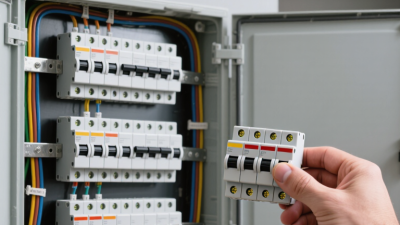
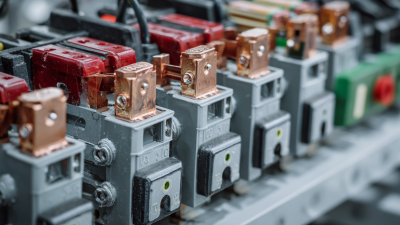
Choosing a circuit breaker switch is not just a matter of comparing prices or browsing familiar brand names. The right device must match the system’s voltage, current rating, fault level, and installation conditions. A mismatch can affect protection and reliability. Small details matter, including terminal design, enclosure space, and the clarity of product documentation.
As circuit-protection engineer Lena Ortiz puts it, “A breaker earns trust when its ratings, test evidence, and installation requirements are clear.” That principle offers a practical lens for reviewing China’s leading manufacturers. Buyers can compare product ranges, quality controls, technical support, certifications, and experience in specific applications. A factory’s ability to provide traceable test reports may matter more than an impressive catalog. Ask direct questions. Verify the details.
This guide introduces ten manufacturers serving markets that include buildings, factories, and power-distribution projects. Their products and capabilities are not interchangeable, even when specifications look similar. Some buyers may prioritize compact molded-case breakers; others need equipment for larger distribution systems. The shortlist is a starting point, not a substitute for technical review. Supplier rankings can also miss the mark when project requirements differ. Check current datasheets and confirm selections with a qualified electrical professional before purchasing.
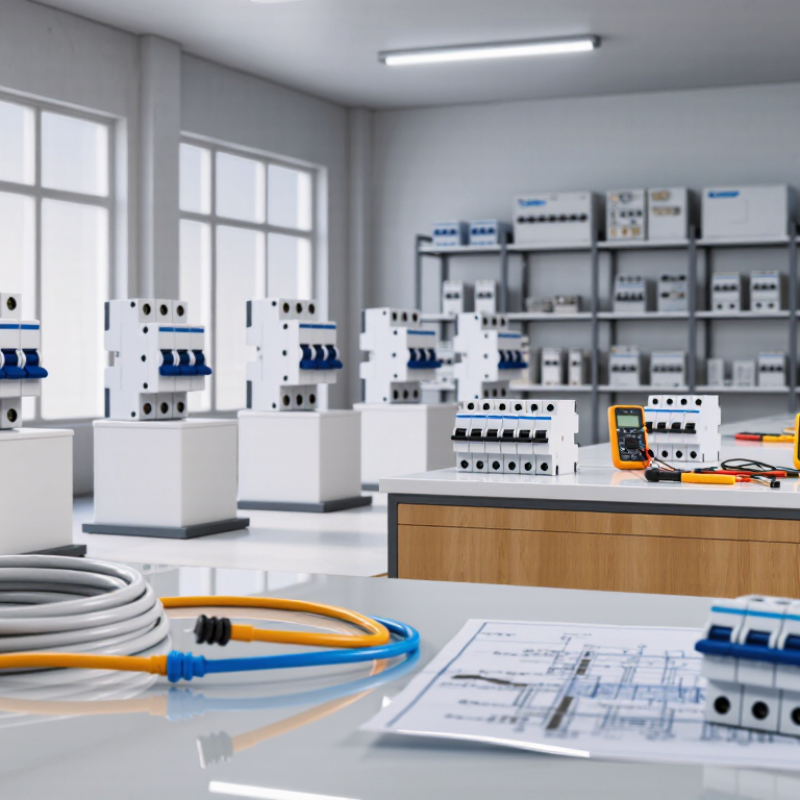
China’s circuit breaker switch industry serves building, infrastructure, manufacturing, and power distribution projects. Its product range includes miniature, molded-case, air, and vacuum circuit breakers. Manufacturers often work within dense supply chains for copper contacts, insulating materials, arc chutes, and trip units. This can support varied specifications and production volumes. The market is not uniform, though. Factory capability, engineering depth, and quality controls differ.
Product design depends on intended voltage, current, breaking capacity, and installation conditions. A breaker used in a small control panel faces different demands from one protecting industrial equipment. Testing may cover temperature rise, mechanical endurance, and short-circuit performance. Buyers should review the exact model’s ratings and test documentation, not rely only on a catalogue page. Details matter.
China-based suppliers serve both domestic and export markets, with some adapting products to project requirements. In practical procurement, clear drawings, sample checks, and traceable inspection records help reduce surprises. A polished specification sheet does not always reveal how a device performs after repeated switching or exposure to dust and heat. That gap deserves attention. Even experienced buyers can miss it.
For China Top 10 Circuit Breaker Switch Manufacturers, compare evidence, not catalog claims. The IEA’s Electricity Grids and Secure Energy Transitions (2023) estimates that 80 million kilometres of grids must be added or refurbished by 2040. Its Electricity 2024 report projects global electricity demand growth averaging 3.4% annually from 2024 to 2026. These trends make dependable switching equipment and consistent production quality essential.
Ask for type-test reports against IEC 60947-2, and verify that test samples match the proposed model’s rated current, voltage, and breaking capacity. Check factory quality controls, component traceability, inspection records, and how design changes are documented. A certificate alone is not enough. Small details matter. Confirm that routine test procedures are available and that the supplier can explain how defects are handled. Where possible, inspect the production line or arrange an independent audit.
Delivery capacity and technical support also deserve scrutiny. Request realistic lead times, spare-parts arrangements, and clear responses to technical questions. Compare these claims with recent production records and customer references, while checking that the references cover similar applications. A polished factory tour can be reassuring, but it cannot replace test evidence. This is an imperfect measure, too: audits capture a moment, not every future production run.
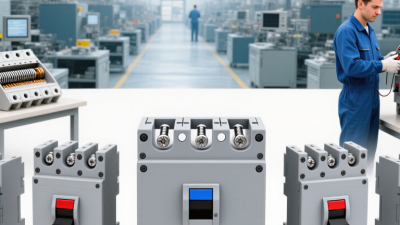
China’s circuit-breaker industry covers products for homes, factories, buildings, and power networks. With company names omitted, these ten profiles describe distinct manufacturing strengths rather than a verified ranking. A residential specialist typically focuses on compact miniature breakers for distribution boards. A commercial supplier may emphasize molded-case breakers for shops and office buildings. An industrial producer often offers higher-current protection for plant equipment. A grid-focused manufacturer may build air circuit breakers for main switchboards.
Another profile centers on medium-voltage vacuum breakers, where insulation and switching reliability matter. A renewable-energy supplier may develop direct-current breakers for solar installations and storage systems. One maker combines breakers with monitoring functions, showing trip status and operating data. A motor-protection specialist designs devices around starting currents and overload conditions. Details matter. A modular-product manufacturer prioritizes narrow fittings, clear markings, and quick installation. An export-oriented producer may offer several product families and adapt specifications for different markets.
These profiles are useful starting points, not proof of performance. Buyers should compare rated voltage, breaking capacity, test documentation, temperature limits, and service support. Ask for current product sheets and traceable test reports. A polished catalogue helps, but it cannot replace sample inspection or factory assessment. Comparisons are rarely perfectly clean: product ranges overlap, and published specifications may not show performance under real operating conditions.
Profiles of Ten Leading Chinese Circuit Breaker Switch Manufacturers
Data note: No company or brand names are shown. Since manufacturer-specific product data cannot be verified here, the table presents ten common product and capability profiles found in the circuit-breaker industry. Ratings are representative market ranges, not specifications attributed to individual manufacturers.
| No. | Product or Capability Profile | Typical Commercial Ratings | Relevant Standard | Common Applications | Key Selection Consideration |
|---|---|---|---|---|---|
| 1 | Miniature Circuit Breakers (MCBs) | Typically up to 125 A; breaking capacities vary by model, commonly 4.5–10 kA | IEC 60898-1 | Residential and light-commercial branch circuits | Check rated current, trip curve, pole configuration, and prospective short-circuit current. |
| 2 | Molded Case Circuit Breakers (MCCBs) | Commonly about 16–1,600 A, depending on frame and trip unit | IEC 60947-2 | Commercial and industrial feeders, distribution boards, and equipment protection | Confirm interrupting capacity, adjustable trip settings, and coordination requirements. |
| 3 | Air Circuit Breakers (ACBs) | Commonly about 630–6,300 A | IEC 60947-2 | Main low-voltage switchboards and high-current feeder protection | Assess rated current, short-time withstand performance, protection functions, and draw-out needs. |
| 4 | Residual Current Circuit Breakers (RCCBs) | Commonly available up to 125 A; residual operating sensitivities include 30 mA and higher values | IEC 61008-1 | Electric-shock protection and earth-leakage protection in installations | An RCCB does not provide integral overload or short-circuit protection; provide suitable overcurrent protection separately. |
| 5 | Residual Current Breakers with Overcurrent Protection (RCBOs) | Commonly about 6–63 A; residual sensitivity and breaking capacity vary by model | IEC 61009-1 | Individual residential and commercial circuits requiring combined protection | Verify residual-current type, trip curve, pole arrangement, and rated short-circuit capacity. |
| 6 | Motor Protection Circuit Breakers | Current-adjustment ranges depend on the motor size and device frame | IEC 60947-4-1 | Motor branch circuits and motor starter assemblies | Set the thermal protection to the motor nameplate current and coordinate with the contactor and overload system. |
| 7 | DC Molded Case Circuit Breakers | Voltage and current ratings vary substantially; purpose-designed DC models are available for different system voltages | IEC 60947-2 | Battery systems, DC distribution, and industrial direct-current circuits | Use a device explicitly rated for the DC voltage, polarity requirements, and circuit time constant. |
| 8 | Photovoltaic DC Circuit Protection | PV system designs may use equipment rated for 1,000 V DC or 1,500 V DC, subject to the product design | IEC 60947-2; applicable PV system requirements | Solar-array combiner boxes and photovoltaic DC distribution | Check maximum system voltage, string current, DC breaking capability, and the exact intended PV application. |
| 9 | Electronic Trip Units and Protection Options | Available functions and settings depend on the breaker frame and trip-unit design | IEC 60947-2 | Industrial distribution requiring configurable protection and system coordination | Compare long-time, short-time, instantaneous, and ground-fault functions where applicable. |
| 10 | Switch-Disconnectors and Circuit-Breaker Accessories | Ratings are product-specific; accessories can include auxiliary contacts, shunt releases, and motor operators | IEC 60947-3 for switch-disconnectors | Isolation, local switching, and integration into low-voltage assemblies | A switch-disconnector provides switching and isolation functions but is not, by itself, a circuit breaker with overcurrent protection. |
For procurement, verify the current datasheet, test documentation, certification scope, and installation requirements for the exact product and market.
When comparing China’s top ten circuit breaker switch manufacturers, look beyond product names and headline ratings. Check rated voltage, breaking capacity, pole configuration, and operating life against your actual installation needs. A compact breaker may suit a control cabinet, while a higher-capacity model may be required for demanding equipment. Details matter. Request test data that matches the exact model, not just a similar product in the same range.
Certifications and factory capabilities also deserve close review. Confirm that certificates are current, cover the product being quoted, and apply to your destination market. Ask about production testing, inspection records, traceability, and quality controls for incoming materials. A factory tour or live production review can clarify what brochures leave out. Still, one visit cannot prove long-term consistency; compare sample results with batch documentation. Manufacturing scale is useful, but it does not automatically mean better technical support or shorter lead times.
Tips: Ask for drawings, test reports, and a sample before placing a large order. Compare warranty terms and spare-part availability. If answers differ between sales and engineering teams, pause and verify the details. That extra check can feel slow, but it may prevent a costly mismatch.
Circuit breakers serve commercial buildings, factories, renewable-energy systems, and data centers. The IEA’s Electricity 2024 report estimated data centers used about 460 TWh of electricity in 2022, potentially exceeding 1,000 TWh by 2026. IRENA reported 473 GW of renewable capacity additions in 2023. These applications need protection suited to different fault levels, operating cycles, and installation environments. Heat matters. A breaker’s rated current alone does not confirm it will perform reliably in a crowded panel.
When evaluating manufacturers, buyers should match rated voltage, current, pole count, and breaking capacity to the system’s design fault level. Check trip characteristics, ambient-temperature derating, enclosure requirements, and coordination with upstream and downstream devices. Request applicable test reports, certifications, traceable production records, and clear warranty terms. Confirm sample availability, production lead times, and replacement-part support. Paper ratings can still disappoint when installation conditions are overlooked.
Tips: Share a single-line diagram and expected fault current with shortlisted suppliers. Ask for test evidence against the relevant IEC standard, such as IEC 60947-2 for low-voltage breakers. Compare equivalent specifications, not just unit prices. Keep a small inconsistency check in your process: procurement documents and site conditions do not always match.