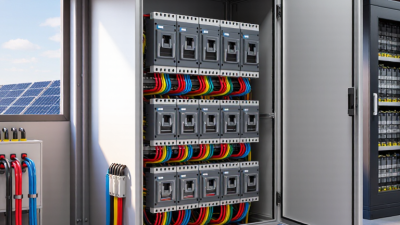
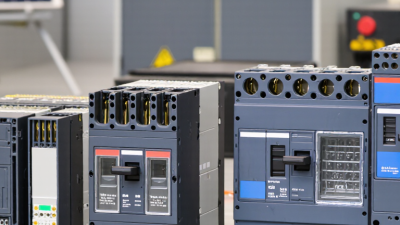
What Are the 2026 Top DC Breaker Types? This question matters as direct-current systems expand across solar arrays, battery storage, electric vehicles, data centers, and industrial controls. Unlike AC, DC does not naturally cross zero during each cycle. Its arc can stretch across contacts, glow inside a compact enclosure, and continue damaging equipment. A reliable DC breaker must interrupt that energy quickly and safely.
Electrical protection specialist Dr. John D. McDonald offers a useful principle: “A breaker is only effective when its interrupting rating matches the fault energy.” That warning deserves attention. A small 63A breaker may look suitable beside a battery cabinet, yet battery fault currents can rise far beyond expectations. Installation temperature, cable length, polarity, voltage level, and available short-circuit current all change the result.
This overview examines the leading 2026 DC breaker types, including thermal-magnetic, electronic, photovoltaic, battery, high-voltage, and molded-case designs. Each type solves a different protection problem. Some favor simple overload response. Others provide adjustable settings, remote tripping, or stronger arc control. The best choice is rarely the most expensive one. It is the design that fits the real circuit.
That sounds straightforward. It is not always.
Product labels can create false confidence. Certification marks, trip curves, and breaking-capacity data require careful checking. Engineers should verify manufacturer instructions and applicable standards before selection. This article focuses on practical comparison, while recognizing one limitation: emerging DC architectures may expose weaknesses that current recommendations do not fully predict.
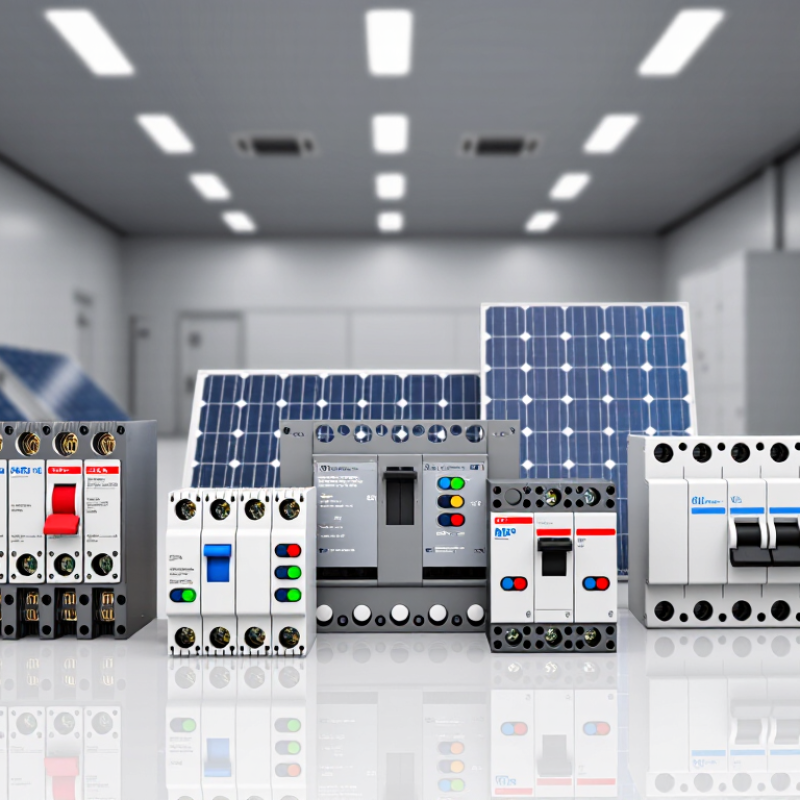
DC circuit breakers protect direct-current systems from overloads and short circuits. Unlike AC, DC has no natural zero-crossing point to help extinguish an arc. The breaker must stretch, cool, and divide that arc inside its chamber. This makes DC interruption more demanding, especially at higher voltage and fault current.
Common types include miniature, molded-case, magnetic-hydraulic, and electronically controlled breakers. Thermal elements respond to sustained overloads, while magnetic releases act quickly during severe faults.
Electronic trip units can measure current more precisely and offer adjustable protection settings. Arc chutes, permanent magnets, and carefully shaped contacts guide the arc away from the contact area. Polarity also matters on many DC breakers. Reversing the terminals may reduce their rated interrupting performance.
A practical selection begins with system voltage, continuous load, prospective fault current, conductor size, and ambient temperature. A breaker rated for 250 V DC may not safely interrupt a 250 V battery fault without additional conditions. Field inspections often reveal loose terminals, undersized wiring, or settings that do not match the design. Small details matter. Standards such as IEC 60947-2 or UL 489 can support verification, but the installation still needs engineering review and local approval. No breaker type is perfect; fast protection can create nuisance trips, while delayed operation can damage conductors. Specification sheets deserve careful reading.
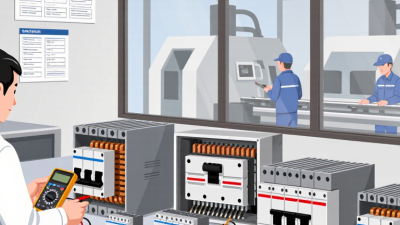
In 2026, DC circuit breakers are selected by voltage, fault current, load behavior, and installation environment. The main types include miniature circuit breakers, molded-case circuit breakers, electronic breakers, and high-voltage DC breakers. Each serves a different operating range.
DC arcs do not naturally cross zero, so breakers need arc chutes, magnetic blowout systems, or electronic interruption.
Miniature circuit breakers suit smaller branch circuits and compact enclosures.
They provide thermal overload protection and magnetic short-circuit tripping.
Molded-case circuit breakers handle higher currents and often offer adjustable trip settings.
Electronic breakers measure current through sensors and can respond with greater precision.
Some also provide communication and condition-monitoring functions.
High-voltage DC breakers use stronger insulation and specialized arc-control structures.
They are common in traction networks, utility equipment, and large battery installations.
Details matter. These features support safer use in battery storage, solar arrays, control panels, and electric transport systems.
Reliable selection begins with continuous current and the maximum prospective fault current. Check rated working voltage, interrupting capacity, polarity, ambient temperature, cable size, and coordination with upstream protection.
In a cabinet, allow space for heat dissipation and verify terminal torque during commissioning.
The label alone can mislead. A breaker rated for DC is not automatically suitable for every battery string.
Engineers should confirm test standards, installation instructions, and technical data. Fit can change. Space, heat, and maintenance access may quietly decide whether a technically correct breaker performs well in service.
DC breaker technologies differ mainly in how they detect faults, control arcs, and manage heat. Thermal-magnetic breakers remain common in battery systems, control panels, and low-voltage equipment. A thermal element responds to sustained overloads. A magnetic element reacts to sudden short circuits. Their design is proven, but response time can vary with temperature and fault magnitude.
Electronic-trip breakers use sensors and adjustable logic. They can provide accurate protection, selective coordination, and event records. This helps technicians investigate a 48-volt battery fault without guessing.
Solid-state breakers respond even faster and produce no mechanical arc. They also support remote switching and repeated operation. However, semiconductors create continuous losses and require careful cooling. A compact enclosure may become unexpectedly warm.
Hybrid breakers combine semiconductor switching with mechanical isolation. The electronic path interrupts current quickly, while contacts reduce long-term conduction losses. This design suits demanding storage, charging, and photovoltaic applications.
Current-limiting breakers add another layer of protection by restricting peak fault energy. They can protect cables and busbars, but replacement parts may be more specialized.
No type wins every test.
Field reviews often miss cable length, polarity, ambient temperature, and available fault current. These details change real performance. Engineers should compare interrupt ratings, trip curves, leakage, endurance, and compliance with applicable standards. A breaker that looks ideal on paper may still need thermal testing inside the finished enclosure.
Selecting a DC breaker starts with voltage, current, and system behavior. Solar strings often use miniature or molded-case DC breakers. Battery systems may need higher interrupt ratings and stronger arc control. Electronic breakers suit fast monitoring and adjustable protection. Semiconductor breakers respond extremely quickly, but their cost and heat management can challenge smaller installations.
SolarPower Europe’s Global Market Outlook 2024–2028 recorded about 447 GW of new solar capacity worldwide in 2023.
This growth increases demand for reliable DC protection in combiner boxes, storage racks, and charging equipment. Check the maximum system voltage first, including cold-weather voltage rise. Then compare continuous current, short-circuit current, and the breaker’s DC interrupt rating. A 1,000-volt breaker is not automatically safe on every 1,000-volt circuit.
IEC 60947-2 provides a useful reference for industrial circuit breakers, while IEC 60898-2 covers certain household and similar applications. Local codes may require a 125% continuous-current design margin. Confirm this with the project engineer and authority having jurisdiction.
Polarized breakers can require correct terminal orientation. Non-polarized designs may simplify wiring, but they still need verified DC ratings. I would recheck cable temperature, enclosure heat, and altitude derating before approval.
Small details matter. No selection method is perfect.
In 2026, common DC breaker choices include miniature, molded-case, electronic, and photovoltaic breakers. Each type suits different voltage, current, and fault conditions.
Miniature breakers fit compact control panels. Molded-case designs handle larger feeders and stronger short-circuit demands.
Electronic breakers can provide adjustable protection and monitoring. Photovoltaic breakers are designed for solar circuits, where sustained DC arcs require careful interruption.
Safety standards must match the installation location and system design. IEC 60947-2 is widely referenced for circuit breakers. Other projects may require applicable national standards or certification rules.
Always verify the breaker’s rated voltage, continuous current, interrupting capacity, and polarity markings. A breaker rated for AC is not automatically safe for DC. That mistake remains surprisingly common.
Installation quality matters just as much as product selection. Size conductors for the expected current, temperature, and installation method. Tighten terminals to the manufacturer’s specified torque.
Loose connections can create heat around a breaker, even below its trip rating. Maintain required clearances inside the enclosure. Use suitable protection against dust, moisture, and accidental contact.
I have seen wiring diagrams look correct while field routing created unnecessary heat. Testing should include polarity, insulation condition, trip operation, and torque verification.
Recheck assumptions. DC systems can behave differently under load.