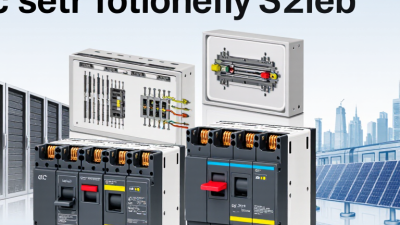
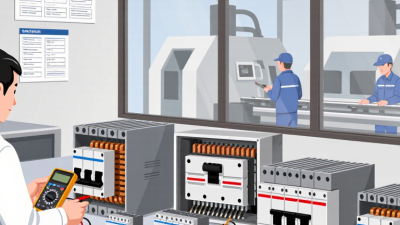
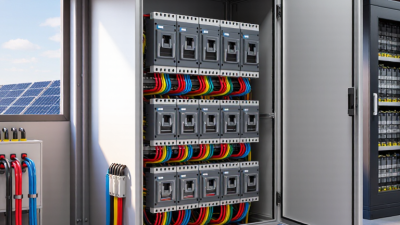
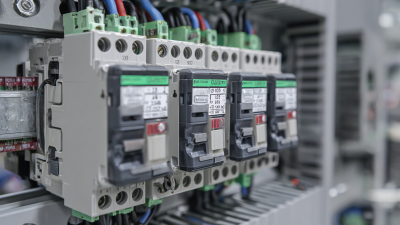
The global shift toward solar farms, battery storage, electric transport, and data centers is increasing demand for reliable DC protection. A dc molded case circuit breaker must interrupt fault current safely, protect conductors, and withstand demanding operating cycles.
The International Energy Agency’s Electricity 2024 report estimates that data centers consumed about 460 TWh globally in 2022. Their electricity use could exceed 1,000 TWh by 2026. These facilities increasingly depend on direct-current architectures, battery systems, and high-power conversion equipment. MarketsandMarkets also projects the global circuit breaker market to grow from approximately USD 8.2 billion in 2023 to USD 11.2 billion by 2028. The figures are useful, but market definitions differ. Readers should verify them.
Mike Holt, a respected electrical safety educator, states, “Electricity will always take the path of least resistance.” That simple warning matters when comparing worldwide suppliers. Product quality cannot be judged by catalog photographs alone. Engineers should review rated operational voltage, interrupting capacity, short-circuit withstand, thermal performance, and certification requirements. IEC 60947-2 and UL 489 compliance can provide stronger comparison points, depending on the installation region.
This guide examines leading dc molded case circuit breaker suppliers worldwide through a practical lens. It considers manufacturing experience, testing capability, customization, delivery support, and after-sales service. Some supplier rankings remain subjective. That weakness deserves attention. A reputable brand may still offer the wrong trip curve, terminal design, or enclosure rating for a specific project. Real project conditions must decide the final choice.
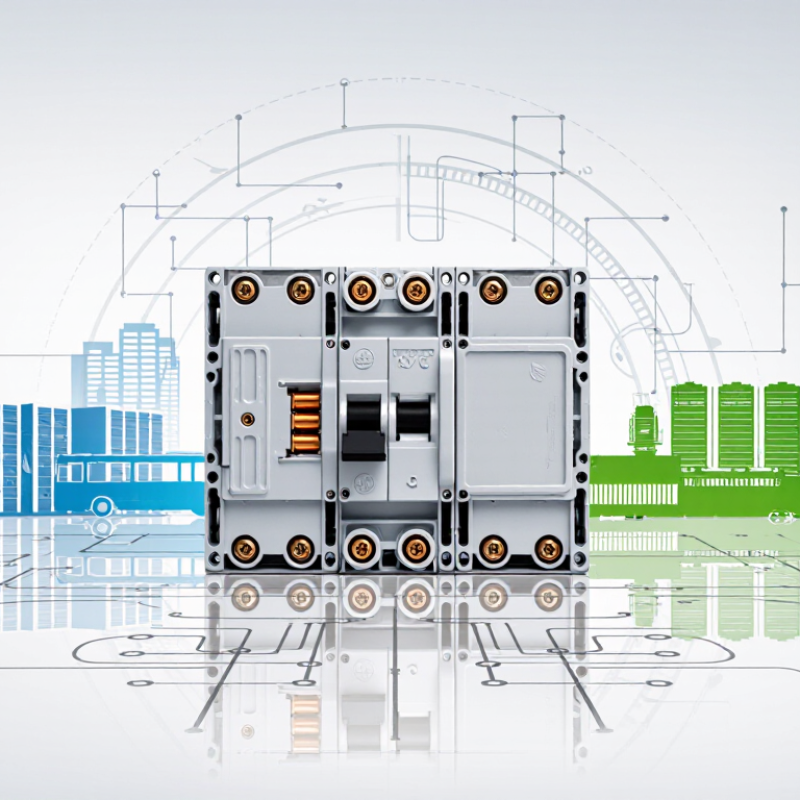
A DC molded case circuit breaker (MCCB) is a protective switching device for direct-current circuits. It interrupts overloads and short circuits before heat damages cables, batteries, or connected equipment. Unlike AC breakers, DC breakers must control an arc that does not naturally pass through zero. Their arc chambers, magnetic trip systems, and contact materials require careful design.
In field installations, technicians often use these breakers in solar arrays, battery storage cabinets, electric vehicles, and industrial control panels. A reliable unit should match system voltage, continuous current, interrupting capacity, and polarity requirements. The enclosure also matters. Dust, vibration, moisture, and limited panel space can affect performance. Certification documents and test records provide valuable evidence, but they cannot replace application review. A product may appear suitable and still be poorly matched. That detail deserves attention.
Tips: Confirm that the breaker is rated specifically for DC, not only AC. Check the maximum fault current at the installation point. Review cable size, ambient temperature, terminal torque, and required accessories. Ask suppliers for clear datasheets, traceable test information, and technical support. For battery systems, consider reverse-current conditions and isolation procedures. Small oversights can cause hot terminals or unexpected shutdowns. Field experience helps, but assumptions remain risky.
DC molded case circuit breakers protect direct-current systems from overloads and short circuits. Unlike AC breakers, they cannot rely on current crossing zero naturally. Their internal arc chutes stretch, cool, and divide the arc. Magnetic trips respond quickly to severe faults. Thermal elements handle prolonged overloads. Electronic trip units can provide adjustable protection and clearer event records.
Selection starts with system voltage, continuous current, and interrupting capacity. Polarity also matters, especially when the circuit requires reliable isolation. IRENA’s Renewable Capacity Statistics 2024 recorded 473 GW of renewable capacity added worldwide in 2023. Solar power contributed about 346 GW. This rapid expansion increases demand for dependable DC protection inside combiner boxes, battery racks, and inverter connections.
The same principle applies to charging equipment and telecom power systems. The IEA’s Global EV Outlook 2024 reported more than 14 million electric cars sold in 2023. Their charging networks require compact breakers that tolerate frequent switching and high fault energy. A breaker chosen by nominal voltage alone can fail in the field. Cable length, ambient temperature, battery chemistry, and prospective fault current deserve equal attention. Real installations are less tidy than laboratory diagrams. Technicians should verify coordination against IEC 60947-2 requirements and the manufacturer’s tested data.
Selecting a global DC molded case circuit breaker supplier requires more than comparing catalog prices. The first checkpoint is application fit. Confirm rated voltage, continuous current, short-circuit interruption capacity, pole configuration, and trip adjustment range. A supplier should provide complete test reports, product drawings, and clear derating data for high ambient temperatures. Missing data is a warning.
Reliable suppliers explain how their breakers perform in battery storage, rail, telecom, or industrial control systems. Ask about contact wear, arc management, insulation distance, and mechanical endurance. Independent laboratory evidence matters more than polished product claims. Certification should match the intended market and installation environment. Documentation must remain traceable by model, batch, and revision.
Service quality often separates capable suppliers from average ones. Review response times, spare-part availability, warranty terms, and technical support across time zones. Request a sample unit for inspection. Check terminal torque markings, enclosure fit, label accuracy, and trip-unit consistency. Small details matter.
I have seen technically strong products delayed by weak logistics. Lead-time promises should include factory capacity, inspection steps, packaging, and customs documentation. No supplier gets every detail right. A realistic evaluation records known limitations instead of hiding them. Pilot testing under representative load can expose nuisance trips, heat buildup, or unclear installation instructions before wider deployment.
Leading DC Molded Case Circuit Breaker Suppliers Worldwide are responding to faster growth in solar, battery storage, rail, and data-center systems. The IEA’s Renewables 2024 report forecasts nearly 5,500 GW of new renewable capacity from 2024 to 2030. Solar power represents about 80% of this expansion. More direct-current equipment will follow.
Experienced buyers assess suppliers beyond catalog prices. They check rated voltage, continuous current, short-circuit capacity, pole configuration, and thermal derating. Enclosures may sit in a 45°C outdoor cabinet, not a cool laboratory. IEC 60947-2 test evidence, production traceability, and documented quality controls also matter. A breaker that interrupts correctly at 25°C may perform differently under continuous heat.
Field reviews often reveal a simple weakness: protection coordination is assumed, not verified. Leading DC molded case circuit breaker suppliers should provide time-current curves, installation limits, accessory compatibility, and application support. MarketsandMarkets and similar industry studies report continuing growth in DC protection demand, but estimates vary by application and research method. That uncertainty deserves attention. Buyers should compare test conditions, not only market numbers. In my view, supplier evaluation remains incomplete without checking spare-part access, technical response times, and local commissioning experience. Small details matter.
Selecting a DC molded case circuit breaker supplier requires more than comparing catalog prices. The International Energy Agency reported over 560 GW of renewable capacity additions in 2023. This growth increases demand for dependable DC protection in solar arrays, batteries, and charging systems. Your supplier should understand these applications, not merely resell standard AC equipment.
Check compliance with IEC 60947-2 or UL 489, depending on the installation market. Request type-test reports, routine-test records, and evidence of traceable production batches. Compare rated operational voltage, continuous current, breaking capacity, and trip characteristics under real DC conditions. DC arcs behave differently from AC arcs. A breaker rated for 800 V DC may still require specific pole connections or spacing.
Ask for temperature-derating curves, enclosure guidance, and replacement lead times. A useful supplier can explain how a 50°C cabinet affects a 250 A breaker. It should also provide terminal dimensions, tightening torque, auxiliary-contact options, and installation drawings. Independent laboratory verification matters. So does technical support after delivery.
Industry forecasts often look impressive, but project failures usually begin with small omissions. A low quotation may exclude shunt trips, busbar adapters, or verified accessories. I would also inspect sample labels and packaging before approving a large order. That step feels slow. It can prevent costly field changes. One assumption may still be wrong: laboratory performance does not guarantee correct installation. Require commissioning guidance, fault-current calculations, and documented acceptance tests before energizing the system.
| Evaluation Dimension | What to Verify with the Supplier | Relevant Requirement or Reference | Practical Acceptance Check | Project Impact | Priority |
|---|---|---|---|---|---|
| Rated DC voltage | Confirm the breaker’s rated operational voltage and whether the rating applies to one pole, two poles, or a series-connected pole arrangement. | The selected rating must be equal to or greater than the maximum system voltage, including charging and transient conditions. | Compare the datasheet rating with the actual battery, PV, EV, railway, or industrial DC bus voltage. | Prevents insulation overstress and ensures safe interruption of the DC circuit. | Critical |
| Continuous current rating | Check the rated current, frame size, terminal temperature assumptions, and any enclosure or ambient-temperature derating. | The selected rating should cover the calculated continuous load and applicable national installation rules. | Verify the load calculation, conductor ampacity, terminal limits, and required design margin. | Reduces nuisance tripping and excessive thermal stress. | Critical |
| DC short-circuit interruption | Request the rated short-circuit breaking capacity at the exact DC voltage, polarity, pole configuration, and time constant used in testing. | IEC 60947-2 and UL 489 are widely used reference standards for circuit-breaker performance, subject to the applicable product scope. | Do not accept an AC interrupting rating as proof of equivalent DC performance. | Determines whether the breaker can safely clear the highest prospective fault current. | Critical |
| Pole configuration and polarity | Confirm whether the device is suitable for single-pole, two-pole, or multi-pole DC applications and whether polarity is fixed or reversible. | The wiring arrangement must follow the supplier’s approved connection diagram and the applicable installation standard. | Review terminal markings, internal arc-chute design, and the required number of poles in series. | Incorrect polarity or pole connection can reduce interruption capability. | Critical |
| Trip characteristics | Identify whether the trip unit is thermal-magnetic, electronic, magnetic-only, or another approved design. | Trip curves and adjustable ranges should be documented for the intended DC load and fault profile. | Coordinate the trip curve with cable ampacity, inrush current, battery fault current, and downstream protection. | Supports selectivity and prevents unnecessary shutdowns. | High |
| Isolation and switching function | Determine whether the breaker is required only for overcurrent protection or also for equipment isolation and routine switching. | Isolation suitability must be explicitly stated; protective interruption and isolation are not automatically identical functions. | Check visible indication, isolation markings, dielectric-test data, and installation requirements. | Affects maintenance safety and lockout procedures. | High |
| Environmental suitability | Review operating temperature, storage temperature, humidity, altitude, vibration, shock, corrosion, and pollution conditions. | IEC 60947-1 provides general low-voltage switchgear requirements; enclosure protection may be classified under IEC 60529. | Obtain derating curves and confirm the enclosure’s required IP rating for the installation location. | Improves service life and reduces failure risk in harsh environments. | High |
| Terminal and conductor compatibility | Confirm conductor material, allowable cable cross-section, terminal torque, lug dimensions, and busbar compatibility. | Terminal capacity and tightening torque must match the approved installation instructions. | Check cable size, bending radius, lug type, clearance, and torque values before purchase. | Prevents hot joints, installation delays, and mechanical incompatibility. | High |
| Accessories and communication | Check availability of auxiliary contacts, alarm contacts, undervoltage releases, shunt trips, motor operators, and remote monitoring interfaces. | Accessory ratings must be separately verified for the control voltage and operating environment. | Confirm accessory wiring, control voltage, space requirements, and compatibility with the protection system. | Determines integration with alarms, SCADA, emergency shutdown, and automation. | Medium |
| Conformity documentation | Request current datasheets, installation manuals, type-test reports, declarations, certificates, and traceable product identification. | Documentation should identify the exact product family, rating, test configuration, and applicable standard edition. | Reject documents that do not match the quoted frame size, trip unit, voltage, or pole arrangement. | Supports regulatory approval, engineering review, and project traceability. | Critical |
| Quality and production controls | Evaluate incoming-material control, calibration, routine testing, final inspection, serial-number traceability, and change-control procedures. | A quality management system such as ISO 9001 can support process consistency but does not replace product compliance testing. | Request sample inspection records and define acceptance tests for production lots. | Reduces variation between samples and delivered production units. | High |
| Supply capability and lead time | Confirm standard production lead time, minimum order quantity, spare-parts availability, engineering response time, and export documentation capability. | Use a written delivery schedule and identify the point at which design changes require approval. | Request a project-specific quotation rather than relying on general catalogue availability. | Affects commissioning dates, inventory planning, and replacement strategy. | High |
| After-sales support | Assess warranty terms, failure analysis procedure, technical training, replacement policy, local service coverage, and long-term product availability. | Warranty conditions should define coverage period, exclusions, required installation practices, and claim documentation. | Include response times, spare-part commitments, and escalation contacts in the purchase agreement. | Reduces downtime and lifecycle risk after installation. | Medium |