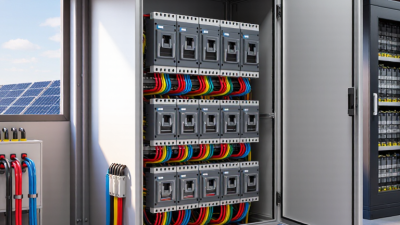
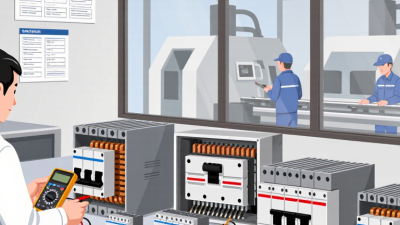
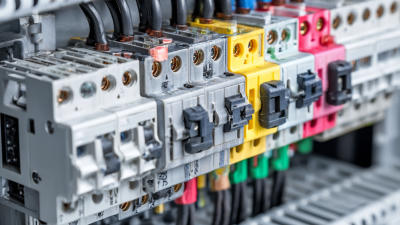
2026 Best DC Air Circuit Breaker Types for Global Buyers?

Global buyers entering the 2026 market need more than a catalog comparison. A dc air circuit breaker must match voltage, current, interruption capacity, installation altitude, and maintenance conditions. The wrong selection may leave a battery room exposed to heat, arcing, or delayed fault clearance.

John D. McDonald, IEEE Fellow and a recognized power-system protection specialist, has often stressed this practical principle: “Protection must be coordinated with the system it serves.” That idea remains highly relevant for photovoltaic arrays, energy-storage systems, rail traction, marine equipment, and industrial DC distribution. A breaker designed for low-voltage battery protection may not suit a high-current busbar. Details matter. Contact spacing matters. Arc-quenching performance matters.

This guide examines the best dc air circuit breaker types for global buyers in 2026. It compares fixed and draw-out designs, thermal-magnetic and electronic trip units, compact frames, and intelligent communication options. It also considers short-circuit ratings, selective coordination, environmental sealing, and service access. Some manufacturers present impressive specifications, yet practical performance can depend on testing conditions and installation quality. That deserves closer review.

A reliable buying decision should combine datasheet evidence, type-test reports, field experience, and supplier transparency. Price alone is a weak filter. So is brand reputation.

The discussion will also reflect on common selection mistakes. Even experienced engineers can overlook derating, cable impedance, or future load growth. A careful comparison creates safer, more maintainable DC systems for buyers across different markets.
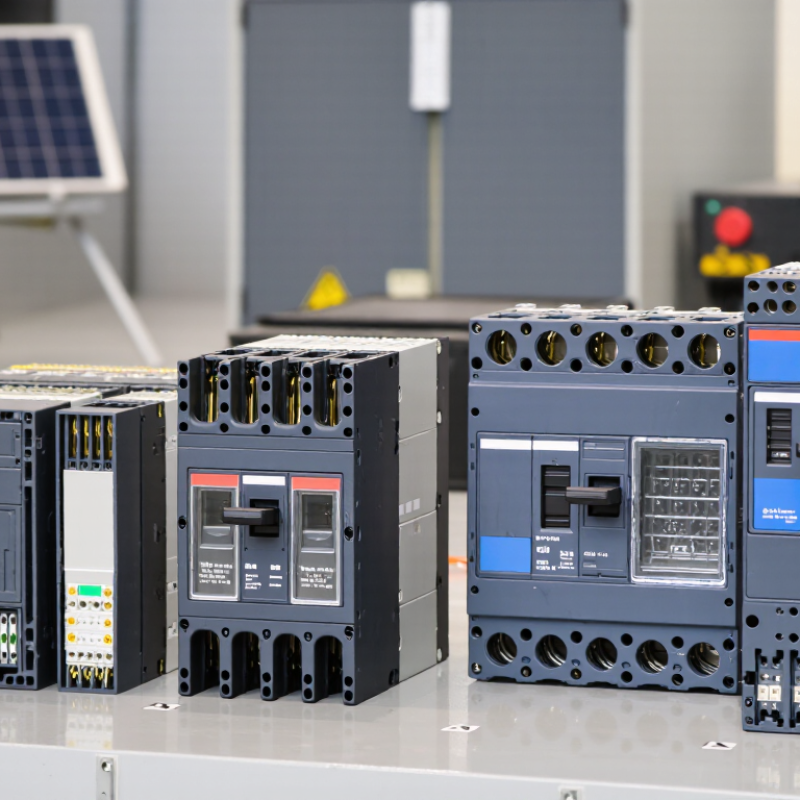
2026 Best DC Air Circuit Breaker Types for Global Buyers?

DC Air Circuit Breakers: Definition, Purpose, and Operating Principles

A DC air circuit breaker uses air to extinguish the arc created when electrical contacts separate. Unlike AC, DC has no natural zero-crossing point. The arc can continue burning, making interruption more demanding. These breakers protect batteries, solar arrays, rail systems, data centers, and industrial DC distribution panels.

Its purpose is practical: interrupt overloads and short circuits before heat damages cables or equipment. A thermal-magnetic model responds to sustained overloads and sudden faults. An electronic-trip model measures current more precisely and allows adjustable protection settings. Fixed and withdrawable designs serve different maintenance needs. No single type fits every installation.

During a fault, the trip unit releases the mechanism. Contacts open rapidly, while magnetic forces drive the arc toward arc runners and splitter plates. The arc lengthens, cools, and loses energy inside the arc chamber. DC voltage, polarity, current direction, and the number of poles affect performance. Small details matter.

For global buyers, check rated DC voltage, continuous current, short-circuit capacity, insulation level, altitude, ambient temperature, and local certification requirements. Confirm whether poles must be connected in series. A common mistake is selecting by amperage alone. That approach can fail during a high-energy battery fault. Field testing also deserves attention; installation conditions rarely match catalog assumptions perfectly.

Key DC Air Circuit Breaker Types and Their Design Differences

Choosing a DC air circuit breaker in 2026 requires more than comparing rated current. DC systems lack the natural current zero found in AC circuits. Arc control matters. A suitable breaker uses arc chutes, magnetic blowout fields, or both to stretch and cool the arc. These details directly affect interruption performance, contact wear, and enclosure temperature.

Common types include single-pole, two-pole, and four-pole designs. Single-pole units suit smaller control circuits, while multi-pole breakers can isolate several conductors together. Polarity-sensitive models require correct line and load connections. Polarity-independent designs offer easier installation, but their internal arc-control structure can be more complex. Fixed breakers are compact and cost-effective. Draw-out versions support safer inspection and faster replacement in larger switchboards.

Electronic trip units provide adjustable overload, short-circuit, and sometimes ground-fault protection. Thermal-magnetic units remain practical for simpler applications. Buyers should verify voltage, continuous current, short-circuit rating, pole configuration, insulation distance, and operating altitude. A breaker rated for 1,000 V DC should not be treated as suitable for every 1,000 V installation. Cable length, battery energy, ambient temperature, and fault location also change the real duty. That assumption is easy to make, and often wrong. In field reviews, installation torque and connection cleanliness deserve equal attention. Small errors there can create hot spots, nuisance trips, or difficult maintenance. Testing against recognized international requirements improves confidence, but the final selection still needs application-specific engineering.

How to Match Breaker Ratings with DC System Requirements

Selecting the right DC air circuit breaker starts with system voltage, not catalogue size. A breaker rated for 1,000 V DC may fail in a higher-voltage array because its arc-control distance is insufficient. IEC 60947-2 requires performance verification at the declared DC voltage and short-circuit conditions. Match the breaker’s rated operational voltage, continuous current, and ultimate breaking capacity with measured or calculated fault current. Leave no guessing room.

Current ratings also need environmental correction. In a 45°C cabinet, continuous current may require derating, especially when several devices share a crowded enclosure. Cable ampacity, battery discharge current, and inverter input limits must agree with the breaker setting. The breaker should interrupt the maximum prospective DC fault current, not only the normal load. For battery systems, check polarity, bidirectional current capability, and the number of protected poles.

The scale is growing quickly. The International Energy Agency’s Renewables 2024 report recorded about 473 GW of new solar capacity in 2023. Its Batteries and Secure Energy Transitions report also noted that utility-scale battery additions reached roughly 42 GW in 2023. These figures increase demand for dependable DC protection. For global projects, verify altitude, humidity, insulation coordination, and local installation rules. A practical warning: a neat spreadsheet can still be wrong if battery fault data is missing. Measure twice. Then review the trip curve with the cable manufacturer’s data.

Safety Standards and Certifications for Global DC Breaker Buyers

For global DC circuit breaker buyers, certification begins with the application, not the product label. IEC 60947-2 defines performance requirements for low-voltage circuit breakers, including short-circuit testing and operating endurance. For North American projects, UL 489 is commonly referenced for molded-case circuit breakers. However, an IEC test report does not automatically prove compliance with every national installation rule. That assumption can become expensive.

Demand is expanding quickly. The International Energy Agency’s Renewables 2024 report expects global renewable power capacity to grow by almost 5,500 GW between 2024 and 2030. Solar provides nearly 80% of this increase, creating more DC protection points in strings, combiner boxes, batteries, and converters. Buyers should match the breaker’s DC voltage, continuous current, interrupting capacity, polarity requirements, and temperature derating to the real system. Check the test conditions. A laboratory rating at 25°C may not represent a sealed enclosure under strong sunlight.

Reliable purchasing also requires traceable evidence. Request the full certificate, scope, standard edition, test report number, and production-site details. Verify whether certification covers the exact frame size and accessory configuration. The IECEE CB Scheme can support international acceptance, but local authorities may still request additional documentation. CE marking is generally a conformity declaration, not proof of independent certification. A certificate alone can mislead. Buyers should also review creepage distances, clearance values, insulation performance, and end-of-life behavior. Small documentation gaps remain common, and careful review is still necessary.

2026 Best DC Air Circuit Breaker Types for Global Buyers: Safety Standards and Certifications
DC Air Circuit Breaker Type Typical DC Application Typical Voltage and Current Range Trip and Protection Technology Key Selection Advantages Important Technical Checks Relevant International Standards Common Market-Access Evidence
Thermal-Magnetic DC Circuit Breaker Battery banks, control panels, telecom power systems, low-voltage distribution and auxiliary DC circuits. Commonly up to 1,000 V DC and approximately 16–630 A, depending on construction and application. Thermal protection for overloads and magnetic protection for short circuits. DC-rated arc chambers and suitable contact spacing are required. Simple operating principle, widely available, easy to maintain and generally cost-effective for conventional DC loads. Confirm DC polarity, number of poles, voltage per pole, continuous current, ambient-temperature derating and short-circuit breaking capacity. IEC 60947-2; applicable national adoptions such as EN 60947-2 or GB/T 14048.2. CE conformity markingUKCA where applicableCB Scheme evidenceRoHS documentation
Electronic-Trip DC Air Circuit Breaker Industrial DC distribution, renewable-energy storage, data-center power systems and critical infrastructure. Often available from approximately 400 A to 6,300 A; voltage capability may extend to 1,000 V DC or higher in specialized designs. Microprocessor-based long-time, short-time, instantaneous and ground-fault functions, with adjustable pickup and delay settings. High setting accuracy, improved selectivity, event recording, communication options and better coordination with upstream and downstream devices. Verify sensor accuracy, auxiliary supply requirements, protection-setting range, communication protocol, withstand rating and maintenance access. IEC 60947-2, including requirements for circuit-breaker performance and verification; national equivalents may also apply. CE conformity markingUKCA where applicableCB test documentationEMC compliance evidence
High-Speed DC Air Circuit Breaker Traction power, industrial drives, battery energy-storage systems, semiconductor equipment and high-power DC networks. Typical designs range from several hundred volts to approximately 1,500 V DC, with current ratings from hundreds to several thousand amperes. Fast electromagnetic or electronic tripping, low-energy mechanisms and specialized arc-extinguishing systems designed to limit fault duration. Rapid fault clearing can reduce arc energy, equipment damage and battery fault propagation risk. Check total clearing time, peak let-through current, minimum fault current, arc voltage, repetitive-duty capability and coordination with fuses or contactors. IEC 60947-2 where the product falls within its scope; application-specific railway or energy-storage requirements may also apply. CE conformity markingUKCA where applicableIndependent type-test reportsApplication-specific compliance file
Current-Limiting DC Air Circuit Breaker High-energy battery systems, photovoltaic combiner equipment, DC feeders and installations with high prospective short-circuit current. Commonly designed for 500–1,500 V DC systems, with interrupting ratings selected according to the calculated prospective fault current. Arc-limiting contact geometry, magnetic repulsion, current-limiting chambers and high-speed interruption. Reduces fault peak current and thermal stress on busbars, cables, batteries and connected converters. Do not select only by continuous current; compare rated short-circuit capacity, peak let-through current, I²t, system time constant and cable withstand. IEC 60947-2 and the manufacturer’s verified test configuration; installation rules may be governed by IEC 60364 or local wiring regulations. CE conformity markingCB test reportShort-circuit test evidenceRoHS documentation
Withdrawable DC Air Circuit Breaker Main DC switchboards, high-availability facilities, battery rooms and industrial systems requiring rapid inspection or replacement. Usually medium- to high-current applications, commonly from approximately 630 A to 6,300 A; voltage depends on the tested assembly. Draw-out or plug-in construction with connected, test and disconnected positions; may use thermal-magnetic or electronic trip units. Improves maintenance safety and reduces downtime by allowing isolation and functional testing without removing the complete breaker from the board. Verify racking interlocks, shutters, position indication, isolation distance, door interlocking, temperature rise and enclosure short-circuit rating. IEC 60947-2 for the breaker; IEC 61439-1 and IEC 61439-2 may apply to the complete low-voltage switchgear assembly. CE conformity markingUKCA where applicableAssembly verification recordsCB documentation
Polarized DC Air Circuit Breaker Battery charging systems, DC traction, photovoltaic systems and applications where reverse-current behavior must be controlled. Commonly used from several hundred volts to approximately 1,500 V DC, with current ratings selected for the feeder and fault level. Magnetic blowout or polarized arc-control arrangements that depend on current direction and correct terminal connection. Can provide effective arc control and selective interruption when installed with the specified current direction. Polarity must be clearly marked and correctly wired. Evaluate reverse-current capability, battery charging direction and fault-current direction. IEC 60947-2 when applicable; the specific product test report must state polarity and installation limitations. CE conformity markingUKCA where applicableType-test reportInstallation instructions
Non-Polarized DC Air Circuit Breaker Bidirectional battery storage, reversible DC drives, floating DC systems and circuits where current direction may change. Commonly offered for low- and medium-voltage DC networks, including applications up to approximately 1,500 V DC, subject to product testing. Arc-control design intended to interrupt current in either direction without a defined line and load orientation. More flexible for battery charging and discharging, regenerative drives and bidirectional power converters. Confirm that non-polarized operation is explicitly stated in the test documentation; check interruption rating in both current directions. IEC 60947-2 or the applicable national adoption, with test conditions covering bidirectional DC interruption where required. CE conformity markingUKCA where applicableCB test evidenceBidirectional test data
Integrated DC Circuit Breaker with Shunt Trip or Undervoltage Release Emergency shutdown, fire-protection interfaces, remote isolation and energy-storage systems requiring controlled disconnection. Breaker ratings vary widely; control accessories are commonly designed for 24 V DC, 48 V DC, 110 V DC or 220 V DC control supplies. Breaker interruption combined with shunt trip, undervoltage release, motor operator, auxiliary contacts or alarm contacts. Supports remote operation, emergency isolation, interlocking and integration with battery-management or facility-control systems. Separate the main-circuit rating from the accessory rating. Verify trip coil duty, pulse duration, release tolerance, fail-safe behavior and control wiring. IEC 60947-2 for the breaker and IEC 60947-5-1 for relevant control-circuit devices and accessories. CE conformity markingUKCA where applicableFunctional test recordsControl-circuit documentation
Buyer verification note: Ratings shown are representative selection ranges rather than universal limits. Before purchase, request the exact DC voltage rating, pole configuration, continuous-current rating, rated short-circuit breaking capacity, utilization category, temperature derating, polarity requirements, endurance data and applicable test reports. CE and UKCA are conformity markings rather than independent product certifications; RoHS addresses restricted substances and is not a circuit-breaker safety certification.

2026 Selection Guide: Comparing Performance, Applications, and Cost

2026 Best DC Air Circuit Breaker Types for Global Buyers?

Selecting a DC air circuit breaker requires more than comparing catalog prices. Engineers should review voltage, continuous current, short-circuit capacity, polarity, and interruption time. DC arcs do not naturally cross zero, so arc-control design matters greatly. Electronic-trip breakers usually provide accurate protection and adjustable settings. Thermal-magnetic types are simpler and often easier to maintain. High-speed designs suit batteries, data centers, rail systems, and renewable-energy converters.

Performance depends on the application. A battery storage cabinet may need fast fault clearing and remote status signals. A traction system may require strong vibration resistance and dependable operation across temperature changes. Industrial panels often value serviceability, spare-part access, and clear trip indication. Check the complete installation, not only the breaker. Cable length, enclosure heat, grounding method, and coordination with upstream devices can change real protection results.

Cost comparisons should include installation, testing, maintenance, downtime, and replacement intervals. A cheaper unit may require more engineering time. That judgment is easy to miss. Verify breaking capacity at the actual DC voltage, then confirm testing and certification requirements for the destination market. International buyers should request test reports, dimensional drawings, terminal details, and operating-life data. IEC or UL alignment can support procurement, but local approval still needs confirmation. In practice, no type is perfect; some high-performance breakers add complexity that smaller systems may not need.

Blogs