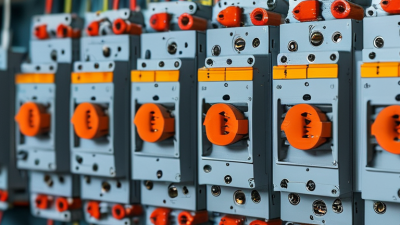
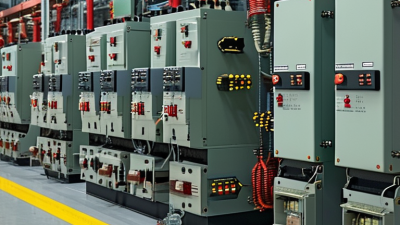
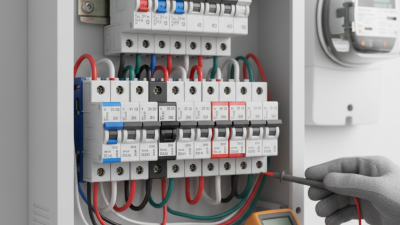
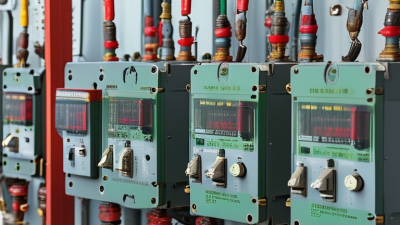
Top 10 Molded Case Circuit Breaker Manufacturers
Selecting a molded case circuit breaker is not just a matter of comparing prices. The right device must match the system voltage, rated current, fault level, and installation conditions. A breaker protecting a compact commercial panel may need different features from one serving a motor control center. Small details matter. Trip settings, terminal access, and enclosure dimensions can affect both installation and maintenance.
This guide introduces ten manufacturers known for producing molded case circuit breakers for industrial, commercial, and infrastructure applications. It considers practical factors such as product range, interrupting capacity options, thermal-magnetic or electronic trip units, technical documentation, and customer support. These details help engineers and purchasing teams narrow their choices. They do not replace careful product verification. Always check current datasheets and confirm that a selected model suits the intended application.
Manufacturer reputation can be useful, but it is only part of the decision. Availability, regional service, compatibility with existing equipment, and delivery times may also shape a project. No list is perfect. Product lines change, and a familiar brand may not offer the best fit for every panel. The companies highlighted here provide a starting point for comparison, not a universal ranking. Review specifications closely, ask suppliers direct questions, and consider the conditions technicians will face in the field. Even a well-known breaker deserves a second look.
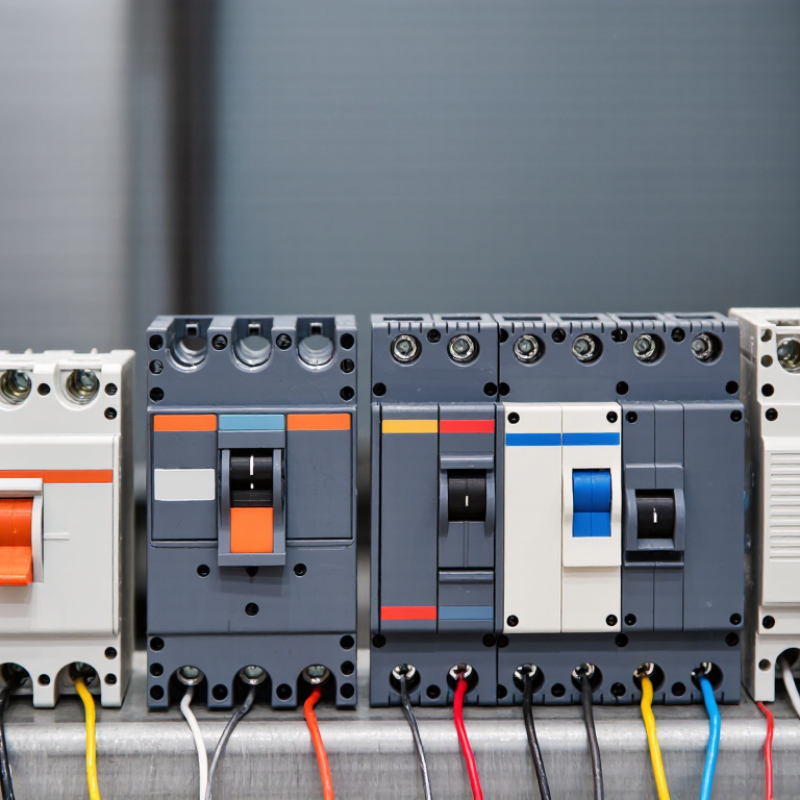
Molded Case Circuit Breakers: Definition, Design, and Applications
A molded case circuit breaker (MCCB) is a resettable device that protects low-voltage electrical circuits from overloads and short circuits. Unlike a fuse, it can usually be returned to service after a fault is cleared. Inside its molded insulating case, contacts open when a trip mechanism detects excessive current. Depending on the design, thermal, magnetic, or electronic trip elements respond to sustained overloads or sudden fault currents. The contacts separate quickly, while an arc-control chamber helps contain and extinguish the electrical arc. Small details matter.
MCCBs are used in commercial buildings, factories, and distribution panels, where they protect feeders, equipment, and some motor circuits. A motor may draw a brief surge during startup, so protection settings must account for normal operating conditions without leaving the circuit exposed to faults. Selection involves checking rated current, voltage, number of poles, and interrupting capacity against the installation. Ambient heat and coordination with upstream or downstream devices also affect performance. Still, selection is not plug-and-play. A breaker with a suitable current rating may not have enough fault-interrupting capacity for its location. Verify the equipment data and installation conditions, and have qualified electrical professionals handle selection and installation. Worth a second look.
How to Evaluate Molded Case Circuit Breaker Manufacturers
Evaluating a molded case circuit breaker manufacturer starts with the application, not a polished catalog. Define the system voltage, available fault current, load profile, and enclosure conditions before comparing products. Check that the breaker’s rated current and interrupting capacity match the installation. Ask for test reports, product drawings, and clear explanations of applicable standards. Small details matter. A trip curve that looks suitable on paper may behave differently when motors start or ambient temperatures rise.
Look beyond the device itself. Ask how production lots are inspected, how components are traced, and whether technical staff can explain coordination with upstream and downstream protection. A useful supplier should answer specific questions without relying on vague claims. Request sample documentation and, where practical, inspect a unit’s markings, terminals, and operating mechanism. Check lead times, spare-part availability, and the process for handling failures. These points can reveal more than a sales presentation. Still, a checklist is imperfect; real installations have quirks that no brochure captures. Share those conditions early and see whether the manufacturer responds with evidence, practical questions, and consistent support.
Overview of the Top 10 Molded Case Circuit Breaker Manufacturers
An overview of the top 10 molded case circuit breaker manufacturers should compare engineering capability, not just catalog size. Check rated current, breaking capacity, trip-unit options, and performance under the temperatures expected at the installation site. Also review test documentation, product traceability, technical support, and the availability of compatible accessories. These details affect whether a breaker fits a compact distribution panel or a demanding industrial feeder.
Demand is part of the picture. The International Energy Agency’s Electricity 2024 report recorded 2.2% global electricity-demand growth in 2023 and projected average annual growth of 3.4% for 2024–2026. That wider load growth makes dependable protection more important, but it does not make every product suitable for every application. IEC 60947-2 provides a useful reference for low-voltage circuit-breaker requirements. Still, a standards mark alone cannot replace checking the system’s fault level and coordination study. A catalog comparison can miss that.
Tips: Match the breaker’s interrupting rating to the available fault current at its actual installation point. Confirm settings and accessories with the project’s electrical documents. Small details matter. A little uncertainty remains until the design and site conditions are reviewed together.
Products and Strengths of Each Manufacturer
Molded case circuit breaker manufacturers differ less by appearance than by engineering priorities.
One may offer compact thermal-magnetic breakers for small panels, while another focuses on electronic trip units for larger feeders. Electronic models can provide adjustable protection settings and event data. That helps maintenance teams investigate trips. Not every site needs those features.
Some manufacturers emphasize high interrupting capacity for demanding distribution systems. Others develop current-limiting designs that reduce fault energy, or products suited to motor circuits and frequent switching. Their strengths often show in the details: clear terminal markings, sturdy handles, and trip settings that are easy to verify. Small details matter.
Ratings vary by model, so compare voltage, current, breaking capacity, and enclosure conditions against the equipment design.
A broad product range can simplify procurement across several panel sizes, while specialized manufacturers may offer more focused support or customization. Some provide accessories such as auxiliary contacts, shunt trips, and interlocks; compatibility should be checked rather than assumed. Technical documentation is another useful measure of quality. Look for complete curves, installation limits, and test information.
A polished catalogue is not enough.
I would also question any selection based on price alone, since service access and replacement availability can become costly after installation.
Comparing Manufacturers by Technology, Standards, and Market Reach
Top 10 Molded Case Circuit Breaker Manufacturers
Comparing ten manufacturers means looking beyond sales rankings. Compare protection technology, certification evidence, product range, and regional support. The IEA’s Electricity 2024 report projects global electricity demand growth averaging 3.4% annually from 2024 to 2026. This is not a breaker-market forecast, but it signals continued pressure on electrical infrastructure. Numbers need context.
For each manufacturer, check compliance with IEC 60947-2 or UL 489, according to the intended market and application. Then review rated current, interrupting capacity, trip-unit options, and performance under heat. A molded case breaker mounted in a warm, crowded panel may need derating. Ask for test documentation, installation guidance, and replacement-part availability. Market reach matters most when local engineers can obtain support and compatible accessories. A broad catalog alone proves little.
Tips: Request comparable test data, not just product brochures. Confirm the exact voltage, fault level, and enclosure conditions. Some rankings overlook service quality; that is a weakness worth admitting. A top-ten list can guide research, but it cannot replace application-specific engineering review.
Top 10 Molded Case Circuit Breaker Manufacturers: Standards Benchmark
IEC 60947-2 covers circuit-breakers for circuits with rated voltages up to 1,000 V AC or 1,500 V DC. These are standard scope limits, not a comparison of individual manufacturers or product ratings.