10 Essential Tips for Choosing the Right Circuit Breaker Switch
When it comes to selecting the right circuit breaker switch, expert advice is invaluable. John Anderson, a well-respected electrical engineer, once said, “Choosing a circuit breaker is as critical as the circuit itself.” This highlights the importance of making informed decisions in this matter.
Understanding the specifications of a circuit breaker switch is essential. Many people overlook its amperage rating, voltage relationship, and trip characteristics. These elements are vital to prevent electrical fires and equipment damage. A small mistake in choosing can lead to significant consequences. It’s not just about picking any breaker; it's about the right fit for your specific needs.
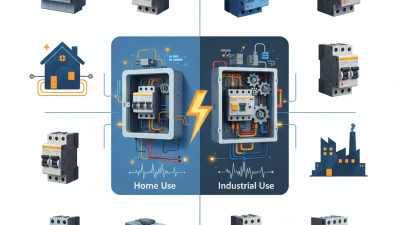
Common pitfalls include assuming one size fits all. The circuit breaker switch you use for a home may differ greatly from what’s needed in industrial settings. Testing various options and understanding your electrical system can save time and money. When in doubt, seek professional guidance. Remember, knowledge is key in ensuring safety and reliability.

Understanding Circuit Breaker Types: A Comprehensive Overview
When selecting a circuit breaker, understanding the different types is crucial. There are primarily two categories of circuit breakers: thermal and magnetic. Thermal breakers operate based on heat generated from electrical currents. They respond to overloads slowly, allowing for temporary surges. In contrast, magnetic breakers react quickly to short circuits. This quick response can prevent extensive damage.
Data from industry reports shows that about 30% of electrical fires result from overloaded circuits. Choosing the right type of circuit breaker can significantly reduce this risk. For homes, a combination of both types may be beneficial. Thermal breakers can handle increased loads, while magnetic breakers provide rapid safety from sudden spikes.
It's essential to reflect on your specific electrical needs. Not all environments are the same. Certain situations may require a breaker that handles more voltage. A residential setting might not need the same specifications as an industrial site. Evaluating your precise requirements could save you from future electrical issues. Always consider future expansions of your electrical system as well. What works today might not suffice tomorrow.
Key Ratings and Specifications for Circuit Breakers Explained
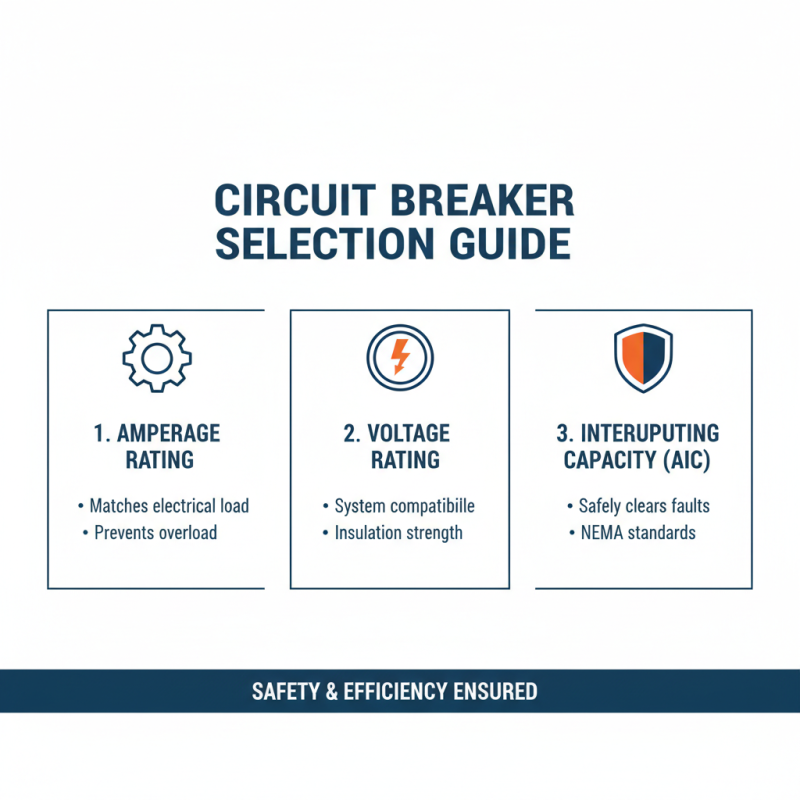
Choosing the right circuit breaker switch involves understanding key ratings and specifications. These specifications dictate the breaker’s performance. A report by the National Electrical Manufacturers Association highlights that a breaker must adequately handle the electrical load within a system. This ensures safety and efficiency.
One critical rating is the amperage. It indicates the maximum current a breaker can handle before tripping. For example, a 20-amp breaker is suitable for standard residential circuits. However, insufficient amperage can lead to nuisance tripping or even electrical fires. Consider your current needs before deciding on a breaker size.
Voltage ratings matter too. They show the maximum voltage the breaker can interrupt without damage. A mismatch can be catastrophic. Look for circuit breakers rated for the voltage of your system—typically 120V or 240V for most homes.
Tip: Always review the application specifications. Assess if you need weather-resistant breakers for outdoor use. Also, check if your installation requires a dual function, like ground fault protection, to enhance safety. Ensuring these factors align is vital. Forgetting even one can lead to costly mistakes.
The Importance of Ampacity in Circuit Breaker Selection
When selecting a circuit breaker switch, understanding ampacity is crucial. Ampacity refers to the maximum current a conductor can safely handle. Choosing the right ampacity ensures that your electrical system operates efficiently without overload. An insufficient ampacity can lead to overheating and, ultimately, circuit failure. Prioritize a breaker with an appropriate rating to safeguard your devices.
One tip is to consider the total load of the circuit. Calculate the combined wattage of all devices. This step helps in determining the needed ampacity. Another suggestion is to factor in future upgrades. If you plan to add more devices, opt for a breaker that can accommodate potential growth. This is often overlooked but can save you from frequent replacements.
Remember to check the environment where you will install the breaker. Factors like temperature and humidity affect performance. A breaker in a cooler, dry area may function better. However, if you're in a humid location, choose one designed to combat moisture. Reflect on these aspects to avoid pitfalls in your selection process. Planning ahead is key.
Evaluating Breaker Response Time and Trip Characteristics
When selecting a circuit breaker switch, evaluating response time and trip characteristics is crucial. Response time refers to how quickly the breaker reacts to electrical faults. A fast response can prevent damage to equipment and reduce fire risks. Trip characteristics describe the breaker’s behavior during overloads and short circuits. Understanding these can help in choosing the right breaker for your needs.
Consider the specific needs of your applications when evaluating response time. Some devices may require a slower trip to avoid nuisance tripping. For instance, motors often have a brief surge at startup. Breakers with a time-delay feature could be beneficial in these scenarios. It’s vital to balance safety with functionality.
Don’t overlook the importance of trip characteristics. Look into how a breaker behaves under fault conditions. Some breakers trip instantly, while others take longer. Evaluate the consequences of both approaches based on your setup. A mistake here can lead to equipment damage or safety hazards. Continuously review your choices to ensure you meet evolving requirements.
Load Calculation Techniques for Accurate Breaker Sizing
When selecting a circuit breaker switch, accurate load calculation is key. Knowing your energy needs helps ensure safety and efficiency. Start by identifying all devices that will connect to your circuit. Assess their total wattage. This step is often overlooked but vital for proper sizing.
Consider the peak load. A common mistake is to underestimate the maximum power usage. Many homes have fluctuating demands. Therefore, calculating for the highest usage period is essential. This method helps avoid potential trips and breakage. Record the load for different times of the day to grasp your actual needs.
Remember to leave a safety margin. A breaker rated too close to your calculated load may fail. An often ignored detail is factoring in future growth. As your needs evolve, so should your circuit's capabilities. Choose a breaker that can accommodate this growth. Balancing current demands with future considerations can be tricky but greatly beneficial.
10 Essential Tips for Choosing the Right Circuit Breaker Switch - Load Calculation Techniques for Accurate Breaker Sizing
| Tip Number |
Tip Description |
Load Calculation Method |
Recommended Breaker Size (Amps) |
| 1 |
Determine the total load of your circuits. |
Sum the wattage of all devices. |
20 |
| 2 |
Consider circuit length and voltage drop. |
Voltage drop calculation. |
30 |
| 3 |
Identify the type of load (resistive, inductive). |
Load type analysis. |
15 |
| 4 |
Check compatibility with existing electrical system. |
System compatibility assessment. |
40 |
| 5 |
Consider the circuit breaker’s interrupt rating. |
Review manufacturer specifications. |
50 |
| 6 |
Choose between single-pole and double-pole breakers. |
Analysis of the circuit requirements. |
20-30 |
| 7 |
Plan for future expansion of electrical load. |
Future load estimation. |
60 |
| 8 |
Assess the environmental conditions of the installation. |
Environmental analysis. |
40 |
| 9 |
Select a breaker with adequate safety features. |
Safety feature evaluation. |
30 |
| 10 |
Consult with a qualified electrician for final selection. |
Professional assessment. |
Variable |