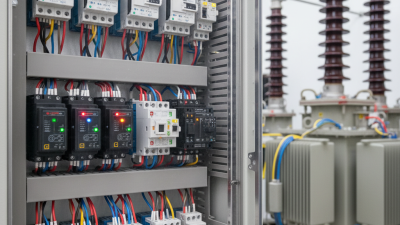
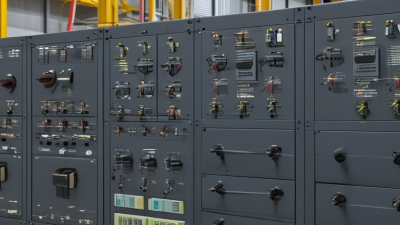
Choosing the right DC relay in 2026 requires more than comparing prices, contact ratings, and catalog photographs. Global buyers must examine coil voltage, switching current, polarity, electrical endurance, insulation distance, and operating temperature. A relay installed beside a hot motor may face very different conditions from one inside a clean control cabinet. Small details matter.
Electromechanical relays remain practical for general switching and visible contact isolation. Solid-state relays offer silent operation, fast response, and long switching life. Hybrid and latching designs can reduce heat or standby power. Yet every type has weaknesses. Mechanical contacts may arc under inductive loads. Solid-state devices can leak current and generate heat. Latching relays may need careful reset control. No selection guide is perfect.
As reliability engineering authority Dr. Michael G. Pecht states, “Reliability is the probability that a system will perform its intended function for a specified period of time under stated conditions.” This principle shapes our review of the 2026 Best DC Relay Types for Global Buyers. We consider real installation conditions, not only laboratory specifications. We also examine certification expectations, supply stability, documentation quality, and regional support. A low-cost relay can become expensive after premature contact welding or repeated field replacements. Sometimes, the best choice is not the most advanced option. It is the one engineers can verify, source, and replace confidently. Still, buyers should question every recommendation, including ours. Specification sheets can hide practical limitations. Careful testing remains essential.
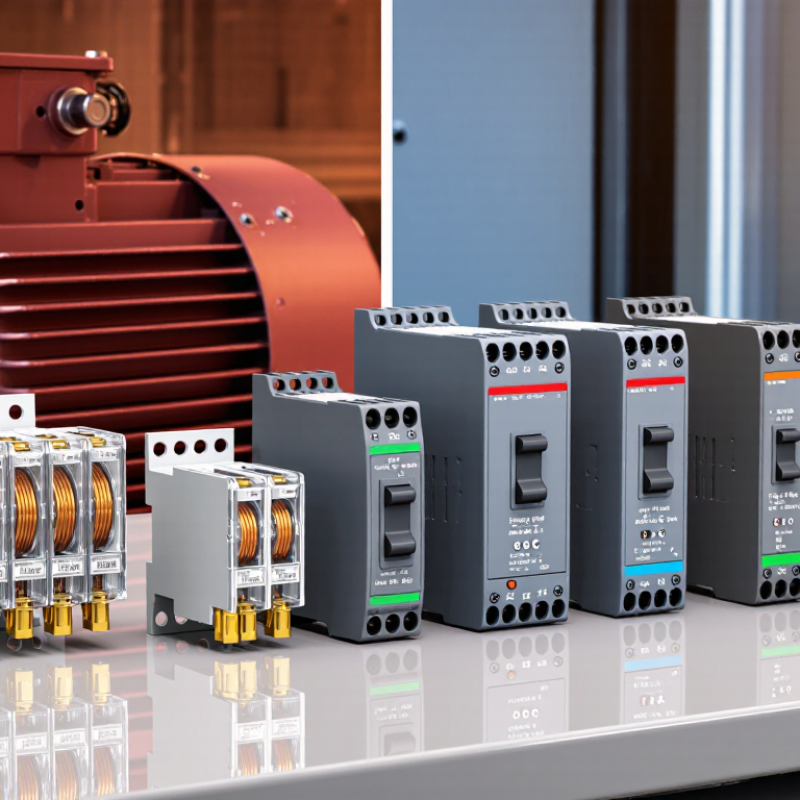
DC relays control circuits by opening or closing electrical paths. Electromechanical relays use coils and physical contacts. Solid-state relays switch without moving parts. MOSFET-based designs suit fast, low-voltage control, while high-voltage DC contactors handle batteries and charging systems. The choice depends on voltage, current, switching frequency, isolation, and fault behavior.
Demand is becoming more DC-centered. The International Energy Agency’s Global EV Outlook 2024 reported nearly 14 million electric car sales in 2023. That growth increases the need for reliable battery disconnects, pre-charge circuits, and auxiliary controls. The IEA Electricity 2024 report also estimated data-center electricity use could exceed 1,000 TWh by 2026. Compact DC switching devices will matter in these power-dense environments.
Mechanical relays remain practical for moderate loads and visible contact separation. They can produce audible clicks and contact wear. Solid-state types respond faster and resist vibration, but heat dissipation is often underestimated. High-voltage applications need carefully rated insulation and fault interruption. IEC 61810 and IEC 60947-4-1 provide useful testing and performance frameworks for global buyers.
Check derating curves, coil suppression, creepage distances, and endurance data. Do not trust current ratings alone. Installation temperature changes everything. A relay that works in a cool laboratory may fail inside a sealed cabinet. This is where many purchasing decisions become overly optimistic. Experienced engineers verify prototypes under real loads, including inrush current, humidity, and repeated cycling.
As electric vehicles and battery storage expand, DC switching needs are becoming more demanding. The IEA Global EV Outlook 2025 reported over 17 million electric cars sold worldwide in 2024. That growth increases demand for relays that manage high voltage, inrush current, and emergency isolation.
Electromagnetic DC relays use a coil to move physical contacts. They provide clear galvanic isolation and tolerate short overloads, but contact bounce, arcing, and wear require careful testing. At higher DC voltages, magnetic arc blowout and contact spacing become critical. Solid-state relays use semiconductors, such as MOSFETs or IGBTs, instead of moving contacts. They switch quietly and quickly, with almost unlimited electrical cycles. However, leakage current and heat loss remain practical concerns. A compact housing can still need a substantial heat path.
Latching relays maintain their position without continuous coil power. They suit battery systems where standby consumption matters. Their reset behavior deserves close review during faults. Polarized relays respond to current direction and can support polarity-sensitive circuits, but wiring errors may prevent operation. Hybrid relays combine semiconductor pre-switching with mechanical isolation, reducing arcing while retaining a visible open circuit.
The U.S. Department of Energy’s Vehicle Technologies Office identifies high-voltage safety, efficiency, and thermal management as major electrification priorities. No relay wins everywhere. Engineers should compare voltage, current, switching frequency, ambient temperature, fault energy, and service access before choosing a type. Testing only at room temperature is a weak assumption.
Global electrification is raising relay demand in vehicles, battery storage, solar systems, and industrial controls. The IEA’s Global EV Outlook 2025 reported more than 17 million electric cars sold in 2024, exceeding 20% of new-car sales. IRENA’s Renewable Capacity Statistics 2025 recorded 585 GW of renewable capacity additions during 2024. These figures make DC switching performance more important for international buyers.
Choose a relay by separating coil voltage from contact voltage. A 24 VDC coil does not mean the contacts can safely switch 24 VDC. Check continuous current, inrush current, breaking current, and load type. Resistive loads are easier. Motors, capacitors, and solenoids create harsher arcs. DC arcs persist because current does not naturally cross zero. Contact spacing, magnetic blowout, and specified DC ratings therefore matter. IEC 61810 test classifications can help compare relay endurance, but field conditions still change results.
Tips: Confirm the highest operating voltage, not the nominal value. Review cold-start current and cable losses. Ask for ratings at your exact load category. A relay rated for 30 A resistive service may perform poorly with a 12 A motor. Derating is wise, though often ignored. Also check altitude, ambient temperature, switching frequency, and contact material. The perfect datasheet match can still fail in a dusty cabinet. That uncomfortable possibility deserves testing.
2026 Best DC Relay Types for Global Buyers
Selecting a DC relay requires more than checking voltage and contact capacity. Safety compliance can change by destination, installation environment, and end use. Electromechanical relays commonly require review against IEC 61810, while insulation coordination may involve IEC 60664. Applications involving machinery, vehicles, or control panels can require additional standards. The exact list depends on the product’s function.
For European markets, check applicable CE requirements, technical documentation, EMC performance, and restricted-substance rules. CE is a conformity marking, not a universal safety certificate. North American buyers may request evidence aligned with recognized national standards and local inspection rules. Other regions can require separate marks, language, testing, or registration. A relay with a familiar approval symbol may still fail a project audit. That is easy to overlook.
Tips: Request current test reports, not only approval logos. Confirm coil polarity, surge suppression, creepage distance, and contact ratings at the actual DC load. Ask whether ratings cover inductive loads, low temperatures, vibration, and continuous operation. Keep traceable records.
Regional compliance is rarely solved by one document. A careful buyer should compare the relay, socket, enclosure, and complete assembly. Documentation gaps often appear late. That delay can be expensive. I may be overly cautious, but treating certification as a paperwork detail remains a weak procurement habit. Verify the latest local requirements with a qualified laboratory or compliance specialist before shipment.
2026 Best DC Relay Types for Global Buyers
Selecting the best DC relay starts with the circuit, not the catalogue. Define coil voltage, continuous current, switching frequency, contact material, and load type. A motor, battery charger, and photovoltaic controller create different arc and inrush conditions. IEC 61810 provides useful performance classifications for electromechanical relays. Use its testing language when comparing suppliers across markets.
Market conditions also matter. The IEA Global EV Outlook 2024 reported nearly 14 million electric car sales in 2023. IRENA recorded 473 GW of renewable capacity added during the same year. These figures point to growing demand for reliable DC switching in transport and energy equipment. For high-current battery systems, evaluate contact resistance, thermal rise, isolation distance, and fault interruption capability. For compact control panels, a sealed PCB relay may be enough. Yet, my experience suggests that “enough” often changes after field testing.
Tips: Match the relay’s DC breaking rating with the real load, not its nominal voltage. Test cold starts, repeated switching, vibration, and cable losses. Confirm regional approvals, creepage requirements, packaging, and replacement availability. A relay passing a laboratory test may still struggle beside a hot inverter. Do not ignore installation errors. They remain common. Consider lifecycle cost, because a cheaper relay can demand more maintenance and downtime. Calibration records and supplier traceability also strengthen purchasing decisions.