Why Choose a Molded Case Circuit Breaker for Your Project?
Selecting the right protective device can determine how safely and reliably a project operates. A molded case circuit breaker offers a practical balance between fault protection, compact design, and service flexibility. Its insulated housing protects internal components while supporting consistent performance in commercial, industrial, and infrastructure applications. When a short circuit occurs, the breaker can interrupt dangerous current before cables, panels, or connected equipment suffer severe damage.
Real project decisions require more than choosing the highest available ampere rating. Engineers usually review load current, voltage, interrupting capacity, ambient temperature, enclosure conditions, and future expansion. Thermal-magnetic models can respond to overloads and short circuits, while electronic trip units may provide more precise adjustment and monitoring. In a busy plant, these differences matter. A correctly selected molded case circuit breaker can reduce unnecessary shutdowns and make fault investigation more manageable.
However, no breaker suits every installation. That assumption can fail. An oversized device may protect equipment poorly, while an unsuitable trip setting can cause nuisance interruptions. Installation quality matters just as much as product specifications. Experienced teams verify coordination studies, terminal torque, conductor sizing, and inspection records before energizing a panel. They also check current standards and manufacturer instructions, because ratings and test requirements vary by region and application. This article examines why projects choose molded case circuit breakers, where they provide genuine value, and which limitations deserve careful review. It also considers the practical questions that specifications sometimes overlook: maintenance access, replacement time, operating environment, and the cost of an unexpected outage.
What Is an MCCB? IEC 60947-2 Ratings, Poles, and 10–1,600 A Frames
Why Choose a Molded Case Circuit Breaker for Your Project?
What Is an MCCB? IEC 60947-2 Ratings, Poles, and 10–1,600 A Frames
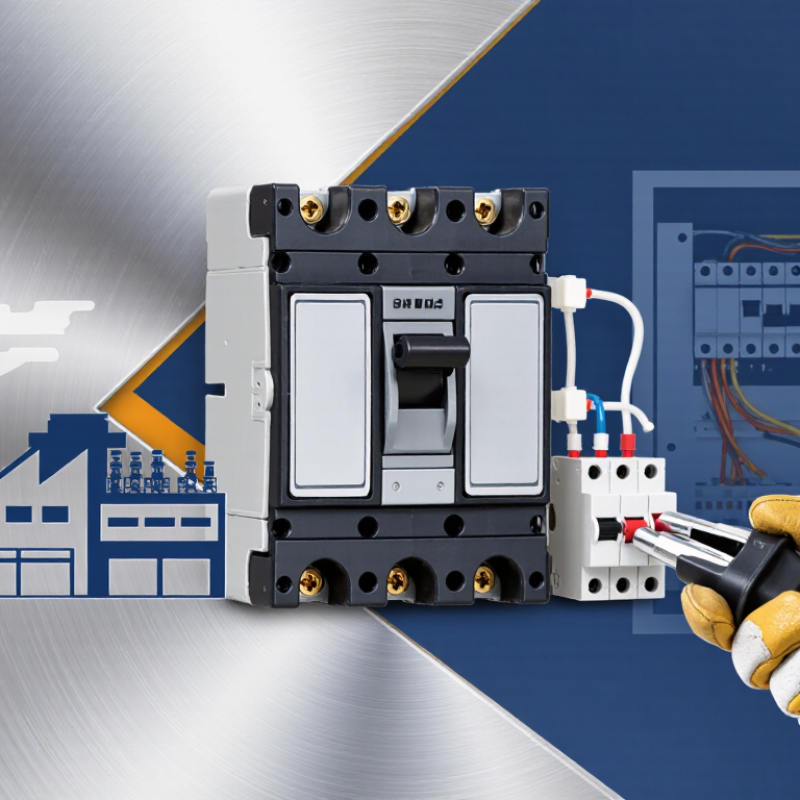
A molded case circuit breaker, or MCCB, combines thermal and magnetic protection inside an insulated enclosure. IEC 60947-2 covers its operating performance, testing, and verification requirements. It is not simply a larger miniature circuit breaker. MCCBs suit feeders, motors, commercial panels, and industrial distribution where fault currents can be substantial.
Frame size indicates the maximum current platform, while the trip unit sets the usable rating. Common designs range from 10 A to 1,600 A, although exact values depend on the manufacturer and configuration. Available pole arrangements usually include two, three, and four poles. A four-pole unit can switch the neutral when system design requires it. Do not select poles by habit.
The IEA Electricity 2024 report forecasts global electricity demand will grow by about 3.4% annually from 2024 through 2026. That growth increases pressure on distribution equipment and maintenance teams. In site work, engineers should check voltage, interrupting capacity, short-circuit current, ambient temperature, cable coordination, and available accessories. A higher ampere frame does not automatically provide better protection. It may even weaken coordination if the trip setting is poorly chosen.
Field measurements matter. A neat specification sheet can still hide installation problems. Review the latest test certificates and manufacturer data before approval. My practical concern is simple: project schedules encourage quick selection, but protection settings deserve slower thinking.
How MCCB Thermal-Magnetic Trips Protect Against Overloads and Short Circuits
When a project needs dependable low-voltage protection, a molded case circuit breaker deserves close attention. Its thermal-magnetic trip combines two different responses inside one compact device. That difference matters in real installations. During a site inspection, an overloaded feeder may feel warm before anything trips. The thermal element detects this rising heat through a bimetal strip. It opens the circuit after a controlled delay. Heat builds slowly.
This delay helps motors and transformers handle normal starting current without unnecessary interruption. The magnetic element reacts differently. A severe short circuit creates a powerful magnetic field almost instantly. The trip mechanism then opens the contacts within a very short time.
Inside the breaker, arc-control components help extinguish the electrical arc safely. Correct interrupting capacity remains essential. A breaker that cannot withstand the available fault current is unsuitable, regardless of its appearance.
Selecting an MCCB requires more than matching the voltage and ampere rating. Engineers should check cable capacity, prospective fault current, ambient temperature, and trip adjustability. A field check may reveal loose terminals, poor ventilation, or incorrect settings. These small details can change protection performance. One common mistake is treating every nuisance trip as a defective breaker. Sometimes the real cause is motor inrush, undersized wiring, or poor coordination. Thermal-magnetic protection is reliable, but it is not perfectly intelligent. Regular testing and documented settings make its limitations easier to manage.
How to Match Voltage, Current, and Icu Breaking Capacity Up to 100 kA
Choosing a molded case circuit breaker starts with the system voltage, not the catalog’s largest current rating. Match the breaker’s rated operational voltage to the circuit’s actual supply. A 400 V system needs a breaker suitable for that voltage and installation method. Check insulation and impulse ratings when the environment includes long cable runs, switching surges, or exposed equipment.
Current selection also needs context. A 250 A breaker may carry a steady load, but heat inside a crowded panel can reduce its usable capacity. Confirm the design current, conductor size, ambient temperature, and enclosure ventilation. Leave practical margin, but avoid excessive oversizing. It can weaken overload protection.
Icu is the key short-circuit check. It indicates the maximum prospective fault current the breaker can interrupt at a stated voltage. Measure or calculate the fault level at the installation point, then select an Icu equal to or above that value. For example, a calculated 42 kA fault at 400 V requires capacity above 42 kA, not merely a 42 kA label without voltage confirmation. Ratings up to 100 kA may suit high-fault industrial panels, but the highest figure is not automatically the safest choice. Also review Ics, coordination, and upstream protection. Mistakes often happen when engineers compare current ratings but overlook voltage-specific breaking capacity.
Why Choose a Molded Case Circuit Breaker for Your Project?
Matching voltage, rated current, and ultimate short-circuit breaking capacity (Icu) is essential when selecting an MCCB. The chart shows representative industrial design checkpoints across common low-voltage systems.
Select an MCCB with a rated operational voltage (Ue) at or above the system voltage, a rated current (In) above the calculated continuous load current, and an Icu rating equal to or higher than the prospective short-circuit current at the installation point. Actual selection must be verified against the applicable installation standard and the electrical system study.
Why Adjustable Trip Settings Improve Selectivity and System Coordination
Why Choose a Molded Case Circuit Breaker for Your Project?
A molded case circuit breaker offers more than basic overload protection. Its adjustable trip settings help engineers coordinate protection across a distribution system. The downstream breaker should trip first, while the upstream breaker remains closed. This reduces unnecessary shutdowns and keeps essential loads operating.
The adjustment process needs real system data. Engineers should compare available fault current, cable ratings, motor starting current, and time-current curves. IEC 60947-2 provides a recognized framework for circuit-breaker performance. IEEE 242 also supports coordinated protection studies. A practical field error is setting every breaker too low. That may improve sensitivity, but it can cause nuisance trips during normal motor starts.
NFPA reported an estimated 26,100 U.S. home fires involving electrical distribution and lighting equipment from 2015 to 2019. These fires caused about 280 civilian deaths, 1,120 injuries, and 1.1 billion dollars in property damage. The data is residential, not industrial, but it shows why protection settings deserve careful review. Selectivity is not guaranteed by installing a larger frame size. It depends on tested curves, accurate calculations, and realistic operating conditions. Even then, coordination can fail near the instantaneous-trip region. That limitation is easy to overlook. A molded case circuit breaker with adjustable settings gives the project more control, but only when technicians verify settings after commissioning and revisit them after major load changes.
When MCCBs Outperform MCBs in Industrial, Commercial, and Motor Applications
Why Choose a Molded Case Circuit Breaker for Your Project?
When MCCBs Outperform MCBs in Industrial, Commercial, and Motor Applications
An MCCB becomes valuable when circuits carry higher loads or face stronger fault currents. Many MCBs suit small branch circuits, lighting, and office equipment. MCCBs often provide higher interrupting capacity, adjustable trip settings, and larger cable compatibility. That flexibility matters near transformers, large distribution panels, and production machinery. The International Energy Agency’s Energy Efficiency 2023 analysis reports that electric motor systems consume more than half of global electricity. Motor protection deserves careful attention.
Motors can draw five to eight times their full-load current during starting, depending on design and load. An incorrectly selected MCB may trip during normal acceleration. An MCCB can coordinate better with motor starters, overload relays, and upstream protection. U.S. Department of Energy guidance identifies motor-driven systems as major industrial energy users, making reliable switching and fault protection operational priorities.
Field inspections often reveal another issue: engineers choose a larger breaker but ignore cable capacity and coordination. That is not protection. It is only more hardware.
MCCB settings should match measured load current, starting behavior, available short-circuit current, and conductor ratings. IEC 60947-2 provides the relevant low-voltage circuit-breaker framework. Yet standards do not replace site measurements.
For a compact commercial panel, an MCB may remain the cleaner choice. In a dusty factory, a chilled-water plant, or a motor control cabinet, an MCCB usually offers more practical adjustment and service resilience.