
Who Are China’s Top Titanium Parts Manufacturers?
China has become a major production base for precision Titanium Parts, serving aerospace, medical, marine, chemical, and energy industries. Its strongest manufacturers combine advanced equipment with disciplined process control. That combination matters more than a polished website.
As titanium author and materials specialist Matthew J. Donachie wrote, “Titanium rewards careful processing and punishes careless handling.” This principle explains why supplier selection requires more than comparing prices. A reliable factory should show its machining capabilities, alloy knowledge, heat-treatment controls, and inspection records.
Look closely at the details. Can the supplier maintain tight tolerances on thin-walled aerospace brackets? Does it use vacuum or controlled-atmosphere furnaces for heat treatment? Are ultrasonic testing, coordinate measuring machines, and complete lot traceability available? These questions reveal operational maturity.
China’s leading Titanium Parts manufacturers often support CNC machining, forging, casting, additive manufacturing, and surface finishing under one supply network. Some specialize in medical-grade Ti-6Al-4V components. Others focus on large forged discs, turbine parts, or corrosion-resistant fittings. Their strengths are not identical.
This guide examines the companies behind those capabilities. It considers certifications, production experience, export reliability, engineering support, and quality consistency. It also looks beyond claims. A certificate can expire. A sample can impress. Repeated production is harder.
No ranking is perfectly objective. Buyer requirements change the answer. Still, careful comparison can separate capable partners from ordinary vendors. The best choice may not be the cheapest factory. It may be the supplier that delivers the same dimensional accuracy, surface finish, and documentation on the tenth shipment.
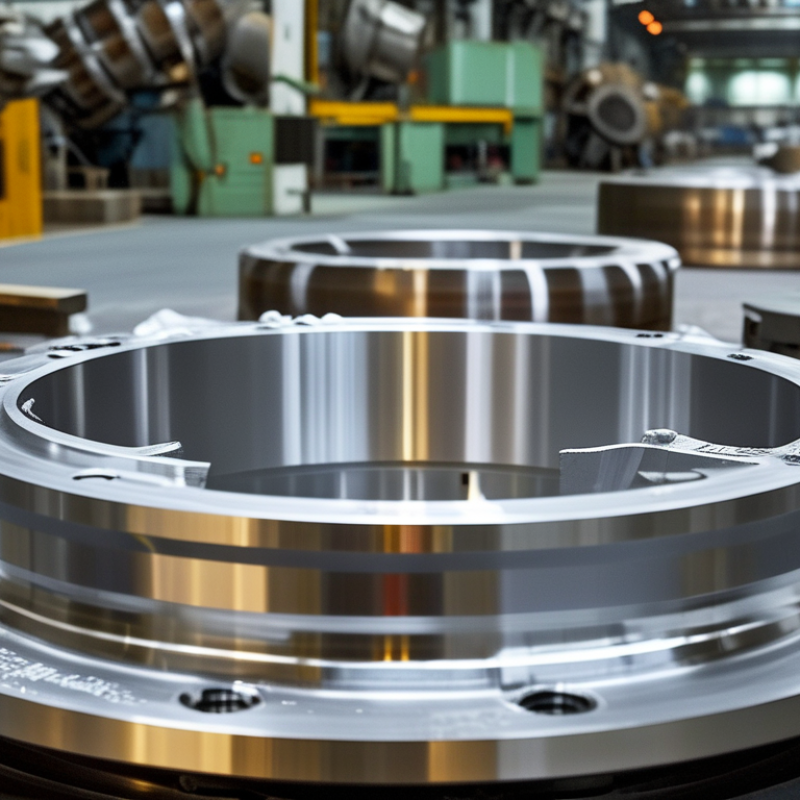
What Are Titanium Parts and Why Are They Important?
Titanium parts are engineered components made from titanium alloys through machining, forging, casting, or additive manufacturing. They combine low density with high strength, making them useful in aircraft structures, medical implants, marine equipment, and demanding industrial machines. Titanium also resists corrosion in salty or humid environments. That matters when replacement is expensive or access is difficult.
Their importance depends on more than the material itself. A reliable manufacturer must understand alloy selection, heat treatment, cutting temperatures, and surface finishing. Titanium can react poorly to careless machining. Heat may build quickly at the tool edge, while friction can cause galling. Experienced producers control cutting parameters and inspect critical dimensions with calibrated equipment. They should also provide batch traceability, test records, and clear tolerance data. Small details matter.
Top titanium parts manufacturers are usually judged by repeatable quality, technical depth, and practical production experience. They may support prototypes, low-volume custom parts, or tightly controlled mass production. Yet no supplier is perfect. A polished sample does not prove stable long-term performance. Buyers should review fatigue data, inspection methods, delivery history, and communication during design changes. Cost deserves attention too. Cheap titanium parts may hide weaker controls, while expensive parts may include unnecessary processing. The right choice requires evidence, not impressive claims.
Who Are China’s Top Titanium Parts Manufacturers? - What Are Titanium Parts and Why Are They Important?
| Data Dimension | Typical Titanium Parts Information | Relevant Technical Data | Importance for Manufacturer Evaluation |
|---|---|---|---|
| Definition | Titanium parts are components made from commercially pure titanium or titanium alloys. | Common materials include commercially pure titanium and alpha-beta alloys such as Ti-6Al-4V. | Material selection affects strength, corrosion resistance, machinability, weight, and service life. |
| Material Density | Titanium is substantially lighter than steel while retaining high mechanical strength. | Titanium density is approximately 4.5 g/cm³, compared with approximately 7.8 g/cm³ for carbon steel. | Lower density supports weight reduction in aerospace, mobility, medical, and high-performance equipment. |
| Strength-to-Weight Ratio | Titanium alloys provide a high strength-to-weight ratio. | Ti-6Al-4V has a typical density near 4.43 g/cm³ and commonly specified minimum tensile strength around 895 MPa, depending on product form and specification. | Manufacturers should demonstrate control of alloy chemistry, heat treatment, mechanical properties, and traceability. |
| Corrosion Resistance | Titanium naturally forms a stable, protective oxide film when exposed to oxygen. | It offers strong resistance in seawater, humid environments, and many chloride-containing conditions, subject to temperature and chemical concentration. | Corrosion-resistant parts can reduce maintenance frequency and improve reliability in demanding environments. |
| Common Manufacturing Processes | Typical processes include CNC machining, forging, investment casting, additive manufacturing, sheet forming, and welding. | CNC machining is widely used for complex, close-tolerance parts; forging is used where improved structural integrity is required. | A capable supplier should match the process to geometry, volume, tolerances, material grade, and performance requirements. |
| Machining Considerations | Titanium has low thermal conductivity and can retain heat near the cutting zone. | Manufacturing commonly requires controlled cutting speeds, rigid fixturing, sharp tools, suitable coolant, and stable chip evacuation. | Process control helps limit tool wear, surface damage, dimensional variation, and production delays. |
| Dimensional Control | Precision titanium parts may contain tight dimensional and geometric requirements. | Inspection may include coordinate measuring machines, optical measurement, gauges, surface-finish testing, and documented calibration. | Reliable measurement systems are essential for repeatability, interchangeability, and customer acceptance. |
| Surface Finish | Surface condition can influence fatigue performance, friction, sealing, and corrosion behavior. | Finishing options may include deburring, polishing, passivation-related cleaning, blasting, anodizing, or other approved treatments. | Manufacturers should define surface-finish limits and verify them using appropriate inspection methods. |
| Non-Destructive Testing | Critical titanium components may require inspection without damaging the part. | Common methods include dye penetrant testing, radiographic testing, ultrasonic testing, and visual inspection, depending on the part and specification. | NDT capability helps identify cracks, inclusions, porosity, lack of fusion, and other discontinuities. |
| Quality Standards | Manufacturers may operate under internationally recognized quality-management and sector-specific systems. | Relevant frameworks can include ISO 9001, AS9100 for aerospace, ISO 13485 for medical devices, and ISO/IEC 17025 for testing laboratories. | Certification does not replace product verification, but it indicates that documented quality processes are in place. |
| Material Certification | Material documentation normally identifies the alloy, condition, heat number, and test results. | Mill test certificates may report chemical composition, tensile properties, yield strength, elongation, and heat-treatment condition. | Material traceability reduces substitution risk and supports regulatory, engineering, and audit requirements. |
| Typical Applications | Titanium parts are used in aerospace structures, aircraft engines, chemical equipment, marine systems, medical devices, and sporting equipment. | Applications typically require a combination of low weight, corrosion resistance, biocompatibility, heat resistance, or high fatigue performance. | Application experience helps a manufacturer select suitable materials, processes, inspections, and documentation. |
| Medical Applications | Titanium and selected titanium alloys are used for implants, bone fixation components, dental parts, and surgical instruments. | Medical production may require biocompatible materials, controlled cleanliness, validated processes, and compliance with applicable medical-device regulations. | Medical-grade production requires stricter documentation and process validation than general industrial production. |
| Temperature Capability | Titanium alloys can perform well across a broad temperature range, but capability depends on alloy and service conditions. | Long-term elevated-temperature exposure can affect strength, oxidation behavior, and microstructure; exact limits must follow the material specification. | Suppliers should provide application-specific engineering data rather than relying on a single general temperature value. |
| Supply and Lead-Time Factors | Lead time depends on material availability, part complexity, tooling, batch size, inspection requirements, and finishing. | Forged or cast blanks, special heat treatment, extensive machining, and third-party testing can lengthen production schedules. | A detailed production plan and realistic delivery commitment are important when comparing manufacturing capabilities. |
| Best Selection Criteria | A qualified supplier should combine material expertise, suitable equipment, documented quality controls, inspection capability, and engineering support. | Key evidence includes process records, inspection reports, traceability documents, capability studies, and samples made to the required specification. | Evaluating verified technical capability is more reliable than selecting a supplier solely by price or production scale. |
Technical values are representative reference data. Final material properties, tolerances, testing methods, and service limits should always be confirmed against the applicable alloy standard, drawing, purchase specification, and operating conditions.


