What is a Water Pump Casing and How Does It Work?
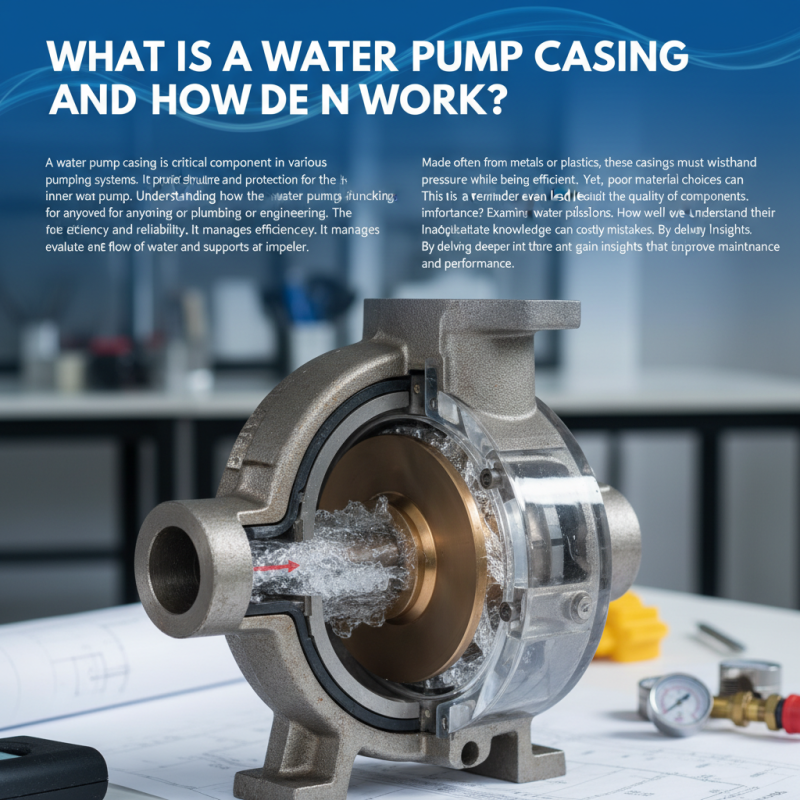
A water pump casing is a critical component in various pumping systems. It provides structure and protection for the inner workings of the pump. Understanding how the water pump casing functions is essential for anyone involved in plumbing or engineering.
The design of a water pump casing ensures efficiency and reliability. It manages the flow of water and supports the impeller. Made often from metals or plastics, these casings must withstand pressure while being efficient. Yet, poor material choices can lead to failure. This is a reminder to always evaluate the quality of components.
Examining water pump casings prompts reflection. How well do we understand their importance? Inadequate knowledge can lead to costly mistakes. By delving deeper into their design and function, we gain insights that can improve maintenance and performance.
What is a Water Pump Casing?
A water pump casing is a crucial component of any water pump system. It serves as the outer shell that houses the pump's internal mechanisms. This casing is typically made of durable materials, such as cast iron or composite plastics, which ensure longevity and resistance to corrosion. Its design allows it to efficiently contain the water and assist in directing flow, contributing to the pump's overall efficiency.
Inside the casing, the impeller spins, creating a vacuum that draws water in. As the impeller rotates, water is forced through the discharge port, allowing for effective transportation. Yet, the design of the casing must be precise. Any imperfections can lead to leaks or reduced performance. Users often overlook the importance of maintaining the casing, which can lead to significant issues over time.
Moreover, a well-designed water pump casing helps in cooling the pump and reducing noise. However, wear and tear can occur due to regular use. Dirt and debris can accumulate, affecting its efficiency. Regular inspections are often neglected, leading to potential failures. Reflecting on these aspects can be crucial for ensuring optimal performance and longevity of the water pump system.
Key Components of Water Pump Casings
Water pump casings are essential in ensuring the efficient operation of pumps. These components house the impeller and help guide water flow. The design of the casing affects the pump’s performance and longevity. Typically made from materials like cast iron or certain plastics, the choice depends on the application and environmental factors. According to the Hydraulic Institute, improper casing design can lead to a reduction in efficiency by up to 40%.
Key components of a water pump casing include the inlet, outlet, and volute. The inlet allows water to enter, while the outlet directs it to its destination. The volute helps convert kinetic energy into pressure, facilitating smooth flow. Research shows that a well-designed volute can improve energy efficiency by 15% or more. However, many designs fail to optimize these features. This oversight can lead to cavitation issues, causing potential damage and increased maintenance costs over time.
Furthermore, factors like temperature and pressure play a critical role in a casing's effectiveness. Higher temperatures can weaken materials, risking pump failure. A study published by the American Society of Mechanical Engineers highlights that 30% of water pump failures stem from inadequate casing design and material selection. Therefore, while many may overlook these elements, they are crucial for the pump's lifespan.
Water Pump Casing Material Strength Comparison
Functionality of a Water Pump Casing
A water pump casing is essential in ensuring efficient operation. It serves as the outer shell that houses the pump's internal components. Its design affects the overall performance and productivity of the pump. In fact, a study from the Hydraulic Institute reported that proper casing design can improve pump efficiency by up to 10%.
Water pump casings are designed to withstand high pressures and corrosive environments. They must match the specific requirements of the fluid being pumped. If the material isn't suited for the task, it can lead to premature failure. An estimated 30% of pump failures are attributed to casting issues, underscoring the importance of material selection and casing design.
The functionality of a water pump casing also involves minimizing hydraulic losses. Research indicates that reducing these losses leads to better flow rates. Inadequate casing can result in turbulence and energy waste. Ensuring the right shape and size is crucial for optimal performance. A mismatch can hinder productivity, often leaving operators in need of costly repairs or replacements.
Types of Water Pump Casings
Water pump casings play a crucial role in the functioning of pumps. They are the outer shell that encases the internal components. The casing helps maintain pressure and directs water flow efficiently. Various types cater to different applications. Each type has distinct advantages and limitations.
Centrifugal casings are among the most common. They harness rotational energy effectively. This design is ideal for moving large volumes of water quickly. Another type is the positive displacement casing. It uses a different mechanism to push water through. This method can be very effective for thick liquids but sometimes leads to inefficiencies.
Some casings are made from rigid plastic, while others use robust metals. The choice of material affects durability and maintenance. It's vital to choose the right casing for specific needs. However, mistakes can happen. Some may end up selecting a casing that doesn't fit the pump type. This can lead to serious operational issues. Each choice requires careful consideration of water conditions and operational demands.
What is a Water Pump Casing and How Does It Work? - Types of Water Pump Casings
| Type of Casing | Material | Applications | Advantages | Disadvantages |
| Centrifugal Pump Casing | Cast Iron, Stainless Steel, Plastic | Water Supply, Irrigation | High Efficiency, Compact Design | Limited Lifespan in Corrosive Environments |
| Submersible Pump Casing | Stainless Steel, Plastic | Wells, Sewage Systems | Space Saving, Operates Under Water | Requires Submersion for Function |
| Diaphragm Pump Casing | Polypropylene, Aluminum | Chemicals, Food Processing | Handles Viscous Fluids, Low Pulsation | Less Efficient for Large Volumes |
| Gear Pump Casing | Cast Iron, Steel | Hydraulic Fluids, Oil Transfer | Constant Flow, High Pressure | More Moving Parts, Higher Maintenance |
| Peristaltic Pump Casing | Plastic, Rubber | Medical, Wastewater Treatment | Gentle on Fluids, Self-Priming | Limited Pressure Capacity |
Maintenance and Troubleshooting for Water Pump Casings
Water pump casings play a crucial role in maintaining the efficiency of water pumps. Regular maintenance is essential to avoid unexpected breakdowns. One common issue is corrosion. Moisture can lead to rust, weakening the casing. Inspect the casing regularly for any signs of rust or damage. If corrosion is found, it’s important to address it immediately.
Another frequent problem is the buildup of debris. Sand, dirt, and other particles can clog the pump. This not only hampers performance but can also lead to overheating. Periodic cleaning can help prevent this. Always check the inlet and outlet ports for any obstructions.
Leaking can also be a sign of trouble. A leak often indicates a failed seal or crack in the casing. Identifying the source of a leak is vital. It can be time-consuming, but it’s necessary for proper function. Remember, neglecting these issues can lead to larger problems down the line. Consistent monitoring and timely repairs make a significant difference in the longevity of your water pump casing.