Vfd For Water Pump Solutions at 2026 Canton Fair Insights?
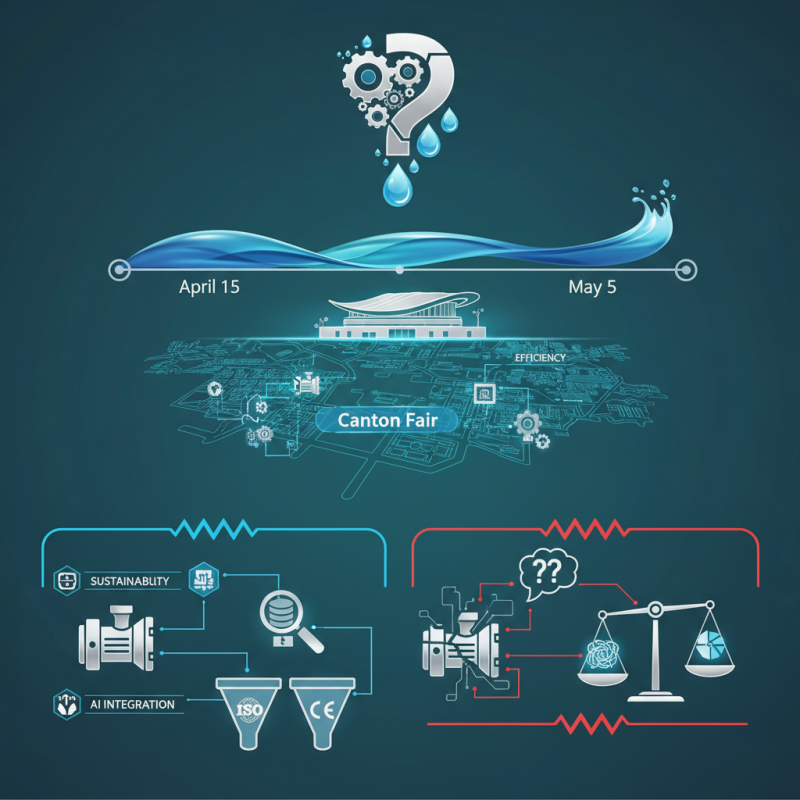
As the 2026 Canton Fair approaches, innovations in Vfd For Water Pump solutions are set to take center stage. From April 15 to May 5, the event will showcase cutting-edge technologies. Attendees will witness advancements in manufacturing and machinery, with a focus on efficiency and sustainability. The integration of AI for smart navigation will significantly benefit buyers. This allows seamless filtering of suppliers based on certifications like ISO and CE. The fair spans an impressive 1.55 million square meters, and the new AI features enhance movement through this vast space.
However, challenges remain for manufacturers in this evolving landscape. Not every water pump solution will meet the advancing demands of the market. Decisions must be made carefully, as choosing the right Vfd for Water Pump applications impacts performance and sustainability. Buyers may experience information overload, complicating their purchasing process. While the fair provides numerous opportunities, it is essential to reflect on product quality amid the rush for innovation. Overall, the 2026 Canton Fair promises to be a pivotal event for water pump technology and its applications.
VFD Technology Overview for Water Pump Applications
Variable Frequency Drives (VFDs) are revolutionizing water pump applications. They provide precise control over pump speed and energy consumption. In 2026, the Canton Fair will showcase advanced VFD technologies. These innovations will benefit various industries, from agriculture to municipal water supply.
One key aspect of VFDs is their ability to adjust speed based on demand. This feature minimizes energy costs and extends equipment life. However, understanding the setup and calibration is crucial. Improper configuration can lead to inefficiencies. It's essential to train operators on best practices.
Tips: Regular maintenance is vital for VFDs. Check connections and settings frequently. Consider using backup systems to prevent downtime. Remember, energy savings can be significant, but only with proper management. Exploring integration with other technologies can also yield better results. It’s an area worth researching and experimenting with.
Importance of VFDs in Water Pump Efficiency
Variable Frequency Drives (VFDs) play a crucial role in optimizing the efficiency of water pumps. Recent industry studies show that VFDs can improve energy savings by up to 50%. This is significant, especially for industries relying heavily on water movement. With rising energy costs, utilizing VFD technology can lead to substantial financial returns.
Efficiency gains stem from the precise control VFDs offer over motor speed. Traditional systems often run pumps at a constant speed, wasting energy. However, VFDs allow pumps to adjust their speed according to real-time demand. This adaptation minimizes energy waste and extends equipment life. Incidentally, data from the U.S. Department of Energy indicates that approximately 20% of all industrial energy consumption goes toward pump systems.
Not every implementation of VFDs delivers perfect results. Many operators struggle with integrating these systems due to the complexity of motor controls. Additionally, poorly configured VFDs can lead to inefficient performance. Thus, continuous monitoring and adjustments are necessary to truly benefit from VFDs. The challenge remains to ensure that the transition to this technology is smooth. Only then can industries fully reap the advantages of improved efficiency and reduced operational costs.
Key Features of VFDs Showcased at the 2026 Canton Fair
At the 2026 Canton Fair, Variable Frequency Drives (VFDs) for water pumps took center stage. Attendees could explore innovative technologies that enhance efficiency and sustainability. VFDs allow for precise control of pump speeds, resulting in energy savings and reduced operational costs. This is critical for various industries, especially agriculture and construction.
One key feature highlighted was the user-friendly interface. Operators found it intuitive to adjust settings. This ease of use is crucial, as many users are not tech-savvy. Another important aspect is the integration of smart technology. VFDs can now communicate with other systems, providing real-time data and performance metrics. This connection enables proactive maintenance, preventing costly breakdowns.
Tips: When considering a VFD for your water pump, check its compatibility with your existing system. Also, ensure that it meets your specific power requirements. Don't overlook the importance of warranty and support. This can save you time and money in the long run. Remember, not every model suits all applications. Reflect on your specific needs before making a decision.
Vfd For Water Pump Solutions at 2026 Canton Fair Insights
| Feature | Description | Benefits |
| Variable Speed Control | Allows precise control over pump speed based on demand. | Improves energy efficiency and reduces wear on pumps. |
| Energy Saving Mode | Optimizes energy use during low demand periods. | Lower operating costs and reduced carbon footprint. |
| Integrated Protection Features | Includes overvoltage, undervoltage, and overload protection. | Increases reliability and lifespan of equipment. |
| User-Friendly Interface | Easy-to-navigate display and settings adjustments. | Simplifies operation for users of all skill levels. |
| Remote Monitoring Capability | Enables users to monitor pump performance remotely. | Enhances maintenance schedules and reduces downtime. |
Market Trends in VFD Solutions for Water Pump Systems
The water pumping industry is evolving rapidly. Variable Frequency Drives (VFDs) are becoming essential for modern water pump systems. According to recent industry reports, the global VFD market is projected to grow at a compound annual growth rate (CAGR) of 5.6% from 2023 to 2026. This growth reflects a rising demand for energy efficiency and automation in water management.
VFDs offer significant advantages, like reducing energy consumption. They allow pumps to operate at optimal speeds, adjusting flow based on demand. However, many installations still rely on outdated technology. Despite awareness of VFD benefits, implementation lags. A study highlighted that only 30% of facilities currently use VFDs for their systems. This gap points to a need for better education within the industry.
Moreover, environmental concerns are driving change. Many governments are pushing for more sustainable practices. In response, the market sees an increase in eco-friendly VFD solutions. However, not all products meet sustainability standards. There's a risk of greenwashing in the market. As the industry moves forward, careful evaluation of products becomes vital for ensuring compliance with eco-friendly goals.
VFD Market Trends for Water Pump Systems (2026)
The chart above illustrates the projected sales of Variable Frequency Drives (VFD) for water pump systems from 2019 to 2025. As depicted, there is a steady increase in sales, indicating a growing trend in the adoption of VFD technology in the water pumping sector.
Future Innovations in VFD Technology for Water Management
The 2026 Canton Fair will showcase future innovations in Variable Frequency Drive (VFD) technology for water management. VFDs are crucial in enhancing the efficiency of water pumps. Reports suggest that integrating VFDs can lead to energy savings of up to 50% in water pumping systems. This is largely due to their ability to adjust motor speed according to the required flow rate.
VFD technology is not without its challenges. Many existing systems are still underutilized. A significant percentage of installations do not make full use of VFD capabilities. This often results from a lack of understanding or technical support.
Future designs must focus on user-friendliness. Simplifying the interface can encourage more operators to use these advanced features effectively.
Market trends indicate a growing demand. The global VFD market in water management is projected to reach $4.5 billion by 2028. However, innovations must also address concerns like reliability and cost.
Many organizations hesitate to invest in new technology without clear evidence of ROI. Addressing these issues will be key for adoption in the water management sector.



