10 Traffic Control Bollard Buying Tips for Global Buyers
Choosing a Traffic Control Bollard for an international project involves more than comparing prices and photographs. Buyers must connect product performance with real site conditions, vehicle movement, climate, and maintenance capacity. A busy warehouse entrance needs different protection from a hotel driveway or a pedestrian plaza. Measure turning paths, mounting surfaces, visibility distances, and drainage before requesting quotations. Small details matter. A poorly positioned bollard can obstruct deliveries, collect water, or create avoidable repair work.
This guide presents ten practical buying tips for global buyers, based on common procurement experience and technical evaluation methods. It considers fixed, removable, retractable, and flexible designs, along with steel grades, protective coatings, reflective bands, impact resistance, anchoring systems, and replacement parts. Reliable suppliers should provide clear drawings, material information, testing evidence, installation guidance, and realistic lead times. Documentation should be easy to verify, not simply impressive.
Local requirements still deserve careful attention.
A product accepted in one market may require different markings, dimensions, or installation practices elsewhere. Even experienced buyers can overvalue a strong appearance and underestimate foundation quality or long-term corrosion. That is an important weakness in many purchasing decisions. Total cost includes shipping, civil works, labor, cleaning, repairs, and future component availability. Samples, reference projects, and a written warranty can reveal more than a polished sales presentation. With a structured comparison, buyers can select a Traffic Control Bollard that supports safety, access management, durability, and dependable operation across changing project conditions.
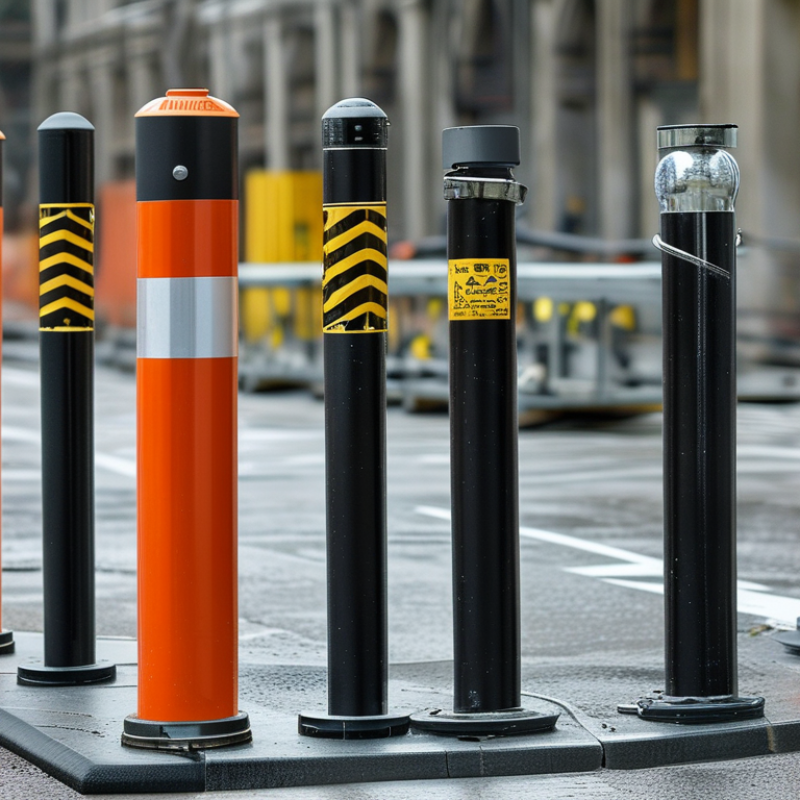
Define Traffic Control Bollard Types and Intended Applications
Global buyers should define the bollard type before comparing prices or finishes. Fixed steel bollards suit permanent pedestrian protection around entrances, sidewalks, and public buildings. Removable models work better where emergency or maintenance access is occasional. Retractable and automatic rising bollards support controlled vehicle entry, but they require power, drainage, servicing, and trained installers. Flexible polymer posts mainly guide traffic and absorb minor contact. They are not equivalent to impact-rated barriers.
Application determines performance. The 2023 WHO Global Status Report on Road Safety estimates 1.19 million annual road deaths worldwide, making clear separation between vehicles and pedestrians a serious design priority. A busy retail frontage may need certified vehicle-security equipment, while a warehouse yard may need visibility posts and access control. The Federal Highway Administration’s 11th Manual on Uniform Traffic Control Devices also emphasizes consistent color, placement, visibility, and retroreflective treatment for traffic devices. Type matters.
Buyers should request crash-test evidence, working temperature ranges, cycle ratings, foundation details, and replacement-part availability. Standards and test methods can differ by market, so a certificate alone may not explain real site performance. A bollard rated for a hostile vehicle event may be excessive for a parking lane, yet a decorative post can fail dangerously at a loading entrance. This is where specifications become imperfect. Site speed, vehicle mass, approach angle, drainage, and pedestrian behavior still need professional assessment. A clear application schedule prevents costly misclassification.
Check Safety Standards, Visibility Features, and Legal Requirements
Global buyers should verify safety standards before comparing prices or finishes. Ask for current test reports covering impact resistance, anchorage, material strength, and weather performance. Requirements differ by road type, country, and installation location. A bollard accepted beside a private loading area may fail approval on a public street.
Visibility needs practical testing, not attractive photographs. Choose high-contrast colors, wide reflective bands, and surfaces that remain visible after dust, rain, and ultraviolet exposure. Check viewing distance at night. Ask whether reflectors meet the required brightness class or photometric test. Small details matter. A low band can disappear behind a parked vehicle.
Legal requirements deserve written confirmation from local authorities or a qualified traffic engineer. Confirm permitted height, spacing, setback, accessible routes, emergency access, and approved mounting methods. Removable units may need locking controls. Fixed units may require engineered foundations. Keep installation drawings, maintenance instructions, and traceable material records.
I once treated a compliance certificate as enough. That was a weak assumption. Certificates can be outdated, incomplete, or issued for a different configuration. Request the exact model, test conditions, production date, and laboratory details. Check whether local rules demand product registration, construction approval, or periodic inspection. A supplier’s confidence is useful, but documented evidence is safer. Test a sample outdoors before placing a large order. Real dust and glare reveal problems quickly.
Evaluate Suppliers, Customization Options, Pricing, and Product Quality
When sourcing traffic control bollards, start with supplier evidence, not attractive catalog photos. Ask for the factory address, production capacity, inspection records, and recent project references. A reliable supplier should explain steel grade, wall thickness, coating process, weld inspection, and expected service life. Request a sample before approving a container order. Measure its diameter, base alignment, paint consistency, and anchor-hole spacing. Small deviations can complicate installation.
Customization should match the site, not merely the buyer’s logo. Confirm fixed, removable, or flexible designs, mounting depth, reflective bands, color codes, cap styles, and warning signage. Share a dimensioned drawing with clear tolerances. Ask whether a prototype is included and how design changes affect tooling and lead time. Packaging also matters. Corner protection and moisture barriers can prevent damaged coatings during ocean transport.
Compare pricing line by line. Include tooling, samples, packaging, testing, spare parts, freight terms, and warranty support. The lowest quotation may hide thin walls or weak anchors. I once treated a polished certificate as enough evidence; the delivered finish showed why physical inspection matters. Use independent inspection when order value is significant. Check coating thickness, weld quality, impact performance, and batch consistency before shipment. No supplier is perfect. Document defects, agree on corrective actions, and keep acceptance criteria in the purchase contract.
10 Traffic Control Bollard Buying Tips for Global Buyers
Recommended procurement weighting for evaluating suppliers, customization, pricing, compliance, and product quality.
Product quality and supplier verification receive the highest weighting because material strength, impact resistance, corrosion protection, testing records, production capacity, and quality consistency directly affect service life and road-safety performance. Buyers should also compare customization capability, applicable safety standards, total landed cost, delivery terms, installation requirements, warranty coverage, and after-sales support.



