
Top Variable Frequency Converter Manufacturers for Buyers

Choosing a Variable Frequency Converter manufacturer is not just a matter of comparing prices or browsing product catalogs. Buyers need equipment that matches the motor, load profile, operating environment, and control system. A conveyor in a dusty workshop may require different protection and overload capacity than a pump running in a clean utility room. Small details matter.

This guide introduces manufacturers and the factors buyers can use to assess them. It considers product range, available power ratings, control features, documentation, technical support, and access to replacement components. Check published specifications against your application, and ask suppliers to clarify gaps rather than assume every model is suitable. Verify certifications and service coverage for the markets where the equipment will operate. Those checks take time.

A polished datasheet is useful, but it cannot answer every installation question. Ask how the manufacturer handles commissioning guidance, parameter setup, warranty claims, and troubleshooting. Compare responses as carefully as headline specifications. Buyers should also consider long-term operating needs, including energy use, maintenance access, and compatibility with existing controls. No single supplier is best for every project; even a well-known brand may not fit a particular site or budget. This overview offers a practical starting point, not a substitute for engineering review. The right shortlist comes from matching verified product details to real operating conditions.
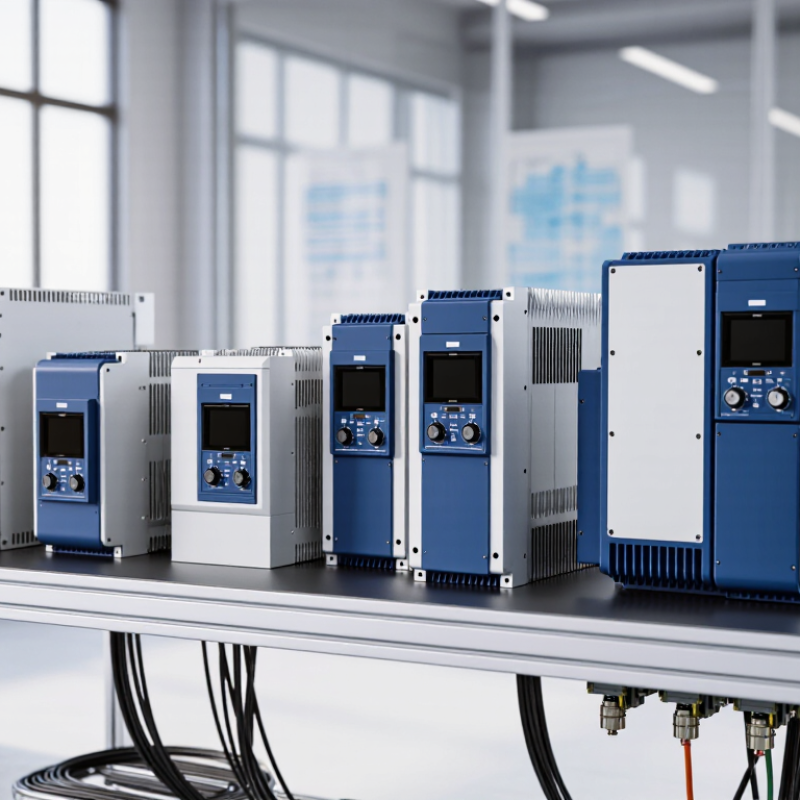
Top Variable Frequency Converter Manufacturers for Buyers

Understanding Variable Frequency Converters and Their Industrial Uses

Variable frequency converters control an AC motor’s speed by adjusting the frequency and voltage supplied to it. On a factory floor, this can mean slowing a pump during low demand or matching a conveyor’s speed to the production line. The result may be lower energy use and less mechanical stress, but savings depend on the machine’s load profile. Not every motor benefits equally. That matters.

In practical selection and commissioning, engineers check motor ratings, operating speed, enclosure, cooling, and the converter’s current capacity. A unit that is undersized may trip when a loaded conveyor starts. Long motor cables can also create electrical stress, so installation details deserve attention. Harmonics and electromagnetic interference may affect nearby equipment; assess them rather than assuming they are harmless.

Tips: Record the motor nameplate data and measure normal operating current before choosing a converter. Confirm whether the application needs braking, frequent starts, or low-speed torque. Leave room in the panel for airflow and service access. These checks sound basic, yet they are easy to miss when a replacement is rushed. The ideal settings may still need adjustment after observing the machine under real production conditions.

Key Factors Buyers Should Compare Across Manufacturers

When comparing variable frequency converter manufacturers, start with the motor and operating conditions, not brochure power ratings. Confirm rated voltage, current, overload capacity, and required speed range against the actual load. A conveyor starting fully loaded behaves differently from a lightly loaded fan. Ask for efficiency data at partial load, too. This detail is easy to miss. Check available control modes, braking options, and compatibility with existing sensors or PLCs. Then review the enclosure rating, cooling method, and documented operating temperature range.

Service matters when a drive trips. Compare warranty terms, spare-part availability, response times, and access to application engineers. Ask what commissioning support includes: parameter review, wiring checks, or on-site testing? Request manuals, fault-code lists, and test records for the exact model. A polished datasheet is not proof of dependable field support. Check how firmware updates and obsolete components are handled. Total cost should include installation, filters, cooling, and downtime—not just the purchase price. One awkward point: published reliability figures may use different test conditions, so direct comparisons can mislead. Get the assumptions in writing. If a specification is unclear, resolve it before procurement rather than treating it as minor paperwork.

Leading Variable Frequency Converter Manufacturers and Their Strengths

Leading variable frequency converter manufacturers stand out through more than rated power. Strong suppliers offer stable speed control, clear commissioning tools, and protection against overload, heat, and electrical noise. The International Energy Agency’s 2011 report, Energy-Efficiency Policy Opportunities for Electric Motor-Driven Systems, estimates that these systems use about 45% of global electricity. Efficient converter selection can therefore matter in pumps, fans, and production lines. Yet a high efficiency claim alone says little about performance in a dusty plant room.

Manufacturer strengths vary. Some provide broad power ranges and flexible motor compatibility; others excel in compact designs, diagnostics, or application engineering. Ask for efficiency curves, harmonic data, overload ratings, and tested operating limits. Check whether the unit can handle frequent starts and the site’s ambient temperature. A polished brochure cannot replace a realistic load test. And local technical support matters when a line stops at 2 a.m. Small details can decide uptime.

Tips: Match the converter to the motor and load, not just the machine’s nameplate power. Request references for similar duties, then verify cooling, enclosure rating, and spare-part availability. Leave room for doubt: projected energy savings depend on actual load profiles and operating hours.

Matching Manufacturer Capabilities to Application Requirements

Matching a variable frequency converter to an application starts with the load, not the catalogue. A pump serving a changing process may benefit from speed control, while a conveyor needs reliable low-speed torque and frequent starts. Check motor current, overload duration, ambient temperature, enclosure rating, and cable length. Small omissions matter. A dusty control cabinet can run hotter than expected.

The International Energy Agency’s 2011 report, Energy-Efficiency Policy Opportunities for Electric Motor-Driven Systems, estimated that motor-driven systems use about 45% of global electricity. That scale makes efficiency worth checking, but savings depend on the duty cycle. The U.S. Department of Energy’s Improving Pumping System Performance guide recommends evaluating the full pumping system, not just the drive. Ask manufacturers for application-specific efficiency curves, harmonic guidance, and commissioning support—not only rated power.

Fit matters more. A unit sized only from motor kilowatts may trip during a heavy start or overheat at low speed. Compare overload capacity against the real load profile, then verify protection features and service access. I would also request a reference for a similar installation. Spec sheets rarely capture every site condition; that gap deserves a second look.

Top Variable Frequency Converter Manufacturers for Buyers - Matching Manufacturer Capabilities to Application Requirements

Capability profiles below describe common supplier specializations, not a ranked list of companies. Product ranges and features vary by model; confirm ratings, options, and regional certifications with the supplier before specifying a drive.

Supplier Capability Profile Best-Fit Applications Capabilities to Look For Useful Selection Checks Typical Buyer Priority
General-purpose industrial drive supplier Fans, centrifugal pumps, mixers, conveyors, and other standard-speed-control duties. Low-voltage drive families, common motor-control modes, adjustable acceleration and deceleration, and standard industrial communications options. Confirm input voltage and phase, motor current, overload rating, control-interface compatibility, and whether the drive supports the intended motor type. Broad product availability, straightforward commissioning, and fit with existing plant controls.
HVAC-focused drive supplier Building ventilation, air-handling units, cooling-tower fans, and variable-flow pumping systems. Functions commonly used in building services, such as PID control, sleep or standby operation, fan and pump protection features, and building-automation connectivity. Check compatibility with the building-management protocol, bypass requirements, motor-cable length, enclosure location, and applicable electrical codes. Energy-efficient part-load operation, easy integration, and practical service access.
Heavy-duty process-drive supplier Extruders, crushers, high-inertia machinery, process lines, and demanding conveyor duties. Drive models with higher overload capability, robust thermal design, advanced motor control, and options for braking or regenerative operation where required. Size by motor current and load profile—not motor power alone. Verify starting torque, overload duration, braking energy, ambient temperature, and altitude derating. Reliable operation under sustained or cyclic high-load conditions.
Precision-motion drive supplier Winding and converting equipment, coordinated production lines, and machines requiring accurate speed or torque control. Fast control response, encoder-feedback options, torque control, synchronized operation, and fieldbus or motion-network integration on suitable models. Confirm required speed range, low-speed torque, feedback-device support, synchronization accuracy, network compatibility, and commissioning tools. Process consistency, coordinated control, and repeatable machine performance.
Low-voltage and compact-drive supplier Small machinery, packaging equipment, laboratory or workshop equipment, and space-constrained installations. Compact low-voltage models, simple setup, panel-mount options, and basic digital and analog I/O on appropriate products. Check supply type, continuous output current, panel ventilation, EMC requirements, and whether the application needs an external braking resistor. Compact installation, uncomplicated setup, and cost-effective control for lighter-duty loads.
System-level drive and engineering supplier Retrofits, multi-drive systems, packaged equipment, and projects with demanding electrical or control requirements. Application engineering, cabinet or system integration, drive configuration, commissioning support, and coordination with motors, filters, and protection devices. Clarify the scope of supply, responsibility for system design, documentation, site support, spare-parts availability, and warranty coverage. Reduced integration risk and a clearly defined route from specification to commissioning.

Evaluating Support, Warranty, and Long-Term Ownership Costs

When comparing variable frequency converter manufacturers, examine support as carefully as the quoted price. Ask who handles commissioning questions and how quickly technical staff typically respond. A clear escalation path matters when a production line stops unexpectedly. Check whether manuals, wiring diagrams, parameter backups, and firmware guidance are easy to obtain. Small details help. A technician facing an unfamiliar fault needs usable documentation, not a sales promise.

Read the warranty for its duration, covered components, labor, shipping, and exclusions. Confirm whether heat, dust, vibration, or installation conditions affect coverage. Then estimate ownership costs across the expected service life: energy use under your actual load profile, routine inspections, replacement fans, spare units, and possible downtime. Ask for service procedures and parts availability in writing. No spreadsheet predicts every failure. It is also easy to overvalue a long warranty while overlooking slow repairs or costly return shipping. Compare suppliers using the same operating assumptions, and keep commissioning records; those records can make later troubleshooting clearer and warranty discussions less uncertain.

Top Variable Frequency Converter Manufacturers: Buyer Evaluation Priorities

Suggested weighting for comparing support, warranty, and long-term ownership costs. These are planning weights—not manufacturer ratings or survey results.

Use these weights as a starting point, then compare written warranty terms, service response commitments, spare-parts availability, commissioning support, and energy use for your specific application.

Blogs