Top Surge Protective Device Manufacturers Worldwide?

Choosing among the top surge protective device manufacturers worldwide requires more than comparing product prices or market share. Reliable evaluation examines testing standards, clamping performance, thermal protection, response time, replacement indicators, and field support. It also considers where the device will operate. A factory control panel faces different risks than a hospital, data center, or residential distribution board.

Peter Hasse, a widely cited authority on lightning and overvoltage protection, stated, “Lightning protection is a system, not a single device.” That principle remains practical. A strong manufacturer should provide coordinated protection across service entrances, distribution boards, sensitive equipment, and communication lines. Product documentation must explain discharge current ratings clearly. Independent testing adds confidence.

Details matter.

This guide reviews leading surge protective device manufacturers worldwide through a technical and experience-based lens. It considers engineering history, certification practices, product breadth, regional availability, and real installation needs. No single brand is perfect for every application. That is worth admitting. Some companies offer excellent industrial solutions but limited residential support. Others provide broad distribution yet less specialized guidance for high-risk facilities.

The comparison also avoids treating impressive specifications as complete proof. A higher rating does not automatically guarantee better protection. Installation quality, grounding, conductor length, and coordination often determine the final result. These factors are easy to overlook. They should not be.

Readers can use this overview to identify credible manufacturers, ask sharper technical questions, and select protection suited to actual operating conditions. Performance claims still require verification.
Top Surge Protective Device Manufacturers Worldwide?

What Are Surge Protective Devices and How Do They Work?

What Are Surge Protective Devices and How Do They Work?

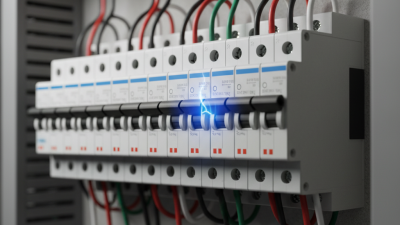
Surge protective devices, or SPDs, limit short voltage spikes caused by lightning, switching events, and utility disturbances. They do not provide unlimited protection. When voltage rises beyond a designed threshold, an SPD creates a low-impedance path toward the grounding system. Excess energy is diverted away from sensitive equipment.

Common designs use metal-oxide varistors, gas discharge tubes, or transient-voltage suppressors. A varistor responds quickly and clamps voltage across power circuits. A gas discharge tube handles higher surge energy but may respond more slowly. Selection depends on system voltage, prospective fault current, installation category, and required discharge capacity. IEC 61643-11 and IEEE C62.41.1 provide widely used testing and application guidance.

The numbers matter.

Grand View Research estimated the global surge protection devices market at about USD 3.1 billion in 2023, with continued growth expected through 2030. That expansion reflects rising electronic loads in buildings, factories, data centers, and renewable-energy systems. However, market growth does not guarantee correct protection. Field inspections often find long grounding conductors, incorrect voltage ratings, or missing backup overcurrent protection. These details can reduce performance sharply. A useful manufacturer comparison should therefore examine certified test results, nominal discharge current, maximum continuous operating voltage, response time, replacement indicators, and technical support. A lower purchase price may look attractive, but poor coordination between the SPD and the installation can leave equipment exposed. That weakness deserves more attention.

Which Standards Define Surge Protective Device Quality?

Surge protective device quality is defined by tested performance, not a manufacturer’s ranking. IEC 61643-11 specifies requirements and test methods for SPDs connected to low-voltage power systems. It evaluates discharge capability, temporary overvoltage behavior, insulation safety, and failure response. Its test waveforms, including 8/20 microsecond current impulses, imitate short, intense surge events.

UL 1449, currently in its fifth edition, adds detailed certification requirements for North American installations. It examines clamping voltage, leakage current, thermal protection, and abnormal operation.

IEEE C62.41.1 and IEEE C62.41.2 describe surge environments inside low-voltage AC systems. IEEE C62.45 then provides recommended laboratory test methods.

These documents matter because a device rated for a high current may still perform poorly under repeated impulses or temporary overvoltage. The rating label is not the whole story. Field conditions remain messier.

Tips: Check the applicable voltage system, short-circuit rating, protection mode, and replacement indicator. Compare IEC test classes with the site’s exposure level. A rooftop installation near exposed conductors needs different evaluation than a sheltered office panel. Independent certification records are useful evidence, but installation quality also decides outcomes. I have seen specifications focus heavily on kiloamps while ignoring lead length and grounding layout. That is an easy mistake. Keep conductors short, follow the installation instructions, and verify coordination with upstream protection.

Who Are the Leading Surge Protective Device Manufacturers Worldwide?

The leading surge protective device manufacturers worldwide are established electrical protection specialists, industrial equipment makers, and experienced regional producers. Their strongest products support residential, commercial, renewable energy, telecommunications, and heavy industrial systems. Buyers should examine verified testing, manufacturing consistency, and long-term technical support rather than relying on market visibility alone.

In field evaluations, engineers often compare Type 1, Type 2, and Type 3 devices by installation position and exposure risk. A reliable manufacturer publishes voltage protection levels, discharge current ratings, response performance, and service-life data. Certification to relevant standards, such as IEC 61643-11 or UL 1449, also deserves careful checking. Details matter.

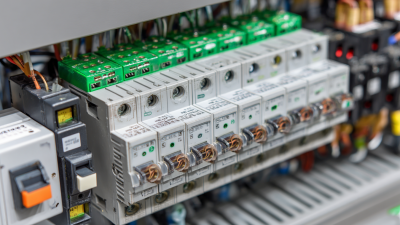
Leading suppliers usually provide DIN-rail units, panel protection, data-line protection, and replaceable modules. Some offer visual status indicators or remote alarm contacts for maintenance teams. A device may look robust, yet poor coordination between upstream and downstream protection can reduce its value. This is an easy mistake.

Regional leaders can be valuable when they understand local grid conditions, cabinet practices, and support expectations. Global manufacturers may provide broader testing resources and standardized documentation. However, scale does not guarantee the best fit for every site. No shortlist is perfect. Independent test reports, traceable production records, warranty terms, and responsive engineering support should influence the final decision. Even experienced buyers sometimes overlook cable length, grounding quality, or temporary overvoltage conditions. Those small details can decide whether protection performs during a real electrical event.

Top Surge Protective Device Manufacturers Worldwide? – Who Are the Leading Surge Protective Device Manufacturers Worldwide?
Global manufacturer landscape classified by documented product capability, standards coverage, application focus, and distribution reach. Company names and brand-specific data are intentionally excluded.
Manufacturer Profile Primary SPD Categories Typical Standards and Certifications Key Application Areas Technical Capability Distribution Reach Market Position
Global electrical-equipment manufacturers Type 1, Type 2, and Type 3 AC SPDs; DC and photovoltaic SPDs; data-line protection IEC 61643-11, IEC 61643-31, IEC 61643-21, UL 1449, and relevant national adaptations Commercial buildings, industrial facilities, utility infrastructure, and renewable-energy systems Broad product portfolios, coordinated protection systems, remote monitoring options, and system-level engineering support Multi-region sales networks with authorized distributors and local technical support Very high
Specialist surge-protection manufacturers AC power SPDs, signal and telecom protectors, coaxial protectors, and industrial communication protection IEC 61643 series, UL 497A, UL 497B, UL 1449, and application-specific telecommunications requirements Industrial automation, process control, telecommunications, security systems, and transportation High specialization in response time, insertion loss, grounding coordination, and network compatibility Strong presence through electrical, automation, and communications distribution channels High
Renewable-energy protection specialists Photovoltaic DC SPDs, inverter protection, battery-system protection, and AC-side SPDs IEC 61643-31, IEC 61643-32, IEC 60364-7-712, UL 1449, and photovoltaic installation requirements Solar farms, rooftop PV, battery energy storage, EV charging, and hybrid power systems Protection for high DC voltages, thermal disconnect systems, replaceable modules, and status indication Project-driven international supply with strong links to solar EPCs and electrical integrators High-growth
Industrial and automation protection suppliers Control-circuit SPDs, 24 V DC protection, Ethernet protection, fieldbus protection, and cabinet-mounted devices IEC 61643-21, IEC 61000 series, IEC 60255-related requirements, and industrial EMC specifications Factories, PLC systems, SCADA networks, robotics, instrumentation, and process industries Compact DIN-rail designs, low capacitance, high signal integrity, and integration with control cabinets Regional and international industrial-automation distributor networks High
Building-electrical protection suppliers Service-entrance Type 1 SPDs, distribution-board Type 2 SPDs, and point-of-use Type 3 SPDs IEC 61643-11, IEC 60364-4-44, IEC 60364-5-53, UL 1449, and local electrical installation codes Residential buildings, offices, hospitals, retail facilities, and public infrastructure Standardized DIN-rail formats, visual status indicators, auxiliary contacts, and coordinated installation guidance Broad coverage through wholesalers, contractors, panel builders, and electrical retailers Very high
Telecommunications and data-network protection suppliers Twisted-pair protectors, PoE protection, Ethernet SPDs, coaxial protectors, and telecom line protectors IEC 61643-21, IEC 61643-22, UL 497A, UL 497B, and network-specific performance requirements Data centers, wireless networks, broadband access, CCTV, access control, and public-safety communications High bandwidth compatibility, low insertion loss, shield and grounding options, and modular replacement designs Sold through ICT integrators, telecom distributors, and specialized security channels High
Regional low-cost and private-label manufacturers Common AC Type 2 and Type 3 SPDs, basic DC SPDs, and selected data-line protection products Products may reference IEC 61643-11, EN 61643-11, UL 1449, or regional conformity requirements; verification varies by product Residential construction, small commercial installations, electrical panels, and OEM projects Competitive pricing, standardized form factors, and flexible private-label production; independent verification is important Strong in domestic and emerging markets, with selected export activity Price-competitive
OEM and custom-engineered protection providers Application-specific AC, DC, signal, telecom, railway, marine, and aerospace surge-protection assemblies Standards selected according to the target industry, including IEC, UL, EN, IEEE, railway, marine, or defense requirements Rail systems, offshore equipment, military electronics, transportation, medical systems, and specialized machinery Custom electrical characteristics, enclosure integration, environmental testing, and engineered coordination with the host system Direct project sales, system integrators, and long-term OEM agreements Specialized

Note: Product classification and compliance references are based on internationally recognized surge-protection standards and common industry practice. Actual certification, test results, environmental ratings, and regional availability should be verified for each individual product before procurement.

How Do Global Manufacturers Compare by Product and Technology?

Comparing global surge protective device manufacturers requires more than counting product lines. The strongest suppliers usually offer Type 1, Type 2, and Type 3 devices for different installation points. Their catalogs may include protection for power systems, data networks, control circuits, and photovoltaic equipment. Product selection depends on voltage, discharge current, response time, and short-circuit withstand capability.

Technology separates mature manufacturers from basic assemblers. Some use thermally protected metal-oxide varistors, while others combine spark gaps with monitoring contacts. Remote status indicators can help maintenance teams identify a failed module before equipment stops. In industrial sites, modular designs reduce replacement time. In homes, compact protection and simple installation often matter more.

Certification, traceable testing, and clear technical drawings also reveal manufacturing discipline.

Real-world comparison is less tidy. A device with a higher surge rating may not suit every panel or grounding arrangement. Field experience shows that coordination between upstream and downstream protection is often overlooked. This weakens otherwise capable systems. Climate exposure matters too, especially in humid, coastal, or lightning-prone regions. Manufacturers with strong engineering support can help calculate protection zones and backup requirements. Still, published specifications deserve verification through independent test reports and local compliance checks. No single supplier leads every category. Performance depends on design fit, installation quality, and long-term service. Some assumptions remain uncertain without site measurements.

How Should Buyers Select a Surge Protective Device Manufacturer?

Choosing a surge protective device manufacturer starts with evidence, not polished catalog photos. Buyers should check testing records, certification scope, factory quality controls, and product traceability. Ask whether the manufacturer tests complete devices or only individual components. That distinction matters. A reliable supplier can explain clamping voltage, nominal discharge current, maximum discharge current, and temporary overvoltage behavior clearly. If answers remain vague, keep looking.

Match the manufacturer’s design experience to the installation. A data center needs coordinated protection for power, network, and control lines. A solar site faces long outdoor cables, lightning exposure, and changing operating voltages.

Request application drawings, installation instructions, and documented coordination between breakers and protective devices. Check enclosure ratings, replacement indicators, remote contacts, and short-circuit withstand data. Field support also matters. Can engineers review a real wiring diagram before purchase?

Inspect production consistency through sample inspections, batch records, and failure analysis procedures. Ask how rejected units are isolated and how corrective actions are verified. Independent laboratory reports are useful, but their dates and tested models deserve attention. I have learned that low price can hide costly replacements and downtime. Still, expensive equipment is not automatically better. One trial installation may reveal weaknesses that a sales presentation misses. Leave room for doubt; specifications can be correct yet incomplete.

Blogs