2026 Top Protection Relay Types and Their Applications Guide?
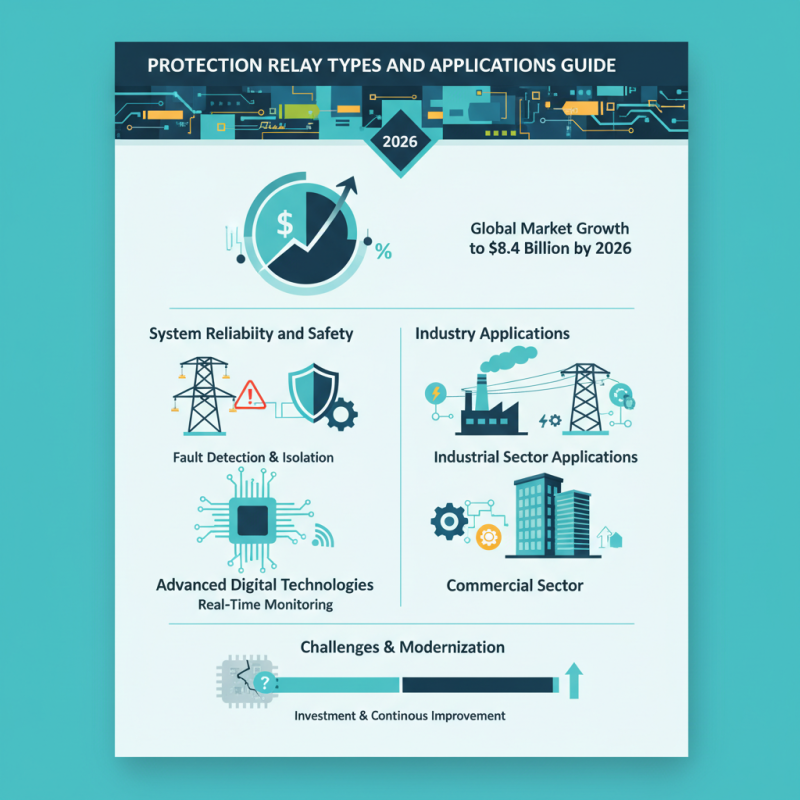
In the evolving landscape of electrical engineering, protection relays play a crucial role in system reliability and safety. According to a recent market report by MarketsandMarkets, the global protection relay market is expected to reach $8.4 billion by 2026, growing at a CAGR of 6.2%. This growth highlights the increasing demand for reliable protection solutions in various applications, including industrial and commercial sectors.
Protection relays are vital for detecting faults in electrical systems. They enable quick isolation of faulty sections, preventing extensive damage. Advanced technologies are now integrated into these devices, enhancing their responsiveness and accuracy. For example, digital protection relays offer advanced communication capabilities and real-time monitoring features, significantly improving operational efficiency.
However, challenges remain in effectively implementing these technologies. Many facilities still use outdated systems that do not leverage the latest advancements. This gap can lead to insufficient protection and increased operational risks. The journey toward modernization in protection relays requires both investment and a commitment to continuous improvement. As the industry progresses, understanding the different types and applications of protection relays will be essential for maximizing safety and reliability.
Overview of Protection Relay Types in 2026
In 2026, the landscape of protection relays is changing. With advancements in technology, different types of relays are seeing expanded applications across various industries. Digital relays are becoming increasingly popular, offering enhanced data analysis capabilities. According to a recent industry report, the use of digital relays is expected to grow by 20% annually due to their efficiency and precise fault detection.
Electromechanical relays, while older technology, maintain relevance and are valued for their simplicity and reliability. They are often used in less sensitive environments where costs must be kept low. However, relying solely on these traditional solutions may leave room for error. Users must be vigilant in recognizing the limitations of electromechanical designs, especially as system complexities increase.
Intelligent electronic devices (IEDs) are making their mark as well. These devices integrate communications, monitoring, and control functions, making them ideal for modern smart grid applications. Yet, the transition to IEDs is not without challenges. A report highlighted a gap in skilled personnel to manage these technologies. As systems grow in complexity, ongoing training and education will be crucial for effective implementation. Understanding these nuances will help professionals make informed decisions.
Key Criteria for Selecting Protection Relays
When selecting protection relays, it is crucial to consider specific criteria to ensure optimal performance. Start by assessing the type of system you have. Different systems require different relay types. For instance, a digital relay suits modern, complex systems, while an electromechanical relay may be better for simpler setups. Each choice impacts reliability and efficiency.
Another key factor is the application environment. Factors like temperature, humidity, and vibration levels can affect performance. Choosing a relay designed for harsh conditions can prevent failures. Additionally, evaluate the relay's response time. A faster relay can provide effective protection in critical situations.
Lastly, communication capabilities matter. Modern relays often include communication protocols that facilitate integration with other devices. This feature enhances overall system monitoring and control. Reflection here is essential; the wrong choice can have severe consequences. Thus, thorough analysis and a clear understanding of your specific needs are vital in making the right selection.
2026 Top Protection Relay Types and Their Applications
This chart illustrates the distribution of different types of protection relays used in various applications in 2026. Electromechanical relays are increasingly being replaced by digital and microprocessor-based relays due to improved accuracy and functionality.
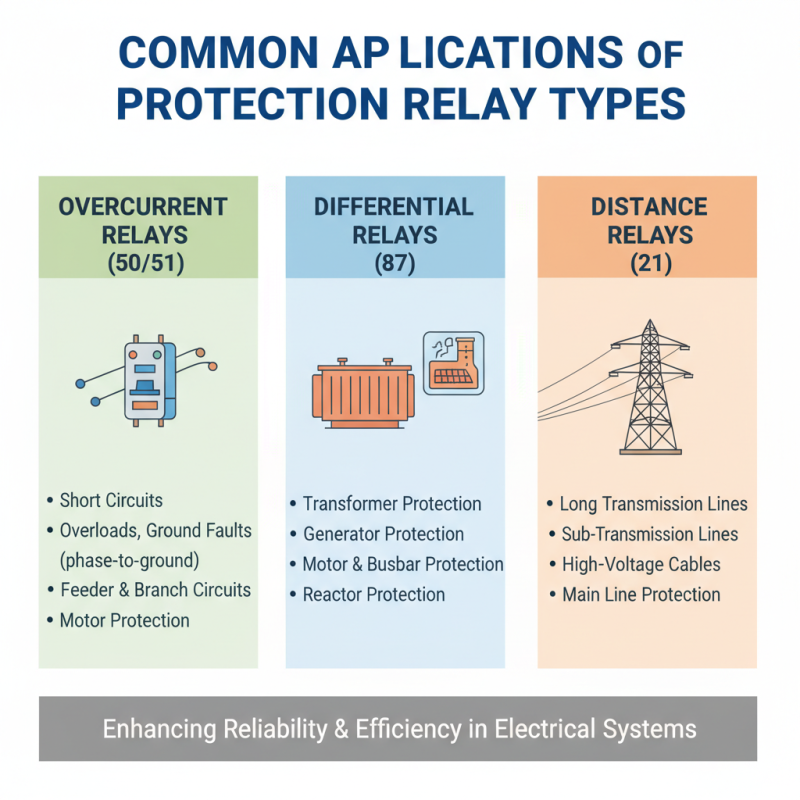
Common Applications of Different Protection Relay Types
Protection relays play a critical role in safeguarding electrical systems. They detect faults and trigger circuit breakers to isolate damaged sections. Various types exist, each tailored for specific applications. The right type can enhance reliability and efficiency.
For instance, electromechanical relays are widely used in industrial setups. They are simple, durable, and cost-effective. But their slower response times can lead to potential issues. Digital relays, on the other hand, offer advanced features. They provide faster detection and more precise fault analysis. Many industries are now shifting towards this technology.
Differential relays are key in transformer protection. They compare the current entering and exiting the transformer. When discrepancies occur, they act swiftly to prevent damage. However, incorrect settings can cause unnecessary trips. Each relay type has unique strengths and weaknesses, making careful selection essential.
Future Trends in Protection Relay Technology
The future of protection relay technology is shaped by evolving needs in electrical systems. With increased reliance on renewable energy sources, these devices will adapt to manage complex grids. Advanced algorithms will improve decision-making speed and accuracy. This shift will enhance system reliability.
Machine learning is becoming crucial in protection relays. Algorithms can analyze historical data to predict faults. This predictive capability can reduce downtime and prevent costly outages. However, data quality and integration remain challenging.
Cybersecurity is another top concern. As protection relays connect to networks, they become vulnerable. Ensuring these systems are secure is vital. Solutions must evolve quickly to address emerging threats. Engineers need ongoing training to keep pace with these developments. The intersection of technology and protection requires careful consideration.
Challenges and Considerations in Protection Relay Implementation
Implementing protection relays in electrical systems presents several challenges and considerations that must be addressed for optimal performance. One significant concern is the complexity of integration with existing infrastructure. Many facilities struggle to upgrade their protection systems while maintaining operational efficiency. According to a 2022 study by the Electric Power Research Institute, over 40% of companies reported difficulty in retrofitting new relay technologies into old systems.
Reliability is another crucial factor. The accuracy of a protection relay directly impacts system safety. An error in measurement can lead to catastrophic failures. Data from the International Electrotechnical Commission highlights that improper settings and configurations are responsible for 35% of relay failures. Regular testing and updates are imperative but often neglected due to budget constraints.
Additionally, staff training is essential. A 2023 industry survey found that nearly 60% of technicians felt inadequately trained on the latest relay technologies. This gap often results in mismanagement during critical events. Investing in regular training programs can mitigate risks and enhance the efficacy of protection systems. Addressing these challenges can lead to safer and more reliable electrical grids.