
What Are the Top Panel Light Manufacturers in China?

China has become a major production center for commercial, residential, and industrial Panel Light systems. Its manufacturers range from established lighting groups to specialized factories serving overseas brands. This article examines leading companies through practical buying criteria, not promotional rankings.

Lighting educator James R. Benya has stated, “Good lighting is not just about seeing; it is about creating an environment.” That principle matters when comparing Chinese suppliers. A bright sample alone proves very little. Buyers should examine measured efficacy, color consistency, UGR performance, flicker control, heat management, and driver reliability. A clean ceiling installation can still fail if the light produces glare or visible pulsing.

Real evidence matters.

The strongest manufacturers usually provide photometric files, LM-80 or TM-21 data where applicable, test reports, warranty terms, and traceable production information. Factory experience also appears in small details: stable aluminum frames, uniform diffuser panels, secure terminal blocks, and packaging that protects corners during shipping. Companies such as Opple, NVC Lighting, FSL, PAK, MLS, and Yankon may deserve attention, but their suitability depends on the project and model.

That is where this topic becomes less simple. A famous brand may not offer the best private-label solution. A smaller factory may respond faster, yet lack strong after-sales support. Even published specifications can change between batches.

Therefore, this guide evaluates China’s top Panel Light manufacturers by product quality, engineering capability, customization, compliance support, production scale, and export reliability. Sample testing remains essential. Supplier claims should be checked against independent documents, installation results, and long-term feedback. Good decisions require patience, and sometimes a second inspection.
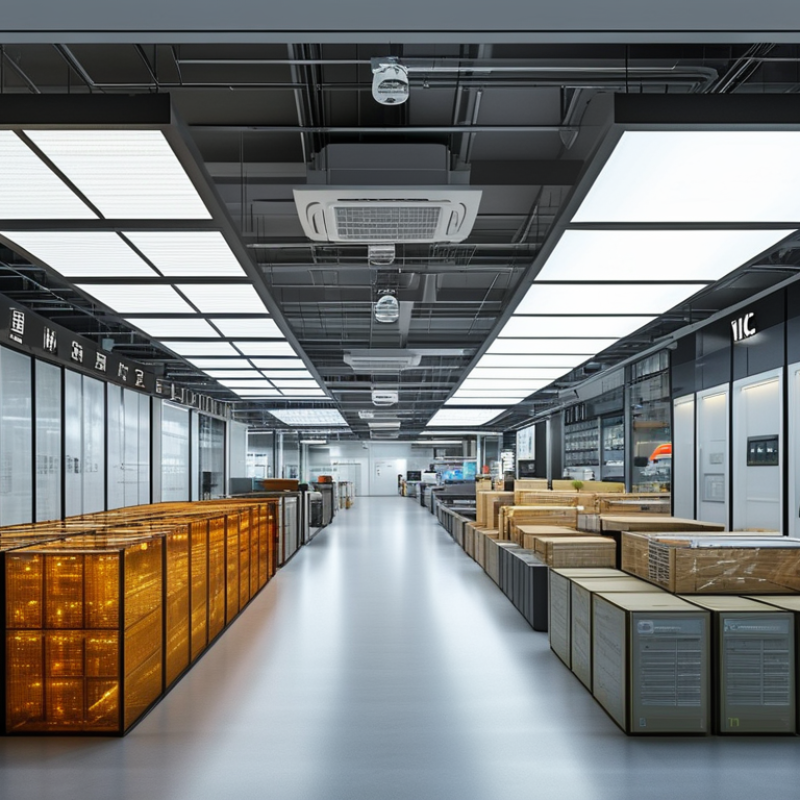
What Are the Top Panel Light Manufacturers in China?

What Are Panel Lights and Why Is China a Major Manufacturing Hub?

Panel lights are flat LED fixtures designed to spread light across a broad, even surface. Their slim frames fit offices, schools, hospitals, shops, and modern homes. Inside, LED chips connect to a driver, while a diffuser softens bright points and reduces glare. The result is clean ceiling lighting with lower energy use than many older fluorescent fixtures. Small details matter. A weak driver can cause flicker, noise, or early failure.

China has become a major manufacturing hub because several production networks operate close together. LED components, aluminum frames, diffusers, circuit boards, packaging, and testing services are often available within the same industrial region. This proximity can shorten development time and reduce transport costs. Manufacturers can also adjust sizes, color temperatures, mounting methods, and control systems for different projects. That flexibility attracts wholesalers and building contractors worldwide.

A reliable evaluation should look beyond price. Ask for test reports, photometric data, color-rendering results, thermal performance, and driver specifications. Check samples after extended operation, not only when they are new. A panel may appear excellent in a showroom but perform poorly in a hot ceiling cavity. No factory is flawless. Even strong suppliers may struggle with inconsistent diffuser batches or changing component quality. Clear inspection records and repeat testing make those risks easier to control. The best purchasing decisions often come from patient verification, not attractive catalog images.

What Criteria Define a Top Panel Light Manufacturer in China?

A top panel light manufacturer in China is defined by more than production volume or a low quotation. Real experience appears in practical details: stable brightness, clean aluminum frames, secure wiring, and diffusers that resist yellowing. A capable factory should explain its LED selection, driver performance, color consistency, and heat-management method clearly. Vague answers are warning signs.

Technical evidence matters. Reliable manufacturers provide test reports, safety documentation, photometric data, and traceable production records. Their panels should perform consistently across different batches, not only during a showroom demonstration. Ask about lumen maintenance, color temperature tolerance, power factor, flicker control, and operating temperature. Small details matter here. A five-year warranty sounds useful, but its conditions must be readable and realistic.

Quality control should continue after assembly. Inspectors need to check solder points, frame alignment, insulation, and packaging before shipment. Experienced suppliers also offer samples, installation guidance, replacement parts, and responsive communication across time zones. Their production line should be clean, organized, and open to reasonable audits. Still, no manufacturer gets every detail right. Even a strong supplier may have delays, packaging flaws, or inconsistent documentation. That is why independent testing and a small trial order remain sensible. A polished factory tour is not proof by itself. Ask for evidence, compare actual samples, and record every agreed specification.

What Are the Top Panel Light Manufacturers in China? - What Criteria Define a Top Panel Light Manufacturer in China?
Evaluation Dimension Key Indicator Practical Benchmark for a Top Manufacturer Why It Matters Recommended Verification
Product Compliance Safety and performance standards Products should be tested against applicable standards such as IEC 60598-1 and IEC 60598-2-2, with market-specific certifications where required. Confirms that the panel light has been assessed for electrical, mechanical, thermal, and photobiological safety. Review current test reports, certificates, product model numbers, and certification scope.
Quality Management Manufacturing process control An ISO 9001-certified quality management system, documented inspections, traceability, and corrective-action procedures. Reduces batch-to-batch variation and helps ensure consistent product quality. Request the ISO certificate, quality-control plan, inspection records, and audit procedures.
Energy Efficiency System luminous efficacy Approximately 100–150 lm/W for many current commercial LED panel-light configurations, depending on power, diffuser, driver, and lighting design. Higher efficacy can reduce electricity use and operating costs over the product life. Check independent photometric reports that include total system wattage and delivered lumens.
Light Quality Color rendering and consistency CRI typically ≥80 for general offices and ≥90 for applications requiring enhanced color accuracy; controlled color consistency is also expected. Supports visual comfort, accurate color perception, and a consistent appearance across installations. Verify LM-79 or equivalent reports, CRI values, CCT tolerance, and measured color bin information.
Glare Control Unified Glare Rating and optical design UGR <19 is commonly specified for many office and computer-based workspaces, subject to room geometry and installation layout. Appropriate optical control helps reduce discomfort glare and improves workplace visibility. Request UGR calculations based on the intended room dimensions, mounting height, spacing, and reflectance.
LED and Driver Reliability Component quality and lifetime evidence Use of documented LED and driver specifications, thermal design, surge protection, and lifetime projections supported by recognized testing methods. Reliable components help limit early failures, flicker, overheating, and maintenance costs. Review component datasheets, thermal test results, driver test reports, and LM-80/TM-21 documentation where applicable.
Flicker Performance Temporal light modulation Low flicker and compliance with the requirements or recommendations relevant to the target market and application. Better flicker control can improve visual comfort and suitability for offices, schools, and healthcare environments. Ask for measured flicker percentage, flicker index, or PstLM/SVM results at the intended operating conditions.
Thermal Management Operating temperature and heat dissipation A tested housing and thermal structure that maintains the LED and driver within their specified temperature limits. Effective thermal management supports lumen maintenance, safety, and long-term reliability. Check thermal test data, ambient-temperature ratings, housing materials, and installation clearances.
Customization Capability Configurations and project engineering Ability to provide different sizes, wattages, CCT options, emergency functions, sensors, dimming systems, and mounting accessories. Flexible engineering helps match the product to local building codes, ceiling systems, and lighting requirements. Evaluate technical drawings, sample-development procedures, control-system compatibility, and engineering response time.
Production Capacity Manufacturing scale and delivery control Documented production capacity, multiple assembly and testing processes, stable component sourcing, and a clear lead-time policy. Supports dependable delivery for commercial, infrastructure, and multi-site projects. Request capacity statements, production schedules, factory-audit results, and recent on-time delivery records.
Warranty and After-Sales Service Warranty coverage and support process A clearly defined warranty, commonly five years for commercial LED lighting products, with stated exclusions and replacement procedures. Transparent after-sales terms reduce project risk and clarify responsibilities throughout the product life. Review the warranty document, failure-claim process, spare-parts policy, and technical-support response times.
Testing Capability In-house and independent testing Access to electrical, photometric, aging, thermal, surge, ingress, and safety testing, supplemented by accredited third-party laboratories when necessary. Comprehensive testing identifies design weaknesses before products reach the market. Inspect laboratory equipment, calibration records, sample test procedures, and third-party laboratory reports.
Sustainability Materials, efficiency, and responsible manufacturing Energy-efficient designs, RoHS-compliant materials where applicable, recyclable packaging, and documented environmental practices. Helps reduce environmental impact and supports procurement requirements for green building projects. Check RoHS declarations, material information, packaging specifications, and environmental management documentation.
Commercial Transparency Technical documentation and quotation clarity Complete datasheets showing input power, lumen output, efficacy, CCT, CRI, beam distribution, dimensions, operating temperature, and control options. Accurate documentation enables reliable comparisons, lighting calculations, and lifecycle-cost analysis. Compare datasheet values with independent test reports and approved production samples.

Which Chinese Panel Light Manufacturers Are Worth Knowing?

Which Chinese Panel Light Manufacturers Are Worth Knowing?

The strongest candidates are not defined by export volume alone. They usually combine LED engineering, stable driver sourcing, and disciplined quality control. Grand View Research estimated the global LED lighting market at about USD 78 billion in 2023. It also projected strong growth through 2030. This demand increases competition among Chinese panel light manufacturers. It also makes supplier selection harder.

Worth knowing are factories with clear OEM and ODM capabilities. They should provide photometric files, flicker measurements, and thermal test records. Look for compliance with IEC 60598, RoHS, and regional safety requirements. ISO 9001 certification helps, but it is not proof of perfect production. A factory audit should inspect aging-test rooms, soldering lines, driver storage, and packaging methods. Small details matter. Uneven diffuser surfaces often reveal weak process control.

The International Energy Agency reports that lighting uses roughly 15% of global electricity. Efficiency therefore matters beyond the showroom. Select manufacturers offering high efficacy, low glare, and documented lifetime testing. LM-80 and TM-21 evidence is useful, although many buyers misunderstand these standards. Ask how results connect with the complete luminaire. A low quotation remains attractive. It may also hide shorter driver life, inconsistent color temperature, or weak after-sales support. No shortlist is perfect. Supplier communication should be tested before a large order.

What Products and Technologies Do Leading Manufacturers Offer?

Leading panel light manufacturers in China now offer more than basic ceiling fixtures. Their product ranges commonly include edge-lit, backlit, suspended, recessed, and ultra-thin panels. Some models support offices, hospitals, schools, retail spaces, and clean production areas. Better products use aluminum frames, efficient light guides, constant-current drivers, and controlled heat dissipation. These details help reduce dark corners and early brightness loss.

Technology choices vary by project. Professional manufacturers may provide flicker-reduced drivers, high color rendering, adjustable color temperature, and UGR control for screen-based workspaces. DALI, 0–10V, motion sensors, and daylight harvesting are also available. For verification, buyers should request photometric files, driver data, thermal test results, and lifetime testing evidence. A high lumen number alone proves little. In practice, glare, driver noise, and installation quality can change the user experience. No specification sheet answers every question.

Tips: Compare delivered lumens, not only input watts. Check CRI, CCT, UGR, warranty terms, and replacement support. Ask for samples under real ceiling conditions. A sample may look excellent in a showroom, yet feel harsh beside a computer screen. Also confirm regional safety and electromagnetic compatibility requirements before placing a large order.

How Should Buyers Compare Chinese Panel Light Manufacturers?

Top panel light manufacturers in China should not be judged by factory size alone. Buyers need to compare performance, consistency, and communication. In practical sourcing work, I check a sample under real ceiling conditions. I measure brightness, color uniformity, glare, and flicker. A strong product should provide clear data for efficacy, color rendering, beam distribution, and expected lifetime. Test reports should come from recognized laboratories, not only internal spreadsheets.

Factory capability matters too. Ask about LED bin control, driver sourcing, aging tests, and final inspection records. Request photos or videos of production stages, including soldering, assembly, and electrical testing. Check whether the manufacturer can maintain the same color temperature across repeated orders. Small differences become obvious in offices and retail spaces. Warranty terms must state coverage, response time, and replacement procedures. Some suppliers promise quickly, but their service details remain vague.

Tips: Compare three samples using the same ceiling, camera settings, and power supply. Ask for a pilot order before committing to a large shipment. Confirm packaging, lead time, spare parts, and installation instructions in writing. Certifications should match the destination market. Do not rely on the lowest price. It may hide thinner materials, weaker drivers, or limited quality control. I would also keep room for doubt. A polished factory tour proves little without batch records and independent testing.

Article Source:

Blogs