
The global Lithium Battery market is expanding quickly, but scale alone does not prove manufacturing excellence. Buyers need evidence.
The International Energy Agency’s Global EV Outlook 2024 reported that electric-vehicle battery demand exceeded 750 GWh in 2023. Demand grew by about 40% in one year. The report also noted China’s strong position across battery production, materials, and supply chains. Those figures explain why global buyers often begin with Chinese, Korean, Japanese, European, and North American manufacturers.
Yet factory size can hide important weaknesses.
The IEA’s Global Critical Minerals Outlook 2024 warned that battery supply chains remain highly concentrated. This concentration creates purchasing risks, especially when buyers depend on one region, one cell format, or one raw-material source. Production capacity matters, but so do chemistry choices, quality control, warranty evidence, recycling plans, and delivery reliability.
Professor M. Stanley Whittingham, a Nobel Prize-winning battery pioneer, described the technology clearly: “The lithium-ion battery is a very complicated system.” His observation remains practical. A strong supplier must manage cells, modules, software, thermal systems, testing, and after-sales support together.
This guide examines top Lithium Battery manufacturers for global buyers. It compares technical capability, certifications, production scale, safety records, and market experience. It also considers less visible details, such as batch consistency and response time after a failed shipment.
No manufacturer is perfect.
Some companies publish impressive capacity figures but provide limited independent performance data. Buyers should question polished claims. Careful verification remains essential.
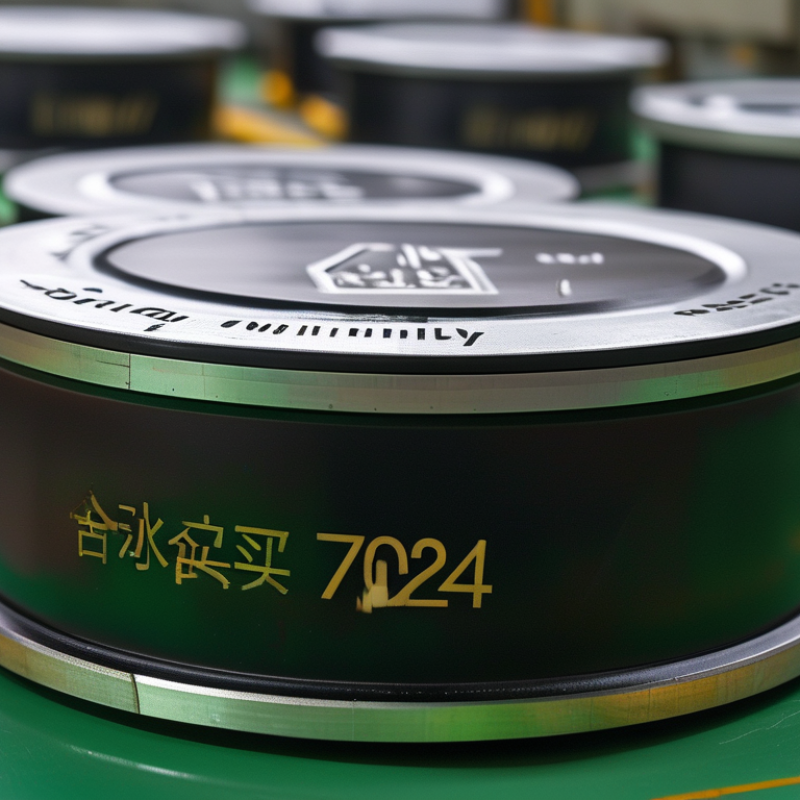
What Defines a Leading Lithium Battery Manufacturer
A leading lithium battery manufacturer delivers more than high energy density. It controls materials, cell design, testing, and after-sales support. The International Energy Agency reported over 17 million electric car sales in 2024. That scale raises expectations for consistency, safety, and traceability. Buyers should request batch records, thermal test results, and clear warranty terms.
Quality appears in small details. A reliable factory uses automated inspection, calibrated equipment, and documented process controls. It should test cells for capacity loss, overheating, vibration, and abnormal charging. The UN 38.3 transport tests are essential for international shipments. BloombergNEF’s 2024 Battery Price Survey recorded an average global pack price of 115 dollars per kilowatt-hour, down 20% from 2023. Lower costs matter, but cheap cells may reflect weaker testing or shorter service life.
Ask difficult questions. How are rejected cells isolated? Can the supplier trace a cell to its production line? Does the warranty cover real operating conditions? Certifications help, but certificates alone do not prove daily discipline. I have seen polished specifications hide vague maintenance procedures. No factory is flawless. A trustworthy manufacturer admits limits, reports failures honestly, and improves its process after field feedback. That candor is often more valuable than another impressive laboratory number.
China remains the largest lithium battery production hub, supported by dense supply chains and large-scale cell factories. East Asian manufacturers also lead in cathode materials, battery management systems, and precision equipment.
Europe is building regional capacity for electric vehicles and energy storage. Its buyers often prioritize carbon reporting, recycling plans, and strict product documentation. North America is expanding domestic production through factory investments and partnerships with vehicle makers. India and Southeast Asia are developing quickly, especially for two-wheelers, solar storage, and commercial transport.
The strongest global players are not only cell producers. They include material refiners, module assemblers, system integrators, equipment suppliers, and recycling specialists. A reliable buyer should examine cycle-life data, thermal safety tests, warranty conditions, and factory quality controls. Production location matters, but traceability matters more. Ask where the lithium, nickel, graphite, and other inputs originate.
Real purchasing experience shows that laboratory results may not match performance in hot warehouses or poorly ventilated vehicles. This remains an uncomfortable gap. Request independent testing and inspect sample batches before signing large contracts. Delivery capacity can also change during mineral shortages or sudden demand increases. Smaller suppliers may offer flexibility, yet their after-sales systems can be weaker. Large producers may provide stronger documentation, but communication can feel slower. Careful comparison is necessary.
| Key Manufacturing Region | Approx. Share of Global Li-ion Cell Manufacturing Capacity, 2023 | Dominant Cell Chemistries | Primary End Markets | Supply-Chain Strengths | Typical Buyer Considerations |
|---|---|---|---|---|---|
| China | Approximately 70–80% | LFP, NMC, lithium cobalt oxide, and lithium manganese oxide | Electric vehicles, energy storage systems, consumer electronics, power tools, and light electric mobility | Large-scale cell production, strong cathode and anode processing, extensive component ecosystem, and broad pack-assembly capability | High production flexibility and competitive pricing; buyers should verify export rules, certification, traceability, and after-sales support |
| Europe | Approximately 5–10% | NMC, with increasing LFP adoption and development of other advanced chemistries | Automotive, commercial vehicles, grid storage, industrial equipment, and specialty mobility | Close access to European vehicle production, strong regulatory infrastructure, recycling development, and growing local gigafactory capacity | Useful for regional sourcing and regulatory compliance; buyers should assess production ramp-up, cost, and local-content requirements |
| United States | Approximately 5–10% | NMC, NCA, LFP, and emerging next-generation lithium-ion formats | Electric vehicles, stationary storage, defense-related applications, aerospace, and industrial systems | Growing domestic manufacturing investment, advanced materials research, strong testing capabilities, and expanding recycling infrastructure | Potential advantages for North American supply chains; buyers should review qualification timelines, local-content rules, and total landed cost |
| South Korea | Approximately 3–7% | NMC, NCA, high-nickel lithium-ion, and selected LFP products | Electric vehicles, premium electronics, energy storage, and industrial batteries | Advanced high-energy-density cells, strong quality control, sophisticated materials engineering, and export experience | Suitable for high-performance applications; buyers should compare pricing, thermal-management requirements, and supply allocation |
| Japan | Approximately 2–5% | NMC, NCA, lithium cobalt oxide, and other high-quality lithium-ion formats | Automotive, consumer electronics, industrial equipment, robotics, and specialty applications | Long-standing battery engineering expertise, reliable process control, and strong safety and quality standards | Often attractive for demanding quality specifications; buyers should confirm capacity availability and commercial scalability |
| Southeast Asia | Less than 5%, with rapid expansion | LFP and NMC, plus battery-pack assembly for two-wheelers and commercial applications | Electric two-wheelers, electric vehicles, consumer products, and stationary storage | Competitive labor costs, improving industrial infrastructure, proximity to Asian supply chains, and favorable regional investment policies | Potential diversification option; buyers should evaluate local supplier depth, production maturity, testing capability, and logistics reliability |
Lithium battery manufacturers differ mainly through cell chemistry, manufacturing control, and testing depth. Lithium iron phosphate cells usually deliver strong thermal stability and long cycle life. They often suit buses, storage cabinets, and commercial vehicles. Nickel-rich chemistries can provide higher energy density, which helps electric vehicles travel farther with less weight. However, they demand tighter thermal management and careful charging control.
Manufacturers also compare through real operating data, not laboratory claims alone. Ask for cycle testing at defined temperatures, charge rates, and depth of discharge. A battery rated for 4,000 cycles may perform differently in a hot warehouse. Cold-weather output matters too. Some advanced designs reduce charging time, while others improve safety through stronger separators or better battery management software. Solid-state technology sounds promising, but large-scale reliability remains an open question. No chemistry wins every test.
Tips: Match the battery to its duty cycle, not its headline capacity. Request independent test reports and traceable safety certifications. Check warranty exclusions, service procedures, and replacement-cell availability. Inspect how manufacturers monitor temperature, voltage, and cell imbalance. A low purchase price can become expensive after repeated downtime. I would also compare measured performance under your actual climate and load. This step is often skipped, and that is a costly weakness.
Typical gravimetric energy density by lithium-ion cell chemistry
The chart uses representative midpoint values from commonly reported commercial cell ranges: LFP 90–160 Wh/kg, NMC 150–220 Wh/kg, NCA 200–260 Wh/kg, LCO 150–200 Wh/kg, and LTO 50–90 Wh/kg. Higher energy density can reduce pack weight, while LFP and LTO are generally selected when long cycle life, safety, or fast charging is prioritized. Actual performance varies with cell design, operating conditions, and pack integration.
For global buyers, leading lithium battery manufacturers must prove more than high output. Quality begins with stable cell chemistry, consistent capacity, and traceable production batches. The International Energy Agency reported that electric vehicle battery demand exceeded 750 GWh in 2023, rising by about 40%. This growth makes manufacturing discipline critical. A battery rated at 100 Ah should show reliable capacity under defined temperature, discharge, and aging conditions. Nominal figures alone can mislead.
Safety testing needs equal attention. Buyers should request evidence for thermal abuse, overcharge, vibration, crush, and short-circuit testing. UN 38.3 supports transport safety, while IEC 62619 addresses industrial lithium battery safety. Certification is useful. It is not proof of perfect field performance. Installation quality, battery management software, and maintenance still influence risk. Sometimes, the overlooked details matter most.
Capacity claims should include cycle-life data, test conditions, and remaining capacity thresholds. BloombergNEF reported that average lithium-ion battery pack prices fell to 139 dollars per kWh in 2023, yet lower cost does not automatically mean better value. A serious supplier should provide factory audit records, quality-control procedures, warranty terms, and failure-rate data. Buyers should also compare usable energy after aging, not only the first-day specification. That comparison is less impressive, but more honest.
Selecting a lithium battery manufacturer requires more than comparing unit prices. Global buyers should examine engineering capability, production consistency, and documented safety controls. Ask for cell specifications, capacity tolerance, cycle-life data, and temperature performance. These figures should come from controlled tests, preferably verified by an independent laboratory.
Visit the facility when possible. Observe cell storage, assembly lines, inspection points, and traceability systems. A reliable manufacturer can explain how each batch is recorded and how defective cells are isolated. Review quality certifications, transport test reports, warranty terms, and compliance documents for your destination markets. Experience shows that attractive samples can conceal unstable mass production. That is an uncomfortable, but important, possibility. Request pilot orders before signing a long-term agreement. Measure real capacity, charging time, heat generation, and performance after repeated use.
Tips:
Compare evidence, not promises. Ask who performed each test and when. Check whether production equipment matches the samples supplied. Speak with technical staff, not only sales representatives. Clarify ownership of design changes and written approval procedures. Keep a risk register covering delays, material changes, replacement support, and recycling responsibilities. Ask why. A vague answer deserves another question. Also, do not treat a low defect rate as permanent; suppliers must show how they calculate it and improve it.