Top 10 Electric Breakers You Need for Safe Home Wiring?
When it comes to home wiring, safety should always be a top priority. Choosing the right electric breaker is crucial for protecting your home against electrical faults. Renowned electrical engineer, Dr. Mark Stevens, emphasizes, "The right electric breaker can prevent catastrophic failures." His insight underscores the importance of understanding the electrical system in a home.
Electric breakers act as a safeguard against overcurrents. Without them, faulty wiring can lead to fires or electrical shocks. Yet, many homeowners overlook their significance. An ideal setup not only includes reliable breakers but also regular inspections. Ignoring these factors could expose your home to unnecessary risks.
Investing in a quality electric breaker isn't just compliance; it’s a commitment to safety. Homeowners often underestimate the diverse types available. Each type serves a specific purpose. Being informed about them can empower homeowners. A small oversight in selection can lead to major repercussions down the line. It’s vital to reflect on your choices and stay educated on advancements in electric breakers.
Understanding the Importance of Electric Breakers in Home Wiring
Electric breakers play a crucial role in home wiring. They protect your electrical system and provide safety against overloads and short circuits. According to the National Fire Protection Association (NFPA), electrical failures are a leading cause of home fires, contributing to approximately 20% of all residential fire incidents. This highlights the urgent need for reliable electric breakers in every household wiring system.
When selecting electric breakers, consider their voltage and current ratings. A breaker should match your home's electrical load to ensure safety. Improperly rated breakers can fail under strain, increasing fire risks. The Electrical Safety Foundation International (ESFI) recommends regularly testing your breakers to ensure they function properly.
Tips: Use a multimeter to check the voltage levels. Regular inspections can prevent potential electrical hazards. Also, consider replacing aging breakers. Their efficiency diminishes over time, making your home vulnerable to electrical issues. Remember, even well-installed systems require upkeep. Neglecting this can lead to unwanted electrical problems down the line. Act wisely to ensure a safe electrical environment in your home.
Key Features to Consider When Selecting Electric Breakers
When selecting electric breakers for safe home wiring, certain key features stand out. One crucial aspect is the amperage rating. This rating determines how much electrical current the breaker can handle. Choose a breaker that matches your home’s electrical needs. An undersized breaker can lead to frequent tripping, while an oversized one may fail to protect your wiring effectively.
Another important feature is the breaker type. Standard circuit breakers are adequate for most applications, but Ground Fault Circuit Interrupters (GFCIs) are essential in areas prone to moisture. These specialized breakers reduce the risk of electrical shock. Meanwhile, Arc Fault Circuit Interrupters (AFCIs) protect against fire hazards caused by arc faults. Evaluating your home’s layout and usage patterns can help pinpoint the right type.
Lastly, consider the response time of the breaker. Some breakers respond faster to faults, enhancing safety. Look for breakers that are sensitive to changes in electrical flow. However, it’s essential to ensure that not all fast-acting breakers are suitable for every circuit. Balancing speed and sensitivity can be a challenge for homeowners. It demands careful thought and understanding of your home’s electrical system.
Top 10 Electric Breakers Recommended for Home Safety
When it comes to home safety, choosing the right electric breakers is crucial. These devices protect your home from overloads and shorts. A well-functioning breaker is your first line of defense against electrical hazards. Look for breakers with the right amperage for your needs. Not all homes are created equal, so understanding your specific requirements is essential.
Consider investing in dual function breakers. These options combine standard protection with ground fault protection. This feature is vital in places like kitchens or bathrooms where moisture can pose risks. Additionally, make sure the breakers you select are easy to reset. A convenient reset function can save time and hassle during power outages.
However, remember that not all breakers are foolproof. Regular maintenance and checks are necessary. Occasionally, things may go wrong, resulting in nuisance tripping. This means your system could misbehave, leading to frustration. Having a trustworthy electrician conduct periodic inspections can help mitigate these issues. Being proactive about your electric system's health ensures enhanced safety for your home.
Top 10 Electric Breakers You Need for Safe Home Wiring
| Breaker Type |
Amperage Rating |
Voltage Rating |
Number of Poles |
Application |
| Type 1 |
15A |
120V |
Single |
Lighting Circuits |
| Type 2 |
20A |
120V |
Single |
Outlets and Devices |
| Type 3 |
30A |
240V |
Double |
Heavy Appliances |
| Type 4 |
40A |
240V |
Double |
HVAC Systems |
| Type 5 |
50A |
240V |
Double |
Electrical Vehicles |
| Type 6 |
60A |
240V |
Three |
General Purpose |
| Type 7 |
70A |
240V |
Double |
Industrial Equipment |
| Type 8 |
80A |
240V |
Double |
Commercial Use |
| Type 9 |
90A |
240V |
Double |
Robotic Systems |
| Type 10 |
100A |
240V |
Double |
Whole House |
Installation Tips for Electric Breakers in Residential Wiring
When dealing with electric breakers, safety is paramount. Proper installation is essential to ensure the reliability of your home's electrical system. Begin by turning off the main power supply before you start. This will prevent any unexpected shocks during the process. Ensure that you have the right tools on hand. A screwdriver and wire stripper are essential for the job.
Selecting the correct breaker size is crucial. Generally, residential circuits use 15 or 20-amp breakers. Choosing the wrong size can result in frequent tripping or, worse, fire hazards. Connect the wires tightly and make sure there are no exposed ends. Loose connections can lead to overheating.
After installation, it's wise to test the breakers. Flip them on and off to ensure they respond correctly. Sometimes, even a new breaker may fail, so stay alert. Check for any unusual smells or noises from the panel. If anything seems off, reconsider your work. Learning from installation mistakes can improve your skills. Take your time and don't rush through the process.
Maintaining and Testing Your Electric Breakers for Optimal Performance
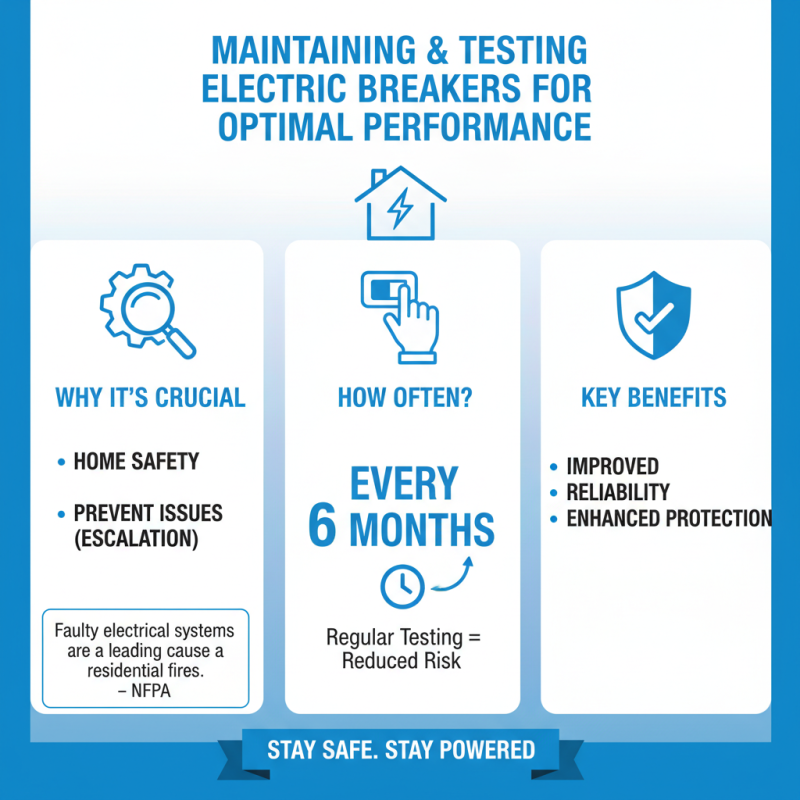
Maintaining and testing electric breakers is crucial for your home's safety. Regular inspections can help identify potential issues before they escalate. According to the National Fire Protection Association (NFPA), faulty electrical systems are a leading cause of residential fires. Testing your breakers every six months can mitigate these risks.
One essential aspect of testing is the circuit breaker trip function. It should trip when overloaded, but occasional tests reveal that some breakers fail to do so. The American National Standards Institute (ANSI) recommends ensuring that breakers trip within 1-2 seconds under overload. If a breaker frequently trips or fails to trip at all, it should be replaced immediately. Many homeowners overlook this, despite its importance.
Another key practice is keeping breakers free from dust and debris. Dirty breakers may heat up, leading to malfunctions. The International Electrotechnical Commission (IEC) suggests cleaning them regularly to improve performance. Inspecting them during routine maintenance can help maintain optimal functionality. It may not be the simplest task, but it is critical for safety. Over time, small oversights in maintenance can lead to larger, costlier issues. Being proactive can make all the difference.