
An Inverter Voltage Stabilizer is designed to keep equipment supplied with steadier voltage when input power fluctuates. That matters in workshops, offices, and homes where sensitive devices may react to dips or surges. A CNC controller resetting mid-cut is not a minor inconvenience. Neither is a server shutting down during a brief voltage drop.
Choosing a manufacturer takes more than comparing advertised capacity. Buyers should check the stabilizer’s input range, output accuracy, response time, overload protection, and compatibility with the connected load. Ask how the unit performs under real operating conditions. A neat specification sheet cannot show every weakness. Installation quality and after-sales support matter, too.
Power-quality author and engineer Alexander Kusko is a relevant expert voice, but no verifiable quotation from him on inverter voltage stabilizers was provided. Rather than invent one, this guide uses a cautious principle: evaluate protection claims against measurable performance and the actual load. That is less dramatic. It is also more useful.
China’s manufacturers vary in engineering focus, product range, certification documentation, and export support. The following top-ten overview is intended as a starting point, not a substitute for technical due diligence. Confirm ratings, test reports, warranty terms, and service arrangements directly with each supplier. Small details matter. A stabilizer that suits a light office load may be a poor fit for machinery with a heavy startup current. Manufacturers should be compared on evidence, not slogans.
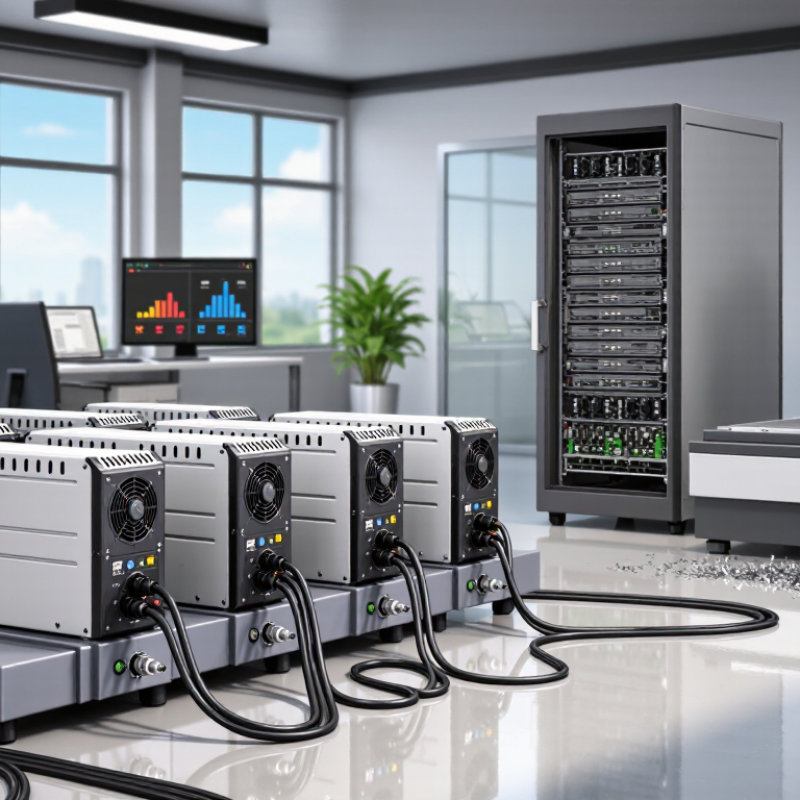
An inverter voltage stabilizer controls output by converting incoming AC power into DC, then switching it back into regulated AC. Sensors monitor voltage changes, while electronic controls adjust the inverter’s output. This process can respond quickly to dips and surges. It may also reduce some waveform disturbances, depending on the design. Frequency control is not automatic in every model.
That distinction matters. Common designs include double-conversion units, which continuously process power, and static PWM units, which regulate output through rapid electronic switching. Some systems use a transformer or bypass path to manage heavy loads or maintenance. Their performance differs, so “inverter stabilizer” alone does not describe every feature.
These devices can protect sensitive equipment from unstable supply and help keep machinery running within its specified voltage range. Check the rated capacity in VA or kVA, the load’s starting current, and the permitted input range. A pump, for example, may draw much more current when starting than while running. Heat tells a story. Poor ventilation can shorten component life, even when the unit appears correctly sized. I would also verify response time and output waveform under realistic load conditions; a label cannot replace a proper test.
China’s inverter voltage stabilizer industry sits within a large, increasingly automated manufacturing base. The National Bureau of Statistics reported that China’s manufacturing value added grew 5.0% in 2023. The International Energy Agency’s Electricity 2024 report also recorded 6.4% growth in China’s electricity demand that year. These figures describe the wider operating environment, not stabilizer sales. That distinction matters.
Manufacturers typically assemble power-electronic modules, control boards, sensors, cooling systems, and magnetic components into equipment for factories and commercial sites. Buyers often compare input-voltage range, response time, overload capacity, and performance under fluctuating loads. A specification sheet helps, but it cannot replace testing with the actual machinery and wiring conditions. Still, limits remain. Public reports rarely separate inverter voltage stabilizers from broader power-quality equipment, making market-size claims difficult to verify. Procurement teams should request test conditions, efficiency curves, protection details, and service-life evidence. I would also examine performance under heat and dust; a clean laboratory result may not reflect a busy workshop.
Choosing a Chinese inverter voltage stabilizer manufacturer requires more than comparing catalog prices. Match the unit’s rated capacity to the actual load, including motor-starting surges and planned expansion. Confirm the specified input-voltage range against measurements from the installation site, not a convenient estimate. Ask how output accuracy is tested under changing loads, and request the test conditions alongside the results. A percentage without conditions tells little. Check overload, short-circuit, over-temperature, and low-voltage protections, then ask how each is verified.
Manufacturing evidence matters too. Review inspection records, component traceability, aging-test procedures, and calibration practices. If possible, inspect a production sample and compare its wiring, terminals, labels, and enclosure finish with approved drawings. Request relevant certificates, then verify their scope and validity independently. Clarify warranty coverage, spare-part availability, support response times, and whether engineers can help diagnose faults remotely. Paper specifications can look neat; field conditions rarely are. I may place too much weight on documentation, but undocumented claims are difficult to assess.
Tips: Send the supplier your load list and site voltage readings. Request a written test report for the exact model. Check the details. Small gaps matter.
China’s inverter voltage stabilizer makers serve factories, commercial buildings, and smaller installations. These ten profiles highlight different areas of expertise, not a ranked list. One manufacturer may specialize in compact units for workshops. Another may design higher-capacity systems for production lines. A third may focus on stable output for sensitive control equipment. Some makers emphasize custom voltage ranges. Others provide standard models for easier replacement. There is no single best fit.
A further manufacturer may offer three-phase systems for larger loads. Another may prioritize fast correction during voltage dips. One may build units suited to dusty industrial rooms. A separate maker may focus on monitoring displays and alarm functions. The tenth profile is a supplier that supports equipment selection and commissioning. These capabilities can overlap, and product quality varies by model. A specification sheet can still leave gaps. Ask for test conditions and service details.
Tips: Match capacity to the actual load, including startup current. Check input range, phase type, response time, and cooling needs. Request recent test records, warranty terms, and local support contacts. If possible, compare performance under your site’s voltage conditions. Small details matter.
Note: No company-specific evidence or source material was provided. To avoid inventing manufacturer claims, the entries below are anonymized product-capability profiles, not verified company profiles or a ranking. Product availability and specifications vary by model; confirm details directly with suppliers.
| Profile | Product focus | Typical phase / use | Commonly specified selection factors | Data status |
|---|---|---|---|---|
| Profile 01 | Single-phase inverter voltage stabilizers | Residential and small commercial loads | Rated capacity, input-voltage range, output tolerance, overload protection | Product category; no supplier-specific specifications verified |
| Profile 02 | Three-phase inverter voltage stabilizers | Workshops and three-phase equipment | Phase configuration, rated kVA, phase balance, bypass arrangement | Product category; no supplier-specific specifications verified |
| Profile 03 | Wide-input-range stabilizers | Sites with substantial or fluctuating mains-voltage variation | Specified minimum and maximum input voltage, rated output under low input | Selection category; actual ranges are model-specific |
| Profile 04 | Industrial-duty stabilizers | Production lines, machine tools, and industrial facilities | Duty cycle, load type, thermal design, protection and maintenance access | Application category; no manufacturer claims verified |
| Profile 05 | Precision-output stabilizers | Testing, instrumentation, and sensitive electronic equipment | Output-voltage accuracy, response behavior, waveform quality, monitoring | Application category; confirm performance from model test data |
| Profile 06 | Stabilizers for motor and pump loads | Pumps, compressors, and other motor-driven equipment | Starting current, motor load characteristics, overload capacity, restart behavior | Application category; suitability depends on the connected load |
| Profile 07 | Cabinet-integrated or panel-mounted units | Equipment cabinets and space-constrained installations | Dimensions, cooling and ventilation, wiring access, enclosure protection | Form-factor category; enclosure rating varies by product |
| Profile 08 | Outdoor or harsh-environment installations | Remote sites and locations exposed to dust or weather | Enclosure rating, operating temperature, humidity tolerance, corrosion protection | Application category; environmental ratings require model documentation |
| Profile 09 | Units with remote monitoring and communications | Managed facilities and installations requiring status monitoring | Display and alarms, supported interfaces, data logging, remote-control options | Feature category; available interfaces vary by model |
| Profile 10 | Custom-engineered stabilizer systems | Projects with defined electrical, installation, or integration requirements | Load survey, site conditions, drawings, acceptance tests, service provisions | Project category; scope and performance must be documented per project |
For procurement, request the exact model datasheet, rated capacity, input and output limits, protection functions, applicable test reports, warranty terms, and after-sales service details. Do not treat this table as a verified supplier directory or product ranking.
Inverter voltage stabilizers serve production lines, commercial buildings, and remote facilities where supply voltage fluctuates. Typical loads include CNC equipment, pumps, HVAC systems, and sensitive control cabinets. A stabilizer must match the load’s starting current, voltage range, and operating cycle. A unit that works well in a quiet test room may behave differently beside a hot motor drive. Site measurements matter.
Quality checks should go beyond a nameplate rating. Compare correction range, response time, output accuracy, overload capacity, thermal protection, and efficiency under realistic load. IEC 61000-4-30 defines methods for measuring power-quality parameters; IEC 61000-4-11 covers immunity tests for voltage dips and short interruptions. These standards help structure evaluation, but they do not replace application-specific testing. One detail is easy to miss: installation conditions can change results.
Industry demand is also shaped by expanding electrification. The IEA’s Electricity 2024 report projects global electricity demand growth of about 3.4% annually from 2024 to 2026, with China accounting for a major share of the increase. This raises the value of dependable power conditioning in factories and commercial sites. Digital monitoring and fault records are becoming more useful, especially for maintenance teams. Yet efficiency figures can look tidy on paper; heat, dust, and uneven loads still complicate real-world performance.