
Top Plastic Blind Drain Suppliers for Global Buyers

A Plastic blind drain can look like a simple roll of polymer mesh, but its performance depends on details buyers cannot judge from a photograph. Core shape, filter fabric, compressive strength, and water-flow capacity all matter. So does the soil around it. A drain that works in clean gravel may clog or deform when conditions change.

Geosynthetics researcher Robert M. Koerner has written extensively about evaluating geosynthetic materials through their properties and intended applications. A practical principle inspired by his work is: “Judge the drainage system under real conditions, not by appearance alone.” This is an editorial paraphrase, not a direct quotation. It points to a useful question for global buyers: can the supplier provide clear test data for the product and explain how it suits the proposed installation?

This guide introduces leading Plastic blind drain suppliers and the evidence buyers can request. Compare product dimensions, filtration details, flow performance, quality-control procedures, and sample availability. Ask how specifications are verified between production batches. Check packaging, lead times, and technical support, too. Those details matter on site. A neatly printed datasheet is helpful, but it cannot replace independent testing or project-specific engineering review. Supplier claims should be checked carefully; even experienced buyers can overlook a mismatch between soil conditions and filter selection. The right choice is not always the cheapest or the thickest product. It is the one whose documented performance fits the project, with uncertainties made visible before the order is placed.
Top Plastic Blind Drain Suppliers for Global Buyers

Plastic Blind Drains: Product Types, Core Designs, and Filter Materials

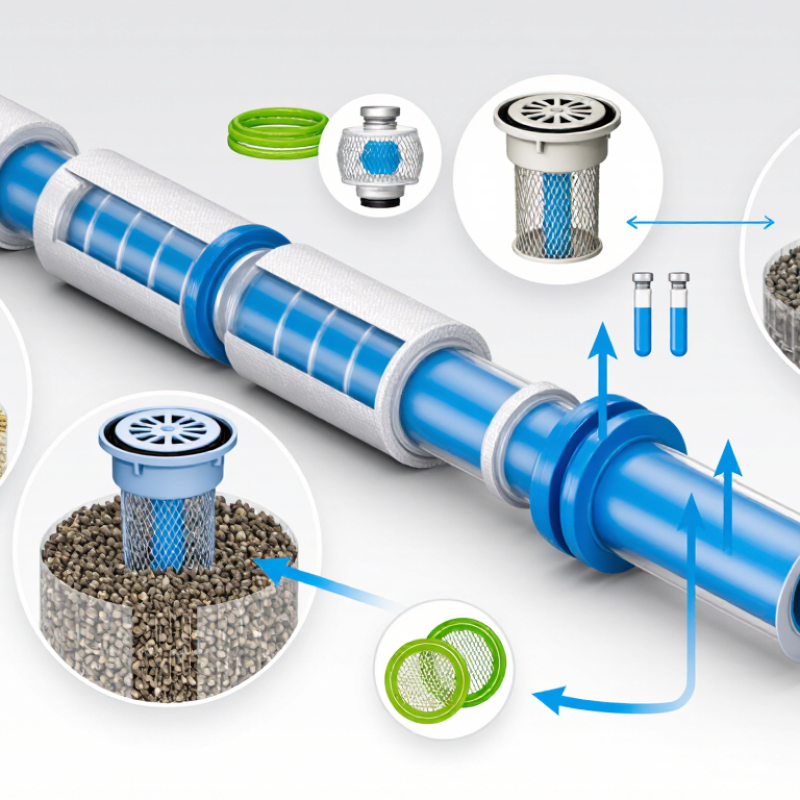
Plastic blind drains are sold as perforated pipe wrapped in filter fabric, molded drainage panels, and geocomposite strips with a polymer core. Pipe suits narrow trenches; panels can collect water across a wider face. Some cores have cusp-shaped dimples, while others use a three-dimensional lattice. Small differences matter.

Core design determines how water moves under soil pressure. Check in-plane flow capacity at the expected compressive load, not only the unloaded catalogue value. Also review outlet spacing, installation depth, and whether joints could admit soil. The Federal Highway Administration’s Geosynthetic Design and Construction Guidelines (FHWA NHI-07-092) discuss filter compatibility and long-term performance. A strong core can still fail if the outlet is poorly placed.

Filter materials are commonly woven or nonwoven geotextiles. Selection depends on soil particle size, water flow, and clogging risk; apparent opening size and permittivity should be checked using applicable ASTM test methods. There is no universal fabric. Grand View Research estimated the global geosynthetics market at about USD 13.2 billion in 2023, but market growth does not prove a drain suits a particular site. A sieve analysis and a sample installation review are more useful than a broad product label. Field conditions can be messy.

Key Performance Data: Flow Capacity (L/s·m), Compressive Strength, and Pore Size

For plastic blind drains, flow capacity should be reported in L/s·m under stated test conditions, not as a number without context. Hydraulic gradient, sample thickness, and compressive load can all change the result. Ask suppliers for test reports showing these conditions and whether flow was measured along the drainage core.

A small bench sample may look impressive. Field loading can tell a different story.

Compressive strength needs a defined method and deformation limit. A peak-load figure alone may hide how much the core crushes before reaching it. Check whether performance is reported after sustained loading, since creep can reduce drainage space over time.

Pore size matters too. It affects water entry and the risk of soil particles migrating into the drain, but one nominal opening size cannot suit every soil. Request pore-size distribution data and compare it with the project’s soil grading.

This part is often overlooked. It is also easy to over-specify a fine pore structure and restrict flow.

Compare like-for-like test data, then confirm suitability with project-specific soil and load conditions. A clear datasheet helps; an unexplained headline value does not.

Testing Drainage Products: ASTM D4716 Flow and ASTM D4491 Permittivity

A plastic blind drain must move water along its core while allowing water to enter through its filter layer. ASTM D4716 measures in-plane flow under a stated hydraulic gradient and compressive load. That load matters: a drainage core can flatten when soil presses against it. Ask for the test conditions, including specimen thickness, gradient, and applied pressure. A flow figure without these details is hard to compare.

ASTM D4491 measures water permeability and permittivity of geotextiles, commonly used as the drain’s filter layer. Permittivity indicates how readily water passes through the fabric under the test conditions. It does not, by itself, predict long-term performance in silty soil. Small details matter. Check whether the tested fabric matches the supplied product, and review the specimen preparation and reported values. It is tempting to treat one clean laboratory result as proof; that is too simple. Field performance also depends on soil contact, installation, and potential clogging. Request test reports that identify the method, sample, and conditions, then compare products on the same basis. A neat number is useful, but it is not the whole story.

Top Plastic Blind Drain Suppliers for Global Buyers - Testing Drainage Products: ASTM D4716 Flow and ASTM D4491 Permittivity

Evaluation item ASTM method or property What is measured Typical reporting units Information buyers should request Interpretation note
In-plane drainage capacity ASTM D4716/D4716M Flow along the plane of a geosynthetic under a stated hydraulic gradient and normal compressive stress. Flow rate per unit width: m²/s; transmissivity: m²/s; hydraulic gradient: dimensionless Test specimen construction, flow direction, hydraulic gradient, applied normal stress, test duration, and reported flow or transmissivity. Results depend on the test conditions. Compare products only when the reported conditions are equivalent or the differences are clearly accounted for.
Geotextile water flow across its plane ASTM D4491/D4491M Water permeability of a geotextile using the permittivity method, with flow normal to the specimen plane. Permittivity: s⁻¹ Test method, specimen identification, conditioning, test result, and whether the tested geotextile is the same grade used in the drain product. This method applies to geotextiles; it does not by itself measure the in-plane flow capacity of a plastic drainage core.
Drainage-core configuration Product construction information Core profile and the configuration of any attached filter geotextile or protective layers. Core thickness: mm; roll width and length: m Cross-section drawing, nominal dimensions, material description, and confirmation of which layers were included in each test specimen. A result for a geotextile alone should not be represented as a test result for the assembled blind drain.
Test condition comparability D4716 and D4491 test reports Whether test setup and specimen details allow a meaningful comparison between reported results. Record the units and conditions used in each report. Ask for the full report or a traceable summary that identifies the method, specimen, test conditions, result, and laboratory. A standard test method does not establish a universal pass/fail threshold; project specifications determine acceptance criteria.
Project suitability Design and installation review Whether the tested drainage properties and product configuration suit the intended soil, loading, flow path, and installation details. Project-specific; use specified design units. Design flow demand, expected compressive stress, filter compatibility, connection details, and applicable project acceptance criteria. Laboratory measurements support product evaluation but do not replace project-specific engineering design.

Buyer checklist: verify the ASTM method and edition cited in the report, confirm whether the specimen represents the complete drain assembly or an individual component, and compare results only under clearly stated test conditions.

Comparing Global Suppliers: Manufacturing Capacity, Export Markets, and Standards

Top Plastic Blind Drain Suppliers for Global Buyers

Comparing suppliers means looking beyond quoted price. Ask how many production lines run regularly, and whether capacity changes during peak construction seasons. A factory with steady extrusion or molding output can support repeat orders, but stated monthly volume needs evidence. Request recent production records, sample dimensions, and test results for drainage capacity and compressive strength. Small details matter. Check whether filter fabric, core geometry, and connectors match your project drawings.

Tips: Ask for samples from current production, not a specially prepared display piece. Confirm packing dimensions, pallet protection, lead time, and export experience in your destination market. A supplier familiar with long sea routes should explain how it prevents crushing and moisture damage. Verify the details in writing.

Export history can reveal useful practical experience, though it does not guarantee product quality. Ask which regions the supplier serves and whether it can provide references for similar climates or installation conditions. Standards vary by project and destination, so specify the required test methods and acceptance limits before ordering. Request traceable reports from a qualified laboratory, and compare the reported conditions with your project requirements. One point deserves a second look: suppliers may describe capacity differently, so clarify whether figures mean installed capability or actual monthly shipments.

Global Buyer Checklist: Specifications, Sampling, Lead Times, and Quality Control

Top Plastic Blind Drain Suppliers for Global Buyers

Grand View Research valued the global geosynthetics market at USD 13.2 billion in 2023 and projected 6.3% annual growth through 2030. Its report covers a broad product category, not blind drains alone, but it signals a competitive, expanding supply market. Buyers should compare measurable performance, not just price. Request the drain core dimensions, compressive strength, and flow capacity under stated pressure and hydraulic gradient. Check the filter fabric’s apparent opening size and water permittivity against project soil conditions. ASTM D4751 and D4491 provide relevant test methods. Small details matter.

Ask for a production sample, not only a hand-cut display piece. Test a full section with its fabric and joints; inspect for crushed channels, uneven bonding, and rough cut edges. Confirm test conditions match the intended installation. A published flow value without pressure or gradient is hard to compare. It happens.

Get written lead times for sampling, production, and shipping, including assumptions about order quantity and packaging. For quality control, request batch traceability, inspection records, and agreed sampling frequency. ISO 9001 certification can support process consistency, but it does not prove a drain meets your project’s performance requirements. One weakness in many purchasing plans is relying on a single sample. That is convenient, but production variation may still surprise you. Specify acceptance criteria before ordering, and retain samples from delivered batches for comparison.

Top Plastic Blind Drain Suppliers for Global Buyers

Global Buyer Checklist: Specifications, Sampling, Lead Times, and Quality Control

The chart shows example sample sizes for normal, single-sample inspection at General Inspection Level II under ISO 2859-1. Confirm the applicable edition, inspection severity, and acceptance criteria for each order. Separately verify product specifications, request samples, and obtain written production and shipping lead times from suppliers.

Blogs