What is a Miniature Circuit Breaker and How Does It Work?
Understanding what a Miniature Circuit Breaker (MCB) is can help in many ways. These devices are essential for protecting electrical circuits. An MCB automatically shuts off power when it detects abnormalities, such as overloads or short circuits. This function plays a crucial role in preventing electrical fires and equipment damage.
The design of a Miniature Circuit Breaker is compact yet effective. It features simple mechanisms that respond to changes in electrical flow. When excessive current flows, the MCB trips quickly, disconnecting the circuit. This action protects both people and property from potential hazards. However, many users may not fully grasp how it works.
Learning about MCBs can reveal gaps in knowledge. For example, incorrect sizing can lead to nuisance tripping. Additionally, installation mistakes can compromise safety. Therefore, understanding how to choose and operate these devices is vital. A Miniature Circuit Breaker is a small but powerful protector in any electrical system.
Definition and Purpose of a Miniature Circuit Breaker
A Miniature Circuit Breaker (MCB) is a crucial safety device used in electrical systems. Its primary purpose is to protect against overcurrents. When the current exceeds a predetermined limit, the MCB automatically shuts off the circuit. This mechanism prevents overheating and potential fires in homes and industrial settings. According to the International Electrotechnical Commission, MCBs help reduce fire risks associated with electrical faults.
MCBs are designed to handle various current ratings, typically from 0.5 A to 125 A. The choice of rating is essential for ensuring protection against overloads. Industry studies suggest that MCBs can trip in milliseconds, offering quick response times. However, not all installations use MCBs effectively. Some electrical systems may require more surveillance or additional protective measures. Proper installation and maintenance are crucial for maximizing safety benefits.
Adopting MCBs significantly decreases the risk of electrical hazards. Yet, many users overlook the importance of regular testing. Regular inspections ensure these devices function correctly. This vigilance can save lives and reduce property damage. Many homes still rely on outdated fuses, missing out on modern protection levels. Education on MCB functionality can bridge the gap between awareness and effective usage.
Components of a Miniature Circuit Breaker
A miniature circuit breaker (MCB) is essential in electrical systems. It protects circuits from overloads and short circuits. Understanding its components helps in grasping how it works.
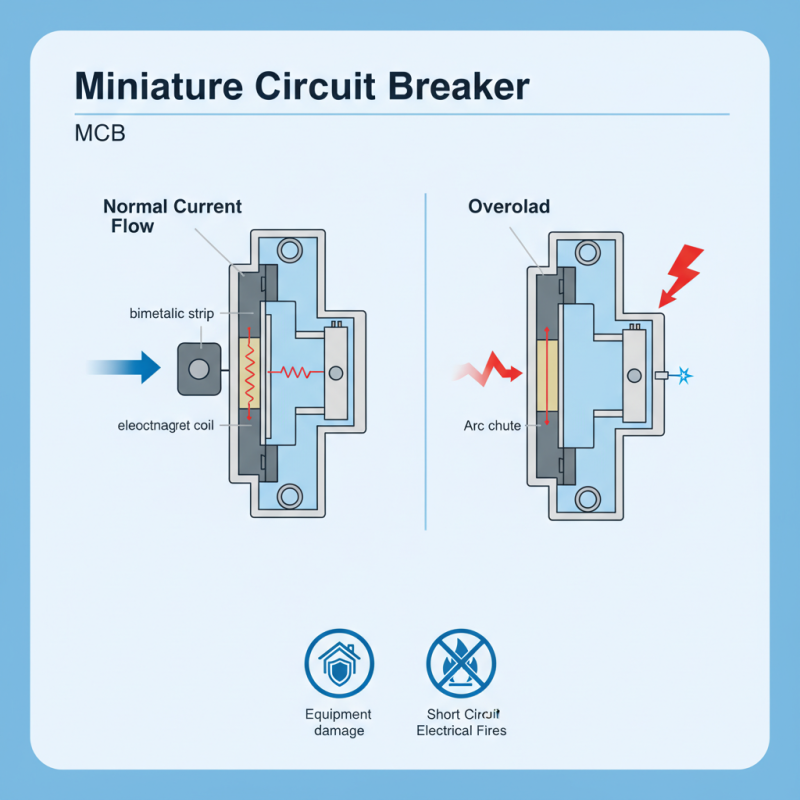
The primary components include the switch, bimetallic strip, and electromagnetic coil. The switch allows users to manually turn the MCB on or off. When an overload occurs, the bimetallic strip bends due to heat. This bending trips the switch, cutting off power. It’s a simple mechanism, yet effective.
The electromagnetic coil is important as well. It responds to short circuits. When current surges, the coil creates a magnetic field. This field pulls a latch to open the circuit quickly. Each component plays a unique role in safeguarding electrical systems, making it a critical device for safety. Nonetheless, understanding these parts can be complex. Many people overlook basic maintenance, which is crucial for effective operation.
How a Miniature Circuit Breaker Operates
A miniature circuit breaker (MCB) is a crucial safety device in electrical systems. It prevents overcurrent and short circuits, automatically cutting off the power supply. When the current exceeds a specified limit, the MCB detects the anomaly and responds quickly. This automatic shut-off helps protect electrical circuits and connected devices.
An MCB operates through a bimetallic strip and an electromagnet. The bimetallic strip bends under excessive heat due to high current. This movement triggers the mechanism to open the circuit. Meanwhile, the electromagnet activates during a short circuit, pulling the switch open. This dual action ensures rapid disconnection, minimizing risks.
Despite their efficiency, MCBs are not infallible. Sometimes, they may trip unnecessarily due to minor surges. This can be frustrating for users, causing inconvenience. Regular checks are essential to ensure they function correctly. Understanding how these devices operate can help users appreciate their importance in electrical safety.
Types of Miniature Circuit Breakers and Their Applications
Miniature circuit breakers (MCBs) are crucial in modern electrical systems. They come in various types, each suited for specific applications. The most common are B, C, and D types. Type B is designed for residential use, protecting against overloads in lighting and small appliances. Type C is used for commercial applications, handling motors and transformers. Type D suits heavy industrial scenarios, capable of managing inrush currents from large equipment.
According to industry reports, the global MCB market is projected to grow significantly, reaching $9.22 billion by 2026. Different regions are seeing varying demand. In Europe, there's a strong push for energy-efficient solutions. Meanwhile, Asia-Pacific is rapidly expanding. Not all MCBs are created equal. For some applications, the selection can be challenging. MCBs must be correctly rated to ensure safety. Oversizing can lead to nuisance tripping. Conversely, undersizing can result in equipment damage. It's essential to evaluate system requirements carefully.
Some users overlook maintenance needs. Dust and moisture can affect performance. Regular inspections can prevent failures. Still, many neglect this aspect. Identifying when an MCB needs replacement is not always clear. Users should be educated about signs of wear. This can enhance reliability and safety. Understanding circuit breaker types helps in making better choices. Choosing the right MCB can significantly impact the overall performance of electrical systems.
Installation and Maintenance of Miniature Circuit Breakers
When installing a miniature circuit breaker (MCB), it’s essential to follow guidelines for safety and efficiency. Begin by selecting the right MCB based on the load requirements. Check the amp rating carefully. Using an incorrect rating can lead to tripped breakers or, worse, electrical fires. Mount the MCB securely in the distribution board. Ensure there’s adequate space around it for heat dissipation.
During installation, connect the wires properly. The live wire should go to the input terminal, while the output terminal connects to the circuit. Tighten all terminals to prevent any loose connections. After installation, perform a test by pressing the test button on the MCB. This action ensures that the breaker trips correctly under fault conditions.
Maintaining MCBs is often overlooked. Regularly inspect for signs of wear, discoloration, or unusual noise. It’s advisable to check connections yearly. Dust can accumulate, affecting performance. Keeping the area clean is crucial. If unsure, consulting a professional electrician is wise. They can provide an in-depth check and advice on any needed changes. Neglecting maintenance can lead to failures when they are most needed.



