
Commercial kitchens need equipment that can move from browning to braising without slowing service. A Freestanding Bratt Pan can handle both, while offering a broad, heated surface for batch cooking. Picture onions softening beside diced meat, or a deep pan of stock simmering before lunch. The right model can support those jobs and simplify production. The wrong one can take up valuable floor space or leave staff waiting for heat.
This guide compares ten models through practical details: capacity, pan dimensions, heating method, temperature controls, tilting, cleaning access, and service support. These features matter more than a polished product photo. A kitchen preparing sauces for a small team may value precise control, while a high-volume operation may need faster recovery between batches. And a larger pan is not always better. It can be difficult to fill, clean, or use efficiently when production varies.
Specifications and supplier guidance provide a useful starting point, but installation needs should also be checked with a qualified professional. Confirm available power or gas connections, ventilation requirements, clearance, and staff workflow before choosing. Product features and performance can differ by configuration, so verify details directly with the manufacturer or supplier. There is no perfect model for every kitchen. This comparison aims to make the trade-offs clearer, even where a feature that looks useful on paper may prove less important during a busy shift.
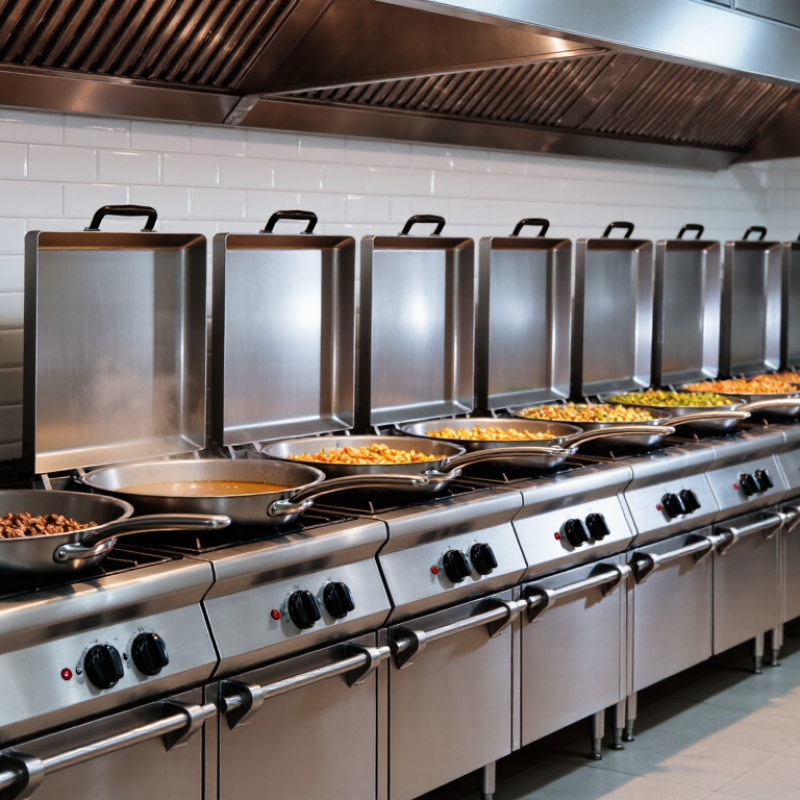
A freestanding bratt pan is a floor-standing commercial cooking appliance, usually built with a deep, wide pan set on an integrated base. In many kitchens, it is also called a tilting skillet. Its own legs or cabinet support the unit, so it does not sit on a worktop.
That distinction matters. Counter space stays available, while staff can cook larger batches at a comfortable working height.
The pan typically has a heated base and sides, a fitted lid, and controls for adjusting temperature. Depending on the model, it may use gas or electricity and tilt forward to pour food into a container. This makes it useful for browning meat, simmering sauces, or cooking vegetables in one vessel.
Details vary, so check the listed capacity, power supply, and cleaning requirements before planning an installation. A large pan is not automatically the right choice. It can take longer to heat when only a small amount of food is being prepared. I would also leave enough space in front for safe tilting and draining.
The term “freestanding” describes how the appliance is supported; it does not mean the unit needs no utility connections or installation planning.
A freestanding bratt pan combines a broad, heated surface with a deep bowl, so cooks can sear, simmer, braise, and stir large batches without changing vessels. That flexibility suits diced beef, onions, and stock reduced together, or rice stirred until it absorbs liquid. For fish or eggs, lower heat and gentle movement help limit sticking and breakage. Small details matter: a crowded pan releases moisture and can slow browning. Not every task feels effortless.
Food safety still depends on checking the food, not trusting the pan’s dial. USDA FSIS guidance sets minimum internal temperatures at 160°F for ground meat, 165°F for poultry, and 145°F for whole cuts of beef, pork, and lamb, followed by a three-minute rest. The FDA Food Code 2022 sets 135°F as the minimum for hot holding. These figures guide cooking and service, but they do not replace a calibrated probe. A bratt pan’s large surface can also heat unevenly, especially with thick batches. Stir, check several spots, and allow time for recovery after adding cold ingredients. That extra check is easy to skip. It shouldn’t be.
Bratt pans can sauté, shallow-fry, simmer, and braise a wide range of foods. Times shown are illustrative estimates; actual cooking time depends on batch size, ingredient size, starting temperature, recipe, and heat setting.
A useful comparison of freestanding bratt pans starts with the kitchen’s actual workload. Check the usable cooking area, not just the stated capacity. A pan that holds 80 litres may still feel cramped when cooks need space to brown meat in batches. Measure doorways, aisle clearance, and the unit’s footprint before considering installation.
Heat control matters during a busy service. Look for responsive temperature adjustment and even heat across the base, especially if the menu shifts from searing to simmering. Ask how quickly the pan recovers after cold ingredients are added. Test the tilting mechanism with a full load if possible; a smooth empty pan can behave differently under weight. Small details count. Controls should be readable, and handles should remain comfortable during repeated use.
Construction and cleaning affect daily reliability. Inspect seams, corners, the drain outlet, and any areas where food or grease could collect. Confirm that staff can clean these spots without awkward reaching. Also compare power or fuel requirements, ventilation needs, warranty terms, and access to routine servicing. A low purchase price can be misleading. No checklist is perfect. One detail is easy to miss: a pan may perform well in a demonstration but suit your kitchen poorly if its batch size, workflow, or cleaning routine differs.
Freestanding bratt pans earn their floor space when a kitchen needs to braise, simmer, shallow-fry, and batch-cook in one vessel. For a top-ten comparison, start with the menu and peak batch size, not the largest capacity on paper. The National Restaurant Association’s 2024 State of the Restaurant Industry projected U.S. restaurant sales of $1.1 trillion and employment of 15.7 million. That scale makes reliable workflow important, but the report does not prove that any single pan improves output.
Compare each pan’s usable capacity, heating response, temperature control, and tilting method. Check whether staff can pour safely into a receiving container, reach the corners during cleaning, and operate controls without crossing a hot work area. Electric and gas models suit different site services, so confirm available connections before comparing prices. Small details matter.
Ask suppliers for demonstrations using a similar load to your busiest service. Observe how evenly the base heats and how quickly it recovers after ingredients are added. Rated capacity can mislead; usable space depends on the recipe and safe working depth. I would also check parts access and service support, though these are easy to overlook when a kitchen is under pressure. A neat specification sheet is not a kitchen trial.
A freestanding bratt pan’s capacity should match the batch, not the busiest day imagined on paper. A 20-gallon model may suit sauces, grains, and modest braises; larger pans help when kitchens cook soups or vegetables in bulk. But a deeper, fuller pan takes longer to heat and unload. Scraping the corners matters, too. EIA’s 2018 Commercial Buildings Energy Consumption Survey reports food-service buildings use about 263,000 Btu per square foot annually, making heat efficiency a practical selection factor. Gas models often respond quickly to temperature changes, while electric units can provide even heat across the base. Check available utilities and ventilation before comparing purchase prices.
Application shapes the choice. A hotel kitchen serving staggered meals may value responsive heat and flexible batch sizes. A school or production kitchen may prioritize large capacity and repeatable cooking. For hot holding, the FDA Food Code sets a minimum of 135°F for hot-held time/temperature control foods; verify the local operating standard and the pan’s control accuracy. Small details matter. Test how smoothly the vessel tilts when full, and whether staff can reach the pouring lip without crossing a busy aisle. A 40-gallon pan can still be a poor fit if most batches are small. I would recheck that assumption against a week of actual production records.
| No. | Representative Nominal Capacity | Common Heat Sources | Typical Cooking Strength | Suitable Kitchen Applications |
|---|---|---|---|---|
| 1 | 40 L | Electric or gas, depending on configuration | Compact batch cooking with a relatively small cooking surface | Small restaurants, cafés, side dishes, sauces, and low-volume sautéing |
| 2 | 60 L | Electric or gas, depending on configuration | Small-to-medium batches with room for browning and shallow frying | Independent restaurants, school kitchens, and regular vegetable or meat preparation |
| 3 | 80 L | Electric or gas, depending on configuration | Versatile medium-volume cooking for multiple menu components | Busy restaurants, hotel kitchens, and batch preparation of stews, grains, and sauces |
| 4 | 100 L | Electric or gas, depending on configuration | Higher-volume cooking with a broad, flat pan surface | Institutional kitchens, catering operations, and larger restaurant services |
| 5 | 120 L | Electric or gas, depending on configuration | Large-batch sautéing, braising, shallow frying, and simmering | Hotels, hospitals, schools, and central production kitchens |
| 6 | 150 L | Electric or gas, depending on configuration | High-volume batch production; requires suitable floor space and services | Large institutional catering, production kitchens, and high-output food service |
| 7 | 200 L | Electric or gas, depending on configuration | Very large batches for cooking, braising, and reducing | Central kitchens, large hospitals, universities, and contract catering |
| 8 | 250 L | Electric or gas, depending on configuration | Large-scale production with significant space and utility requirements | High-volume meal production and large-scale institutional food service |
| 9 | 300 L | Electric or gas, depending on configuration | Extra-large batch cooking intended for substantial daily output | Central production facilities, major catering operations, and large institutions |
| 10 | Capacity selected for the installation (commonly within the commercial range above) | Electric or gas; select according to site utilities and equipment availability | Capacity and heating arrangement matched to workflow, menu, and service volume | New kitchen projects where pan capacity, available utilities, ventilation, and floor layout must be planned together |
| Capacity figures are representative nominal size classes, not a ranking of specific products. Available capacities and heat-source options vary by equipment range. Confirm the manufacturer’s specifications, installation requirements, and local ventilation and utility requirements before purchase. | ||||