
China Top Carbon Fiber Sheet Manufacturers How to Choose?

China’s carbon fiber industry has moved from limited domestic supply toward broader aerospace, automotive, wind energy, and sporting goods applications. The JEC Group and Estin & Co. reported continued global composites growth in their 2024 market analysis, while China Carbon Fiber Association publications have highlighted expanding Chinese production capacity. These figures matter, but capacity is not the same as dependable quality.

Choosing among China’s top manufacturers requires more than comparing prices. A reliable Carbon Fiber Sheet supplier should clearly identify fiber grade, fabric type, resin system, thickness tolerance, and intended application. Ask for current technical data, not only a polished brochure. Tensile and flexural results should reference recognized methods, such as ASTM D3039 and ASTM D7264. Check whether testing is internal or independently verified.

Look closely.

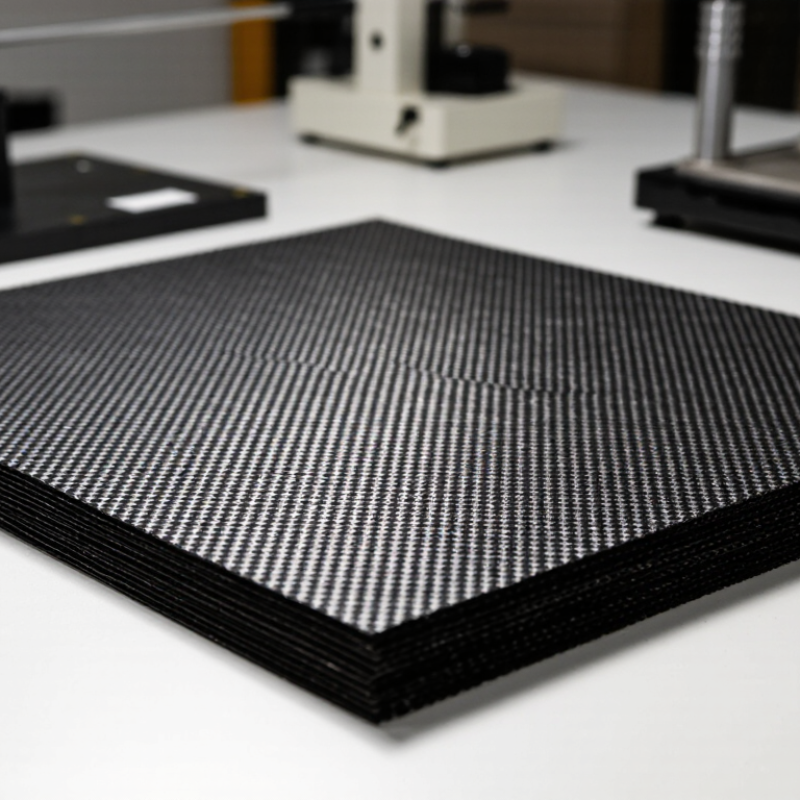
Request production samples. Examine the surface for pinholes, resin-rich edges, waviness, and uneven curing. For a 2-millimeter laminate, even small thickness variations can affect assembly fit and bending performance. Confirm batch traceability, storage temperature, shelf life, and packaging protection. ISO 9001 certification is useful, but it does not replace application-specific testing.

Industry reports sometimes use different definitions for capacity, output, and finished laminate production. That makes direct comparisons imperfect. A manufacturer listed as “top” may still lack stable export experience or suitable engineering support. My practical view is simple: shortlist suppliers by verified performance, process control, communication, and after-sales responsibility. Price should remain important, but it should not decide alone.
China Top Carbon Fiber Sheet Manufacturers How to Choose?

What Defines a Reliable Carbon Fiber Sheet Manufacturer in China?

A reliable carbon fiber sheet manufacturer in China proves consistency, not just production capacity. CompositesWorld’s 2024 Carbon Fiber Capacity report estimates worldwide capacity above 200,000 metric tonnes annually. Capacity alone says little about sheet quality. Buyers should inspect fiber grade, resin system, fiber orientation, thickness tolerance, and curing records.

Look for ISO 9001 procedures, but do not stop there. The ISO Survey 2022 recorded more than 1.2 million ISO 9001 certificates worldwide. Certification supports process control, yet it does not guarantee excellent carbon fiber sheets. Ask for batch-level traceability, resin-content data, and test reports using ASTM D3039 or equivalent methods. A dependable factory can show measured tensile strength, not only catalogue values.

Small details matter. Check whether each panel carries a batch number. Request samples from different production dates. Compare surface waviness, edge cutting, pinholes, and thickness with a micrometer. Production staff should explain storage temperature and moisture control without hesitation. A low quotation can hide unstable resin content or weak inspection practices. I have seen polished audit files create false confidence. That remains a sourcing risk. The strongest supplier welcomes an independent pre-shipment inspection and accepts reasonable corrective actions when data misses the agreed specification.

Which Carbon Fiber Sheet Specifications Match Your Application?

Choosing carbon fiber sheet begins with the load, not the catalog photograph. A mounting plate for a drone arm needs different properties from a chemical tank cover. Define load direction, span, impact risk, operating temperature, and allowable deflection. Keep it practical. Measure twice. If stiffness controls performance, compare flexural modulus and thickness together. A very thin, high-modulus sheet may still bend more than a thicker standard laminate. For repeated vibration, request fatigue data, not only tensile strength. This distinction is often missed.

The fiber layout must match the force path. Unidirectional sheets work well along one main axis. Woven sheets distribute loads across two directions and resist handling damage better. Quasi-isotropic laminates suit parts receiving changing loads. Check fiber volume, resin system, cure method, and surface finish. These details affect weight, bonding, and dimensional stability. For outdoor use, confirm moisture resistance and service temperature. A glossy surface looks precise, but it does not prove flatness.

A dependable manufacturer should provide lot traceability, thickness tolerance, test methods, and inspection records. Request a small sample before approving production. Test it with your adhesive, fasteners, and actual temperature range. Real assemblies can behave differently. I have seen a perfect coupon fail after a poorly prepared bond line. Supplier communication matters too. Ask whether custom cutting, protective films, and edge sealing are available. Leave room for uncertainty. Specifications guide the choice; application testing earns confidence.

China Top Carbon Fiber Sheet Manufacturers: How to Choose?

Which carbon fiber sheet specifications match your application?

Typical cured-laminate tensile strength varies by carbon fiber grade. Standard-modulus sheets are commonly selected for general structural panels, intermediate-strength sheets for lightweight automotive and industrial parts, high-strength sheets for load-bearing components, and high-modulus sheets when stiffness and dimensional stability are the main priorities. Actual values depend on fiber volume fraction, resin system, lay-up, and testing method.

How to Evaluate Material Quality, Testing, and Certification?

Choosing among China’s top carbon fiber sheet manufacturers requires more than comparing prices.
Material quality begins with fiber grade, weave, resin system, and sheet thickness. Ask for a batch-specific datasheet, not a general brochure. Check fiber orientation under bright light. Uneven weave, resin-rich edges, pinholes, or waviness can signal weak processing. A clean surface is useful, but it does not prove structural performance.

Request test results for tensile strength, flexural strength, modulus, interlaminar shear, and void content. Values should include test standards, specimen dimensions, conditioning, and failure modes. Independent laboratory reports deserve more weight than internal spreadsheets. Verify that the tested batch matches the proposed shipment. It sounds obvious. It is often missed.

Certification also needs careful reading. ISO 9001 supports process control, while product compliance requires relevant material or application standards. Confirm certificate scope, issuing body, expiry date, and traceability records. Ask how the factory controls curing temperature, pressure, and post-cure time. I would also request samples from two production lots. One sample can hide variation. In practice, supplier evaluation is rarely perfect; inconsistencies may appear after machining or heat exposure. Record those findings, challenge unclear data, and choose the manufacturer that responds with evidence rather than polished promises.

What Should You Compare in Pricing, Customization, and Production Capacity?

Choosing a Chinese carbon fiber sheet manufacturer requires more than comparing the lowest quotation. MarketsandMarkets’ 2024 study forecasts roughly 10% annual growth for the global carbon fiber market through 2028. Rising demand can affect fiber, resin, energy, and freight costs. Ask whether pricing is calculated per kilogram, square meter, or finished panel. Request a full cost breakdown. The cheapest quote can hide higher waste.

Customization deserves equal attention. Confirm fiber orientation, resin system, thickness tolerance, surface finish, and cutting accuracy. A ±0.2 mm tolerance may suit a cover, but not a structural component. Require drawings, material certificates, and sample testing before mass production. Lucintel’s 2024 industry analysis highlights growing demand for application-specific composite solutions. Yet, customization may reduce production efficiency. This point is often overlooked.

Tips: Compare capacity with evidence, not promises. Request monthly output, active production lines, curing equipment, lead time, and recent delivery records. A factory claiming 500 tonnes monthly should explain its available capacity for your order. Check whether capacity is shared with other customers. Also review testing equipment and quality-control frequency. ISO certification helps, but it does not replace batch inspection. I would compare three suppliers using the same specification sheet. Even then, the decision may remain imperfect; capacity figures can change quickly during peak seasons.

China Top Carbon Fiber Sheet Manufacturers How to Choose? - What Should You Compare in Pricing, Customization, and Production Capacity?

Comparison Dimension Typical Market Reference What to Request from a Manufacturer Pricing or Quality Impact Recommended Evaluation
Sheet Type Unidirectional, bidirectional woven, quasi-isotropic, or sandwich-panel construction Fiber orientation, laminate schedule, resin system, and technical drawing More fiber directions and complex layups generally increase material and processing costs Select the simplest layup that meets the load-direction requirements
Indicative Price Approximately USD 25–180 per m² for many standard sheet configurations; special grades may be higher Ex-works price, currency, quotation validity, packaging, tooling, and shipping terms Price varies significantly with thickness, fiber grade, surface finish, volume, and tolerances Compare quotations using the same dimensions, material grade, quantity, and Incoterm
Thickness Range Common commercial sheet thicknesses are about 0.5–10 mm; thicker panels may require special processing Nominal thickness, tolerance, measurement method, and allowable flatness deviation Tighter tolerances and thicker laminates usually require additional processing and inspection Request a dimensional inspection report for each production batch
Standard Sheet Size Common formats include approximately 500 × 500 mm, 1000 × 1000 mm, and 1220 × 2440 mm Maximum press, autoclave, or continuous-lamination working area Oversized panels may involve special tooling, higher handling costs, or additional joints Confirm usable dimensions rather than only the equipment’s external dimensions
Customization Capability Typical options include custom length, width, thickness, hole patterns, edge profiles, and fiber orientation 2D drawings, 3D files, tolerance table, annual volume, and prototype requirements Prototype tooling and low-volume production usually have a higher unit cost Evaluate whether the supplier can manufacture to drawings without excessive secondary machining
Production Capacity Small custom operations may handle hundreds to a few thousand m² per month; larger production lines can support several thousand m² or more Monthly rated capacity, current utilization, number of production lines, and peak-season allocation Higher available capacity can reduce lead-time risk, but rated capacity is not the same as available capacity Ask for recent production records or a capacity statement related to your exact product
Lead Time Samples commonly require about 7–21 days; repeat production often requires approximately 3–8 weeks, depending on specifications Sample lead time, mass-production lead time, raw-material availability, and holiday schedule Short deadlines may require premium freight, reserved capacity, or additional production shifts Use a written production schedule with sample approval and shipment milestones
Mechanical Performance Performance depends on fiber grade, fiber volume fraction, orientation, resin, and curing method; published values are not universal Tensile, flexural, interlaminar shear, modulus, density, and test standards Higher-performance fibers, optimized layups, and tighter testing requirements increase cost Compare test data produced under the same ASTM, ISO, or EN method
Surface Finish Typical choices include 3K twill, 3K plain weave, matte, gloss, peel-ply, coated, or machined surfaces Surface photographs, roughness requirement, cosmetic acceptance standard, and coating specification Cosmetic surfaces and controlled gloss levels may increase inspection and rejection costs Approve a physical reference sample before bulk production
Quality Control Basic controls should cover dimensions, weight, appearance, cure condition, and mechanical performance Inspection plan, batch traceability, calibration records, nonconformance procedure, and sample reports More comprehensive inspection lowers application risk and may add testing fees Give preference to suppliers able to provide batch-level traceability
Minimum Order Quantity Standard sizes may be available in low quantities; customized laminates commonly require a minimum order or setup charge Minimum order, sample policy, setup fee, tooling ownership, and price breaks by volume Larger orders generally lower unit cost by spreading setup and tooling expenses Compare total landed cost, not only the quoted unit price
Certifications and Compliance Common management-system references include ISO 9001; aerospace, automotive, or medical projects may require additional sector-specific approvals Valid certificates, scope of certification, audit date, material declarations, and regulatory documents Additional compliance, testing, and documentation can increase procurement cost Verify certificates with the issuing organization and confirm they cover the actual factory
Packaging and Delivery Flat protective packaging, moisture protection, corner protection, and export cartons are commonly used Packaging drawings, pallet dimensions, gross weight, shipping method, and damage-claim procedure Large or fragile sheets may have higher freight and packaging costs than their unit price suggests Request a landed-cost quotation based on the destination and delivery term

Note: Price, capacity, and lead-time figures are indicative industry reference ranges rather than quotations from any specific company. Actual results depend on material grade, dimensions, order volume, tooling, testing requirements, and delivery terms.

How Can You Verify Supplier Experience, Service, and Delivery Reliability?

When choosing China’s top carbon fiber sheet manufacturers, verify experience through production evidence, not website claims. Ask for project records covering thickness, fiber orientation, resin system, and annual volume. The International Energy Agency reported over 14 million electric car sales in 2023, creating stronger pressure on lightweight composite supply chains. Experienced suppliers should explain how they manage this demand without weakening inspection controls.

Request recent batch reports, tensile and flexural test results, and complete lot traceability. Check whether testing follows recognized standards, such as ASTM or ISO methods. A useful audit should include resin storage, curing equipment, cutting accuracy, and packing conditions. It should also confirm ISO 9001 procedures, calibration records, and corrective-action logs. Certificates alone are not enough. A clean document may hide inconsistent workshop practice.

Service reliability appears in response speed and technical judgment. Ask for a drawing review before ordering samples. Compare the promised lead time with production schedules, export documents, and previous on-time delivery data. The World Bank’s Logistics Performance Index shows that customs, tracking, and shipment reliability strongly affect international delivery outcomes. Require a written contingency plan for material shortages or equipment failure. I would also test one small batch before scaling. This costs more initially, but rushed trust can cost much more later. Verification is never perfect. That is the uncomfortable part.

Blogs