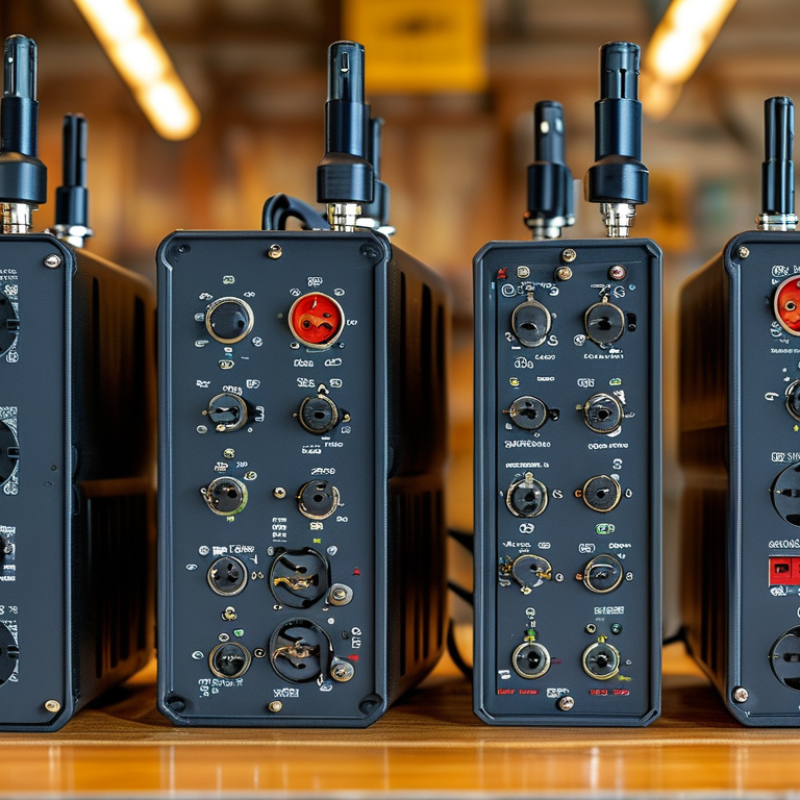
How to Choose the Right Power Phase Converter for Your Needs?
Choosing the right Power Phase Converter can impact your operations significantly. Many users overlook key factors that influence their choice. Understanding your specific needs is crucial for making an informed decision.
A Power Phase Converter transforms single-phase power to three-phase power, allowing you to run three-phase equipment. It's essential to evaluate the power requirements of your machinery. Mismatches can lead to inefficiencies and even damage to devices.
Moreover, consider the installation space and maintenance needs. Some converters require more room and upkeep than others. Reflecting on these aspects will lead to a better understanding of which converter suits your operations best. Each choice comes with its own set of complexities, making careful evaluation vital.
Understanding Power Phase Converters: Types and Applications
Power phase converters are crucial for various industrial applications. They enable smooth operation of three-phase equipment when only single-phase power is available. Understanding the types of converters is essential. There are rotary and static converters. Each type has its strengths and weaknesses. Rotary converters are more robust and can handle high loads. They often provide better efficiency.
Static converters are compact and easier to install. They are suitable for lighter applications but may not support all equipment. Choosing the right type depends on the equipment and load requirements. Consider the power needs of your machines. In some cases, consulting an expert can clarify the best option.
Many users underestimate the complexities involved. Not all converters work well with every piece of equipment. Some may cause performance issues if mismatched. It's essential to analyze both immediate and long-term needs. Investing time in research can yield better returns than rushing to a decision. A detailed assessment ensures the selected converter meets your requirements without hiccups.
Key Considerations When Selecting a Phase Converter for Your Equipment
When selecting a phase converter, it's crucial to understand your equipment's power requirements. This includes voltage, amperage, and phase needs. Different machines operate at specific capacities. Ignoring these details can lead to inefficiency. It's wise to assess the total horsepower of your equipment. Ensure the phase converter can handle the combined load.
Next, consider the type of phase converter suitable for your application. Rotary converters offer better performance for larger loads. They are more reliable and provide stable voltage. Static converters, however, may suffice for lighter applications. They are simpler and typically cheaper. Think about future needs too. An undersized converter might cause operational issues down the line.
Installation is another key aspect. A professional setup can prevent complications. Improperly installed converters lead to equipment damage. Evaluate your space and layout for easy access. This can save time during maintenance. Not all converters are equal; some may require more care than others. Pay attention to the manufacturer's guidelines for optimal performance.
Evaluating Power Requirements: Calculating Amperage and Voltage Needs
Choosing the right power phase converter requires a thorough understanding of your power requirements. Calculating amperage and voltage needs is critical for optimal performance. An improperly sized converter can lead to inefficient operation. This inefficiency can result in wear and tear on equipment, ultimately increasing maintenance costs.
To accurately assess your requirements, start with your equipment's specifications. Voltage and amperage ratings are typically listed in the user manual. For instance, commercial equipment may require 240V and 30A. Understanding these ratings helps to match them with the converter. According to industry reports, approximately 60% of users overlook these essential ratings, leading to compatibility issues.
Consider your total power consumption. If multiple machines are running simultaneously, aggregate their amperage needs. This process ensures that the converter you choose can handle peak loads without disruption. Industry studies reveal that 70% of power problems are linked to incorrect amperage calculations. A precise evaluation can prevent downtime and enhance efficiency, saving you both time and money in the long run.
Comparing Cost-Effectiveness of Different Phase Converter Models
When comparing the cost-effectiveness of different phase converter models, several factors come into play. The upfront cost is significant, but it's not the only consideration. Installation expenses and maintenance requirements also affect overall value. Some models may seem cheaper but can incur higher long-term costs due to inefficient energy usage.
Efficiency plays a crucial role in this analysis. A less efficient converter might save you money initially, but it can lead to higher electricity bills over time. For instance, a converter with a high power factor will consume less energy and perform better. This is essential when considering your operational budget.
It's also vital to reflect on the application. Are you powering heavy machinery or small tools? The specific requirements can shift cost outcomes. A robust converter might be an overinvestment for lighter tasks. Evaluating your actual needs helps avoid unnecessary spending. Consider both the short and long-term impacts of your choice. Balancing initial costs with operational efficiency is key.
How to Choose the Right Power Phase Converter for Your Needs?
| Model | Power Rating (kW) | Phases Supported | Cost ($) | Efficiency (%) | Applications |
| Model A | 15 | Single to Three | 500 | 95 | Manufacturing |
| Model B | 30 | Single to Three | 750 | 90 | Commercial |
| Model C | 45 | Single to Three | 1200 | 92 | Industrial |
| Model D | 60 | Single to Three | 1500 | 94 | Heavy Machinery |
Industry Insights: Common Mistakes in Choosing Phase Converters
Choosing the right power phase converter can be a daunting task. Many users make significant mistakes without realizing it. A common error is underestimating the required horsepower. Each machine has specific needs, and not accounting for this can lead to underperformance. This can result in equipment failure and costly downtime.
Another frequent mistake involves ignoring the type of load. Different loads require different types of phase converters. For instance, a saw may need a different setup than a milling machine. Failing to match the converter to the load can lead to inefficiency. Also, some users overlook installation details. A proper installation affects the system's overall performance and reliability.
It's crucial to understand the specific application. Assessing your voltage and phase requirements is essential. Many users overlook this detail, thinking one size fits all. This mindset can lead to operational issues. Taking the time to research and reflect on these points can save both time and money in the long run. It’s essential to learn from past mistakes and approach the selection process with careful consideration.