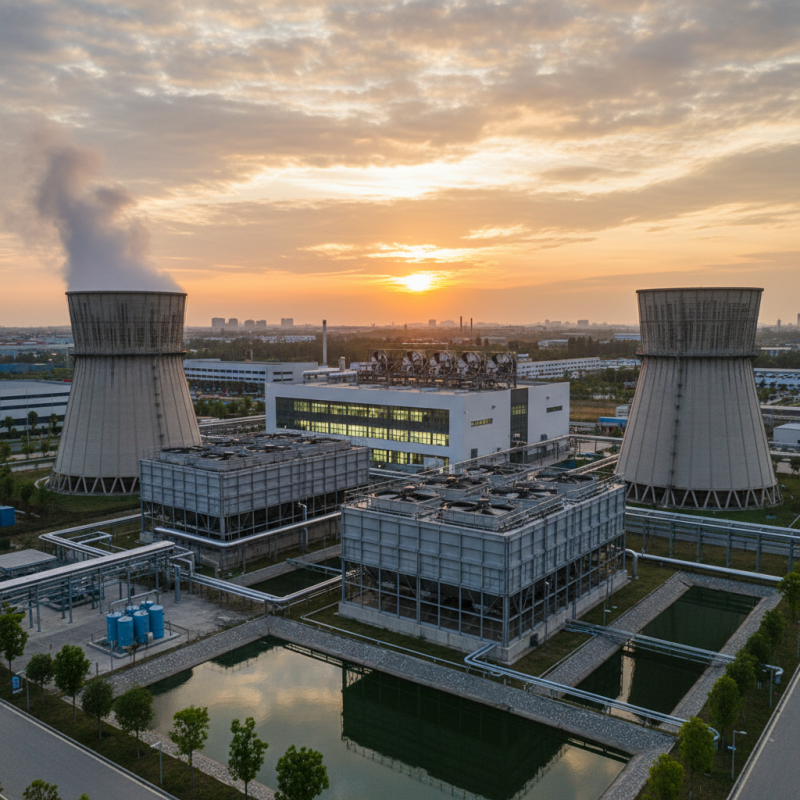
How to Choose the Right Cooling Tower for Your Needs?
Choosing the right cooling tower can be a challenging process. A cooling tower serves as a vital component in various industrial applications. It helps in regulating temperature and improving efficiency.
There are different types of cooling towers available today. Some are designed for specific needs, while others offer more versatility. Understanding the operational requirements is crucial. It's not just about capacity; it's also about compatibility with existing systems.
You must consider factors like water quality and environment. Sometimes, what seems ideal on paper may not perform well in real situations. Mistakes can lead to inefficiencies and increased costs. Being thoughtful in your choice can prevent these issues. A cooling tower should ultimately enhance your system’s performance.
Understanding Different Types of Cooling Towers Available in the Market
When selecting a cooling tower, it's essential to understand the various types available in the market. Different designs serve different purposes. For instance, evaporative cooling towers are popular for their efficiency. They use water to cool down air effectively. You’ll find them in large industrial settings. But they may require more maintenance, which could lead to hidden costs.
Crossflow and counterflow towers are two common designs. Crossflow towers allow air to flow horizontally through the falling water. They work well for moderate cooling needs. On the other hand, counterflow towers push air upward against the falling water. This design can be more efficient but needs careful installation. You might struggle with space constraints or specific site requirements with these options.
Another aspect to consider is the construction material. Cooling towers can be made from fiberglass, steel, or concrete. Each material has different durability, cost, and performance implications. It's a good idea to weigh these factors. If your choice is based solely on price, be ready for potential issues down the line. The right cooling tower is not just about capacity; it’s about finding the best fit for your specific situation.
Assessing Your System Requirements for Cooling Capacity and Efficiency
Choosing the right cooling tower begins with understanding your system's requirements. Cooling capacity is a primary factor. It measures how much heat the tower can remove. Assess your processes and the heat generated. This helps in determining capacity needs accurately. You might think you know your needs, but small adjustments can change everything.
Efficiency is another crucial aspect. Look for the relationships between energy use and cooling performance. A more efficient tower lowers operating costs. However, it can make initial costs higher. It's essential to consider long-term benefits. Don’t overlook maintenance requirements, either. Complex designs may seem attractive but can lead to frustration later.
You might find it challenging to balance capacity and efficiency. Sometimes, a larger capacity doesn't equal better efficiency. Avoid the trap of assuming bigger is always better. Test your assumptions and seek diverse opinions. It’s wise to take a step back and evaluate different options thoroughly. This reflection can guide you toward a suitable cooling tower. The goal is not just to choose, but to choose wisely.
Evaluating Environmental Impact and Installation Space Constraints
Choosing the right cooling tower involves careful consideration of environmental impact and space constraints. One must evaluate the surrounding area. Is there enough room for installation? Check the dimensions and layout. An outdoor setup may have fewer restrictions than a rooftop. Always account for nearby buildings and trees that may affect airflow.
When it comes to environmental impact, the choice of cooling tower can make a difference. Some options are designed to minimize water use and noise. If you opt for an evaporative cooling tower, assess your water resource availability. This may not be the best choice in arid regions. Look into other technologies that could be more efficient for your needs.
Tips: Assess available space with a site layout plan. Consider future expansion when calculating space requirements. Use noise-reduction features if your cooling tower is near residential areas. These simple steps can significantly reduce disruption while improving efficiency. Prioritize environmental compliance in your selection. Sometimes going for cheaper options can lead to higher long-term costs due to regulatory fines or inefficiencies.
Considering Maintenance Needs and Operational Costs
When choosing a cooling tower, maintenance needs are crucial. A report from ASHRAE indicates that improper maintenance can lead to a decrease in efficiency by as much as 30%. Regular upkeep ensures optimal performance. Neglecting this aspect might lead to costly repairs. Dust, algae, and corrosion can accumulate over time. Failure to address these issues can significantly increase operational costs.
Operational costs vary based on the type of cooling tower. A study revealed that evaporative towers are often more efficient than dry cooling systems. However, they require more frequent maintenance. It’s a balance between initial cost and long-term savings. For many facilities, the cost of water treatment can be a major factor. If overlooked, these costs can escalate, impacting the overall budget.
Choosing the right materials also affects maintenance needs. Towers constructed with stainless steel may incur higher upfront costs but offer durability. This might offset maintenance needs over time. Yet, some facilities may find themselves reconsidering the material choice due to unexpected wear. Understanding these dynamics is essential for making an informed decision.
Operating Costs and Maintenance Needs of Different Cooling Towers
Analyzing Manufacturer Reputation and Warranty Options
When selecting a cooling tower, it's essential to investigate manufacturer reputation and warranty options. A recent industry study revealed that 70% of facility managers prioritize brand reliability over initial costs. Reputable manufacturers often invest in quality control and customer service, resulting in lower failure rates. Reliable brands typically have a proven history, which can lead to fewer unexpected maintenance issues.
Warranty terms can significantly influence your choice. Not all warranties are created equal. Some cover parts for limited periods, while others offer extensive support for up to ten years. Understanding the warranty can save you money in the long run. A report by the Cooling Technology Institute shows that facilities with comprehensive warranties experience 30% less downtime.
However, navigating warranties can be challenging. Many providers use technical jargon, making it hard to compare options. It's vital to read the fine print. Some reputable manufacturers offer extended warranties, but conditions may apply. Always ask about service commitments. An unclear warranty could lead to unforeseen expenses. Selecting a cooling tower should balance cost, reputation, and warranty clarity.