2025 How to Choose the Right Air Circuit Breaker for Your Needs
In the ever-evolving landscape of electrical engineering, selecting the appropriate air circuit breaker (ACB) for specific applications remains a pivotal task. As noted by industry expert Dr. John Miller, a seasoned electrical engineer with over 20 years of experience in circuit protection, "Choosing the right air circuit breaker is not just about following specifications; it's about understanding the unique requirements of your system and ensuring safety and efficiency." This statement underscores the importance of a tailored approach to circuit breaker selection.
Air circuit breakers, which serve crucial roles in safeguarding electrical circuits from overloads and short circuits, come in various designs and configurations. The complexity of this decision-making process can be daunting, especially for professionals who may not be fully versed in the nuances of ACB technology. Factors such as the operational environment, load characteristics, and anticipated fault conditions all play significant roles in determining the most suitable air circuit breaker for a given application.
By delving into the principles of air circuit breaker selection and considering expert advice, individuals and organizations can enhance their decision-making processes. This not only promotes the reliability of electrical systems but also ensures compliance with safety standards, ultimately reducing the risk of costly downtime and enhancing operational efficiency.

Understanding Air Circuit Breakers and Their Functionality
Air circuit breakers (ACBs) are vital components in electrical distribution systems, designed to provide protection against overloads, short circuits, and ground faults. Understanding their functionality is crucial for selecting the right model for your specific application. ACBs operate by detecting faults in the electrical circuit and then mechanically interrupting the flow of electricity, thereby safeguarding equipment and minimizing the risk of fire or equipment damage. Additionally, many ACBs include features such as adjustable trip settings, which allow users to customize the response to various fault conditions.
In terms of functionality, ACBs can also enhance overall system reliability through their built-in monitoring capabilities. These breakers can often display valuable data about the electrical system's performance, enabling timely maintenance and proactive monitoring. Furthermore, some models are designed with advanced technologies that improve their response times and reduce energy losses, making them suitable for modern applications where efficiency is paramount. Users must consider the specific operational environment, load types, and desired protective features when choosing an air circuit breaker, to ensure optimal performance in their electrical systems.
Determining Your Power Requirements for Air Circuit Breakers
When choosing the right air circuit breaker (ACB) for your needs, understanding your power requirements is crucial. Start by assessing the total load your electrical system will support. This involves calculating the sum of all devices that will be powered, including their starting and running currents. Be mindful of the diversity factor; not all equipment will operate simultaneously, allowing for a more efficient sizing of your ACB. Proper load estimation helps avoid oversizing, which can lead to unnecessary costs, or undersizing, which may jeopardize safety and equipment lifespan.
Next, consider the voltage ratings necessary for your application. An air circuit breaker must be compatible with your system's voltage to operate effectively and safely. Additionally, evaluate whether your setup requires short-circuit protection, overload protection, or both. ACBs come with various trip settings, and it’s essential to select one that aligns with your specific operational parameters. Understanding these requirements not only ensures reliable performance but also aids in compliance with safety regulations and industry standards. Engaging with a knowledgeable electrical professional can provide valuable insights tailored to your unique circumstances.
Key Features to Consider When Selecting an Air Circuit Breaker
When selecting an air circuit breaker (ACB), there are several key features to consider to ensure that it meets your specific electrical needs. One crucial aspect is the breaking capacity, which is the maximum fault current that the ACB can interrupt. According to a report by MarketsandMarkets, the global air circuit breaker market is expected to grow significantly, reflecting the increasing demand for advanced circuit protection solutions. Choosing an ACB with appropriate breaking capacity is essential for safeguarding equipment and maintaining system reliability.
Another important consideration is the current rating of the ACB, which should align with the expected load in your electrical system. As reported by ResearchAndMarkets, the rise in industrial automation has heightened the importance of precise specifications for circuit breakers. Analyzing load data and future expansion plans can guide you in selecting an ACB that not only supports current requirements but can also accommodate potential increases in demand. Additionally, consider features such as adjustable trip settings and comprehensive protection against overloads and short circuits to enhance the safety and efficiency of your electrical installations.
Furthermore, the physical size and mounting options of the ACB should not be overlooked, especially in space-constrained environments. Industry reports highlight that compact and modular designs are becoming increasingly popular, allowing for easier integration into various settings. Assessing these features will enable you to select an air circuit breaker that not only fulfills your operational requirements but also fits seamlessly into your existing infrastructure.
2025 How to Choose the Right Air Circuit Breaker for Your Needs - Key Features to Consider When Selecting an Air Circuit Breaker
| Feature |
Description |
Importance Level |
Considerations |
| Rated Current |
Maximum load current the breaker can handle. |
High |
Choose based on your load requirements. |
| Breaking Capacity |
The maximum fault current a breaker can interrupt. |
Critical |
Match with system short-circuit calculations. |
| Voltage Rating |
The maximum voltage the breaker can operate safely. |
Important |
Ensure compatibility with your electrical system. |
| Application Type |
Type of installation (indoor/outdoor, industrial/commercial). |
Moderate |
Select based on environmental conditions. |
| Size and Weight |
Physical dimensions and weight of the breaker. |
Moderate |
Consider installation space and mounting options. |
| Tripping Mechanism |
The method used to trip the breaker during fault conditions. |
High |
Determine desired response time and sensitivity. |
Comparing Different Brands and Models of Air Circuit Breakers
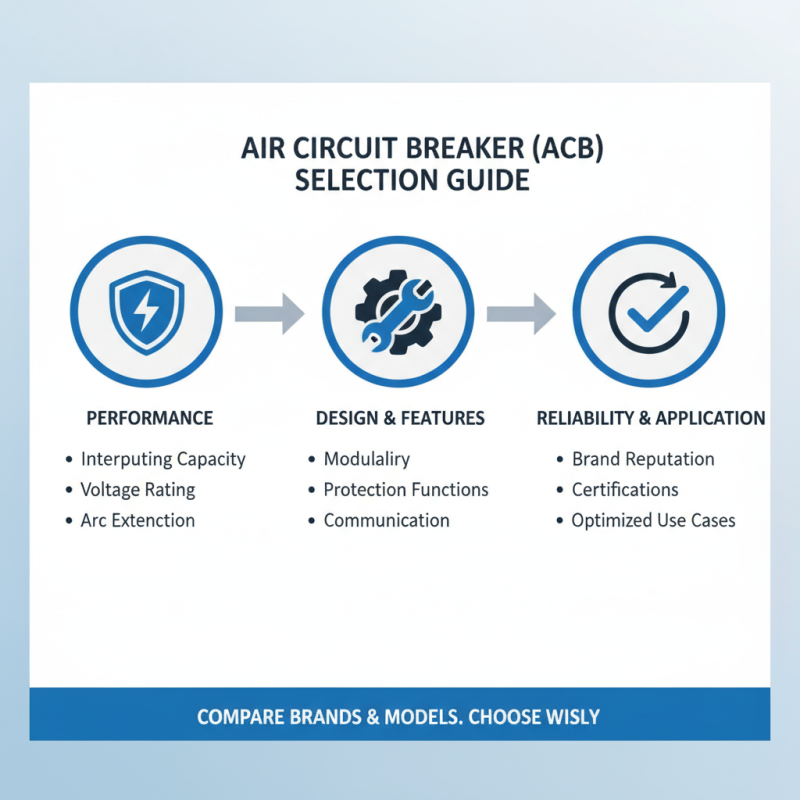
When selecting an air circuit breaker (ACB), it's crucial to compare different brands and models to find the one that best fits your requirements. Not all ACBs are created equal; they vary significantly in terms of performance characteristics, design features, and reliability. A thorough evaluation can help you identify key aspects such as interrupting capacity, voltage rating, and the specific applications for which each model is optimized.
One essential factor to consider is the build quality and technology behind the circuit breaker. Some models offer advanced protection features, such as thermal and magnetic trip functions, which enhance safety and prevent equipment damage. Additionally, the ease of maintenance and availability of spare parts are vital aspects that can influence long-term satisfaction with your choice. Taking the time to research and compare these attributes across different brands will empower you to make an informed decision tailored to your operational needs.
Moreover, user feedback and performance reviews can provide valuable insights into the reliability and efficiency of particular models. Engaging with industry professionals and seeking expert advice can further aid in understanding which brands have a reputation for best-in-class service and durability. By focusing on these comparative elements, you can ensure that you choose an air circuit breaker that will not only meet your immediate requirements but also stand the test of time in your applications.
Installation and Maintenance Considerations for Air Circuit Breakers
When considering air circuit breakers (ACBs) for your electrical installations, understanding installation and maintenance is crucial for optimal performance and safety. Proper installation starts with selecting the right location, ensuring it is easily accessible for operation and maintenance. The installation area should be free from dirt and moisture to prevent damage to the circuit breaker. Furthermore, it’s essential to comply with local electrical codes and regulations, as these guidelines often dictate specific installation practices that enhance safety and functionality.
Tips: Always consult the installation manual provided by the manufacturer to understand specific requirements. Use high-quality connectors and make sure all wiring is appropriately sized for the circuit breaker’s rating, as this can drastically affect performance and longevity.
Maintenance of air circuit breakers is equally important to ensure reliable operation. Regular inspections should be conducted to check for signs of wear, overheating, or dust accumulation. Breakers should be exercised periodically to ensure that they function correctly when needed. Additionally, testing the trip mechanisms and cleaning the electrical contacts are essential steps that should not be overlooked.
Tips: Schedule maintenance checks at least once a year and keep a detailed log of inspections and any repairs performed. This practice can help you identify patterns that may indicate underlying issues, allowing for proactive measures to be taken.