How to Choose the Best Rust Cleaning Agent?
Choosing the right Rust Cleaning Agent is rarely as simple as picking the strongest formula. Rust may appear as a thin orange haze, stubborn flakes, or dark staining around bolts and seams. Each condition needs a different approach.
In practical maintenance work, I have seen aggressive cleaners damage polished metal, painted surfaces, and nearby rubber seals. The “strongest” product is not always the best choice. Check the metal type, rust depth, surface finish, and cleaning environment before buying. A mild citric-acid formula may suit light rust on household tools. A chelating cleaner can offer better control on delicate surfaces. Phosphoric-acid products may work quickly, but they require careful handling and thorough rinsing. Read the label.
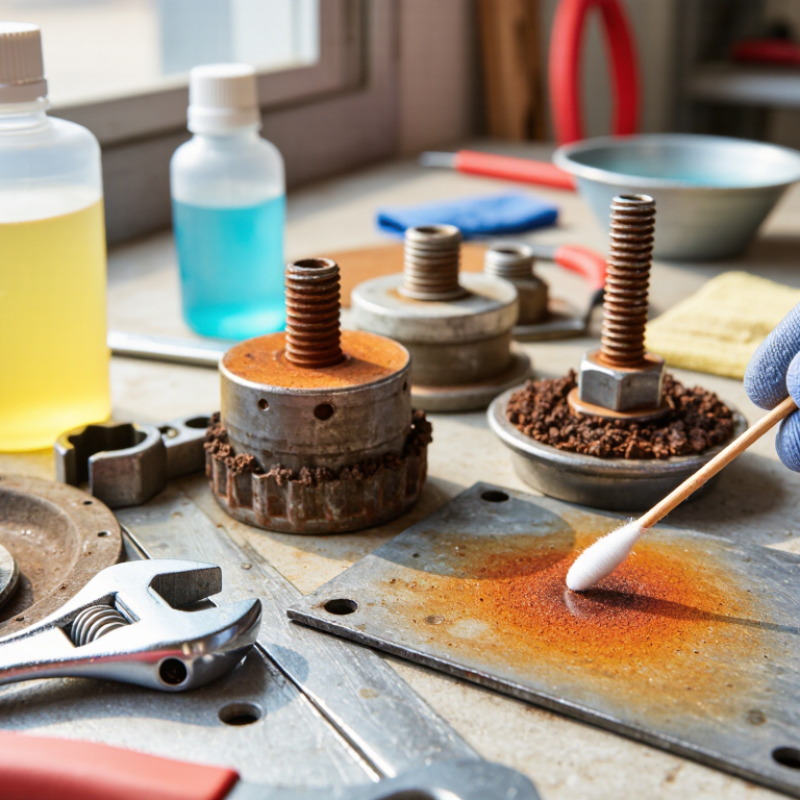
Look for clear instructions, ingredient information, recommended dwell time, and compatible materials. Reliable manufacturers should provide safety data and realistic performance guidance. Test a small hidden area first, using a clean cotton swab or soft brush. Watch for discoloration, bubbling paint, or a dull finish. Ventilation matters, even when the odor seems mild. Gloves and eye protection are sensible precautions.
Do not ignore the final step. Residual cleaner can encourage new corrosion if the surface stays damp. Rinse when instructed, dry completely, and apply a suitable protective coating. My own preference has changed over time: controlled results matter more than dramatic speed. There is no universal winner. The best Rust Cleaning Agent balances effectiveness, material safety, handling effort, and long-term protection. That balance deserves careful thought.
Understanding Rust and How Cleaning Agents Remove It
How to Choose the Best Rust Cleaning Agent?
Rust is not simply dirt on metal. It is iron oxide formed when iron reacts with oxygen and moisture. The surface may look orange, but corrosion can extend into pits and hidden crevices. According to NACE International’s IMPACT study, corrosion costs about 2.5 trillion dollars globally each year, equal to roughly 3.4% of worldwide economic output. A Federal Highway Administration report estimated annual corrosion costs in the United States at 276 billion dollars. These figures show why proper rust removal matters.
Cleaning agents remove rust through different chemical or physical actions. Acidic cleaners dissolve iron oxides, while chelating agents bind rust without aggressively attacking sound metal. Abrasive products physically scrape the corrosion away. Strong acids can work quickly. They can also damage plating, skin, or nearby materials. The safest choice depends on rust thickness, metal type, ventilation, and the required finish.
Light surface rust often needs a mild chelating formula and a soft brush. Deep pitting may require repeated treatment and mechanical preparation. Always test a small hidden area first. Read the safety data sheet carefully. Do not mix products. A common mistake is choosing the fastest cleaner instead of the most compatible one. Even careful work can leave microscopic residue, so rinsing, drying, and applying suitable protection remain essential. No cleaner is perfect.
Identifying the Surface and Rust Damage Before Cleaning
Before choosing a rust cleaning agent, identify both the surface and the depth of damage. Rust on bare steel behaves differently from staining on chrome, painted metal, stone, or glazed ceramic. Touch the area carefully. A raised, flaky texture suggests active corrosion. A smooth orange mark may be transfer or surface staining. Look closely. Check for pits, blistering paint, softened coatings, and exposed edges.
Use a small hidden test area first. Record the surface condition with a photo, then apply the mildest suitable cleaner for the shortest contact time. Acidic cleaners can loosen iron oxide, but they may etch stone, dull plated finishes, or attack nearby grout. Abrasive powders can remove stains while leaving fine scratches. On painted or coated metal, choose a non-abrasive method and avoid aggressive scraping. Ventilation and protective gloves still matter, even with familiar household products.
I once treated orange marks on a coated railing as ordinary rust. The cleaner removed the color, but it also revealed damaged coating underneath. That mistake changed my process. I now separate cosmetic staining from structural corrosion before selecting a cleaning method. If the metal flakes, bends, or shows deep pits, cleaning alone will not restore it. Remove loose corrosion carefully, protect surrounding materials, and follow dilution and contact-time instructions. Test results can mislead. A clean-looking patch may hide continuing corrosion beneath the coating.
Comparing Rust Cleaning Agents by Formula and Strength
Choosing a rust cleaning agent starts with its formula, not its label. Acid-based cleaners often remove heavy rust quickly, while chelating formulas usually work more gently. Organic acids can be suitable for steel parts, but they may still dull sensitive finishes. Alkaline cleaners handle oil and grime better than deep rust. In practice, strength means more than low pH. Contact time, temperature, rust thickness, and surface type also matter.
The NACE IMPACT study estimated global corrosion costs at about $2.5 trillion annually, equal to roughly 3.4% of global GDP. The same report suggested that 15–35% of corrosion costs could be avoided through better management. This supports careful cleaning rather than aggressive chemical use. ASTM G1 recommends controlled cleaning and evaluation when studying corrosion loss. That principle applies to maintenance work too. Test a small hidden area first. I have learned that “stronger” often means faster, not better. That assumption can fail.
Tips: Compare pH, active ingredients, dilution ratios, and dwell time on the technical data sheet. For light surface rust, try a milder chelating formula before using a strong acid. Keep the surface wet during treatment, but avoid extended contact. Rinse thoroughly, dry immediately, and apply suitable protection afterward. Record the product ratio and exposure time. Small records improve repeatability. PPE and ventilation remain essential, even with mild formulas.
Applying the Chosen Rust Cleaner Correctly and Storing It Safely
Applying the chosen rust cleaner correctly starts with reading its label and safety data sheet. Rust removers differ; some contain acids, while others use chelating agents. Wear chemical-resistant gloves, eye protection, and protective clothing. Work outdoors or in a well-ventilated area. Keep children and pets away.
Test the cleaner on a hidden metal area first. I once left a strong solution too long, and the surface became dull. That mistake taught me to follow the recommended contact time closely. Apply a thin, even layer with a brush or cloth. Do not let the cleaner dry unless the instructions allow it. Use a nylon brush for stubborn rust, not an abrasive tool that may scratch the metal. Never mix rust cleaners with bleach, ammonia, or other chemicals.
Rinse the treated surface thoroughly when directed. Remove all residue from seams, threads, and corners. Dry the metal immediately with a clean towel, then allow it to air-dry completely. Moisture left behind can restart corrosion. Store the unused cleaner in its original, clearly labeled container. Close the cap firmly after every use. Keep it upright in a cool, dry, well-ventilated place, away from heat, sunlight, food, and incompatible chemicals. Do not transfer it into a drink bottle or unmarked container. Check the label before disposal, because local requirements may differ.



