
How to Choose the Best Acid Storage Cabinets?

Choosing Acid Storage Cabinets is not a cosmetic purchasing decision. It is a hazard-control choice that affects compatibility, containment, and daily handling. The U.S. Chemical Safety and Hazard Investigation Board’s investigation reports offer case-based evidence of how chemical releases and fires can follow failures in storage and handling. OSHA’s Laboratory Standard, 29 CFR 1910.1450, also places chemical hygiene planning at the center of laboratory safety. These sources do not rank cabinet brands, and they do not replace a site-specific assessment. That distinction matters.

Laboratory safety specialist Dr. James A. Kaufman, founder of the Laboratory Safety Institute, has emphasized hazard awareness and practical safety training in his published work. I cannot verify a verbatim quotation from him specifically about acid cabinets, so assigning him one would be misleading. The practical lesson is still clear: match the cabinet to the acid, the room, and the way staff work. Check the cabinet’s stated chemical compatibility, construction, capacity, spill containment, and ventilation guidance. Then compare those details with the acids’ safety data sheets and your facility’s procedures. A cabinet that fits beneath a bench may still be unsuitable if its lining is incompatible or its doors obstruct access. Small details count. Selection is rarely perfect on the first pass; document the trade-offs, ask the supplier for written compatibility information, and review the choice with qualified safety personnel before purchase.
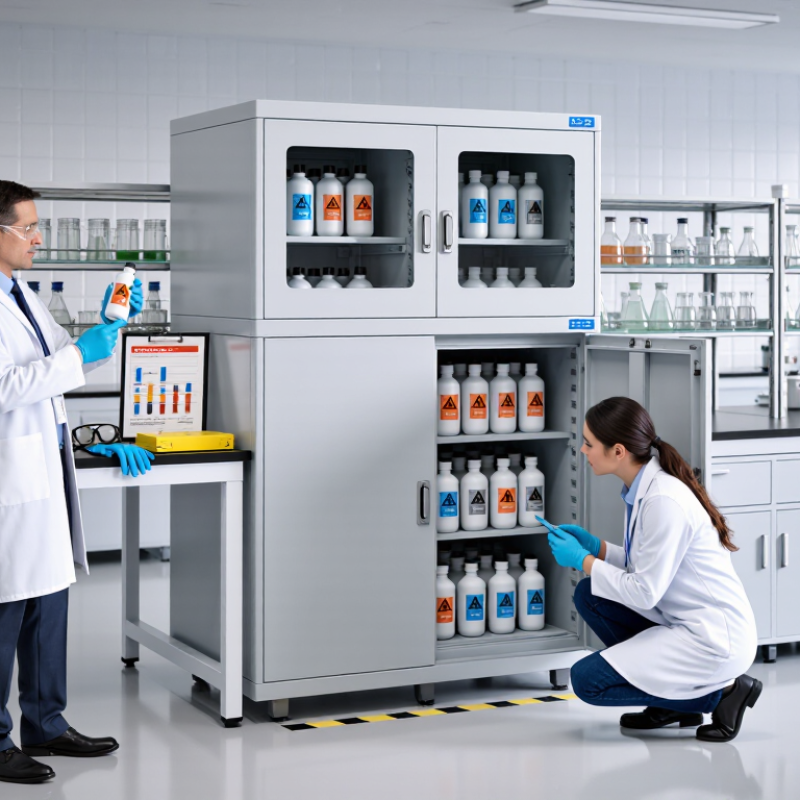
How to Choose the Best Acid Storage Cabinets?

Classify Acid Hazards Using SDS Sections 2, 7, and 10

Acid hazards are not interchangeable. Before choosing an acid storage cabinet, read Sections 2, 7, and 10 of each product’s Safety Data Sheet (SDS). Section 2 identifies hazards such as corrosivity, oxidizing properties, and health risks. These labels are a starting point, not a complete storage plan. Check the exact product and concentration.

Section 7 describes safe handling and storage conditions, including temperature limits, moisture precautions, and incompatible materials. Section 10 adds detail about reactivity, hazardous decomposition, and substances to avoid. Compare these sections across the acids you plan to store. For example, an oxidizing acid may need separation from organic materials, while another acid may react with metals. Do not group containers merely because both labels say “corrosive.”

Look for a cabinet whose construction and interior materials suit the chemicals and their concentrations. Check shelves, seams, and the sump for corrosion-resistant surfaces; a small leak can spread beneath containers. Keep incompatible products in separate cabinets or approved compartments when the SDS indicates segregation. Small details matter. Recheck the SDS when a product, concentration, or process changes. One limitation: an SDS may not answer every site-specific question, and its wording can be broad. If compatibility remains unclear, ask a qualified safety professional before deciding where the container belongs.

Match Cabinet Lining Materials to Acid Compatibility and Corrosion Risks

An acid cabinet’s lining must match the specific chemical, not just the word “acid.” Check the acid name, concentration, temperature, and likely contact time against the cabinet maker’s compatibility data. Polypropylene and polyethylene linings resist many acids, but neither suits every chemical. Strong oxidizers or warm, concentrated solutions can change the risk. Details matter.

Look beyond the broad liner surface. Seams, shelf edges, fasteners, and the spill sump may be more vulnerable to corrosion or leaks. Acid vapors can also attack exposed metal where a lining ends. Small gaps matter. Confirm that every interior component is rated for the intended chemical, and consult its safety data sheet when comparing hazards and storage needs. A clean-looking shelf can still hide damage.

Inspect regularly for rust, cracks, swelling, or a sticky surface, and follow the cabinet’s care instructions after spills. I would recheck compatibility whenever concentration or storage conditions change; a chart is a useful starting point, not a guarantee. In practice, that extra check can prevent a minor drip from becoming hidden damage.

Segregate Incompatible Acids According to SDS Section 10

How to Choose the Best Acid Storage Cabinets?

Segregate Incompatible Acids According to SDS Section 10

Choosing an acid storage cabinet starts with the acids you actually use, not a generic “acid” label. Read Section 10 of each Safety Data Sheet for stability, reactivity, and incompatible materials. Check Section 7 for storage conditions, too. Small details matter. Concentration and formulation can change what materials are suitable.

Keep acids that react with one another in separate, clearly identified storage areas. For example, oxidizing acids may be incompatible with organic acids or reducing agents. Do not assume two acids belong together just because both are corrosive. Use compatible, acid-resistant secondary containment, and keep each container within its own tray when SDS guidance calls for separation. A cabinet’s coating alone does not guarantee compatibility with every acid or vapor.

Before buying, compare the cabinet’s construction and lining with the specific substances and concentrations listed on your SDSs. Confirm that shelves and trays can contain likely spills, and avoid placing incompatible containers above one another. Labels fade. Check them, inspect containers for damage, and review SDS guidance whenever products or procedures change. It is tempting to rely on a simple acid-versus-base rule, but real storage decisions can be less tidy. When compatibility is unclear, pause and ask a qualified safety professional rather than guessing.

Set Cabinet Capacity and Ventilation Using Inventory and Local Codes

Choose cabinet capacity from the acids you actually store, not a rough guess. List each container’s size, quantity, and chemical name, then check its safety data sheet for storage compatibility. Keep incompatible acids apart, and account for trays or other secondary containment that take up usable space. Leave room. A cabinet packed to the door makes labels harder to read and spills harder to manage.

A capacity plan can look generous on paper, then feel cramped once containers are in place. Allow practical room for safe handling and a modest increase in inventory. Review the list when purchasing or processes change. Ventilation needs depend on the chemicals, cabinet design, and local fire and building codes. Check those requirements alongside the safety data sheets and cabinet instructions; do not assume every acid cabinet should be ducted. An improvised fan or duct can create new risks. If exhaust is required, ask a qualified safety professional to assess the setup and confirm it meets local rules. Keep the decision documented, including what inventory and requirements it was based on.

How to Choose the Best Acid Storage Cabinets? — Set Cabinet Capacity and Ventilation Using Inventory and Local Codes
Planning Dimension Inventory or Site Data to Check Practical Selection Guidance Example or Decision Record
Acid inventory Record each acid’s name, concentration, container size, quantity, hazard information, and storage location. Use the current inventory and Safety Data Sheets (SDSs) as the basis for cabinet selection. Recheck the list when chemicals or quantities change. Example inventory: 4 containers × 2.5 L each = 10 L of product.
Cabinet capacity Calculate the total volume and dimensions of the containers, including their secondary trays. Check shelf load limits and usable interior dimensions. Choose a cabinet that fits the containers without crowding and leaves room for safe handling. Any extra capacity allowance is a planning choice, not a universal code requirement. For the 10 L example, a 25% planning allowance gives 12.5 L of target usable space. Confirm that the actual container layout fits.
Chemical compatibility Compare incompatibilities listed in SDSs and the site’s chemical segregation plan. Do not store acids with incompatible substances such as bases. Keep oxidizing acids, such as nitric acid, segregated from organic materials and other incompatible chemicals as required by the SDS and site assessment. Record the segregation decision for each acid; use separate cabinets or approved compartments when needed.
Cabinet construction Identify the acids, concentrations, expected exposure, and cleaning practices. Select materials and interior finishes documented as compatible with the specific chemicals. Corrosion-resistant metal and suitable polymer cabinets are both available; no single material is appropriate for every acid. Verify compatibility against the cabinet documentation and chemical supplier guidance before purchase.
Spill containment Check container sizes, shelf arrangement, and the facility’s spill-control requirements. Use compatible trays or a cabinet sump to contain leaks. Keep containers closed and arrange them so they can be removed without lifting or disturbing other containers. Document the containment method and confirm that trays are compatible with the stored acids.
Ventilation Review each SDS, the chemical hygiene or safety plan, and applicable building, fire, environmental, and occupational requirements. Do not assume every acid cabinet must be ducted. Ventilation needs depend on the chemicals, use, site assessment, and local requirements. Have qualified personnel assess ducting; modifications may affect cabinet performance or listing. Decision: unvented or connected to an approved exhaust system. Record the basis for the decision and obtain required approvals.
Location and access Check the cabinet location, nearby heat or ignition sources, egress routes, and access for trained users. Follow local fire and building requirements and the facility’s risk assessment. Keep the cabinet stable, accessible, and away from conditions that could damage it or its contents. Record the proposed room and location, then confirm suitability with the site safety officer or authority having jurisdiction.
Labels and operating controls Review container labels, hazard communication requirements, and the site’s inspection procedures. Keep original labels legible, identify cabinet contents as required, and establish routine checks for corrosion, leaks, damaged containers, and expired or unwanted chemicals. Assign an inspection frequency under the facility’s chemical safety program and document corrective actions.
Code and standards review Determine the jurisdiction, occupancy, stored chemicals, quantities, and any adopted fire, building, environmental, or workplace rules. Requirements vary by location and application. Confirm current local rules with the authority having jurisdiction and the organization’s safety professional; do not rely on a generic cabinet capacity or ventilation rule. Before purchase: document the applicable requirements, approvals, cabinet specifications, and ventilation decision.

Check Emergency Access: ANSI Z358.1 Eyewashes Deliver 0.4 gpm for 15 Minutes

Choosing an acid storage cabinet means checking what happens after a splash, not just how securely containers fit. ANSI/ISEA Z358.1-2014 (R2020) specifies that eyewash equipment deliver at least 0.4 gallons per minute for 15 minutes. That is about 22.7 liters of flushing water. Keep the route clear, well lit, and on the same level wherever possible. The standard’s guidance generally calls for access within 10 seconds. A cabinet beside a pallet or a door that swings across the route can make “nearby” less useful.

Check the eyewash itself, too. The nozzles should be easy to reach, and the water flow should cover both eyes without requiring the user to hold a lever. OSHA’s 29 CFR 1910.151(c) calls for suitable flushing facilities where workers may encounter injurious corrosives. Fit the cabinet and its location to the actual chemicals and room layout; acid compatibility varies. A floor plan can be misleading. Walk the route with the cabinet door open and the usual work area in use. ANSI/ISEA recommends weekly activation of plumbed eyewash units to help verify operation and clear stagnant water. Keep inspection records, and confirm that nothing stored nearby blocks access.

Blogs