
Top Heat Resistant Rubber Hose Manufacturers in China?

Choosing a Heat Resistant Rubber Hose manufacturer requires more than comparing catalog prices. Buyers should examine working temperature, pressure, conveyed media, reinforcement, and connection design. A hose near a hot compressor may face radiant heat, vibration, and repeated bending. Those conditions can expose weaknesses that a product description does not show.

This guide introduces leading manufacturers in China and the factors that help distinguish them. It considers product range, material specifications, quality documentation, customization, and support for testing. A high temperature rating alone is not enough. The hose must also suit the actual service conditions, and the manufacturer should explain its limits clearly.

A useful engineering question is simple: “What will this hose face in real operation?” No named expert quotation was provided or independently verified, so attributing that sentence to a specific person would be misleading. The comparison should instead focus on evidence, such as technical data sheets, test information, and clear answers about temperature cycling and service life. Even careful comparisons have limits. Published specifications may not capture every installation detail, and buyers should confirm suitability with the manufacturer before ordering.
Top Heat Resistant Rubber Hose Manufacturers in China?

What Heat-Resistant Rubber Hoses Are and How They Work

Heat-resistant rubber hoses carry hot air, water, oil, or other fluids while limiting heat damage to the hose wall. Their performance depends on the rubber compound, reinforcement, and operating conditions—not temperature alone. Silicone, EPDM, and other elastomers suit different fluids and environments. No single compound fits every job.

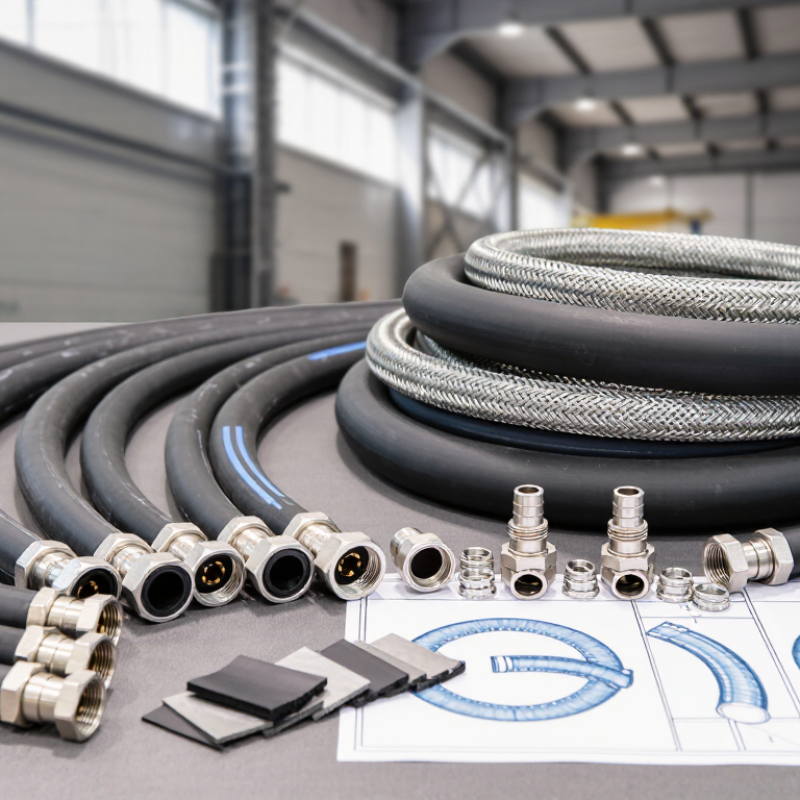
Inside the hose, a rubber liner helps contain the fluid and resist heat-related aging. Textile layers or embedded wire can add strength and help the hose handle pressure or bending. An outer cover shields the assembly from abrasion, moisture, and nearby heat. The layers work together. A hose can still soften, harden, or crack if exposed beyond its rated limits.

For selection, compare the hose’s published temperature range with the actual fluid temperature and surrounding conditions. Check pressure, fluid compatibility, bend radius, and whether heat arrives continuously or in short bursts. A hot engine bay, for example, may create localized hot spots that a general temperature reading misses. That distinction is easy to overlook. Inspect fittings and hose surfaces for bulges, stiffness, leaks, or fine cracks. Ratings are useful, but real installations can be imperfect; verify the manufacturer’s specifications and replace damaged hose rather than relying on appearance alone.

Top Heat-Resistant Rubber Hoses: Typical Elastomer Temperature Limits

Heat-resistant hoses use elastomers suited to different temperature ranges. These indicative upper continuous service temperatures vary by compound and hose construction; check the manufacturer’s specifications for the exact operating limit.

Materials, Temperature Ratings, and Key Performance Requirements

When comparing heat-resistant rubber hose manufacturers in China, examine the compound before the headline temperature. EPDM commonly suits hot-water service, while silicone handles broad heat exposure and FKM offers strong oil resistance. These are typical material traits, not guarantees. Reinforcement, wall thickness, fluid, and exposure time all affect performance. Steam needs a hose specifically rated for steam.

SAE J200 and ASTM D2000 list rubber heat-resistance grades from 70°C to 300°C. These classifications describe material performance, not a complete hose’s safe operating limit. Ask suppliers for continuous and peak temperatures, test fluid, pressure, and service duration. ISO 6803 defines hydraulic-hose impulse test methods; request test results at the stated pressure, not just a pass claim. Check bend radius, abrasion resistance, and whether heat aging changes flexibility.

Tips: Compare finished-hose data sheets. Confirm temperature ratings under your actual pressure and fluid conditions. A high heat rating alone is not enough.

Top Heat Resistant Rubber Hose Manufacturers in China? - Materials, Temperature Ratings, and Key Performance Requirements

Compare common heat-resistant hose liner materials and the service conditions they may suit. Temperature ranges below are indicative examples, not guaranteed ratings for every hose construction.

Hose Liner Material Typical Continuous Temperature Range Typical Short-Term Temperature Range Suitable Service Conditions Key Performance Requirements to Check
EPDM Approximately −40°C to +120°C Some compounds may tolerate brief exposure around +150°C Hot water, cooling systems, weather exposure, and selected steam applications when specifically designed for steam. Verify steam suitability, pressure and vacuum ratings, reinforcement construction, and resistance to the actual fluids. EPDM is generally not suitable for petroleum oils and fuels.
Silicone Rubber Approximately −50°C to +200°C Some formulations may tolerate brief exposure near +230°C Hot air, heating systems, and selected food, pharmaceutical, or clean-process applications when the formulation and hose are approved for the intended use. Check pressure rating, permeation, abrasion and tear resistance, cleaning requirements, and any required food-contact or regulatory compliance. Ratings depend strongly on hose construction.
FKM (Fluoroelastomer) Approximately −20°C to +200°C Some compounds may tolerate brief exposure near +230°C High-temperature oils, fuels, and many chemical services, subject to fluid-specific compatibility. Confirm compatibility with the exact chemical mixture, low-temperature flexibility, permeation limits, and the backing, reinforcement, and cover materials.
HNBR Approximately −30°C to +150°C Some compounds may tolerate brief exposure around +165°C Oil and fuel service, hot lubricants, and applications requiring improved heat and wear performance compared with standard NBR compounds. Check fluid compatibility, temperature cycling, ozone exposure, pressure rating, and compound-specific ageing performance.
NBR (Nitrile Rubber) Approximately −30°C to +100°C Some compounds may tolerate brief exposure around +120°C Many petroleum-based oils and fuels in moderate-temperature service. Confirm the specific fuel or oil compatibility, temperature limits, pressure and impulse performance, and resistance of the cover to the operating environment.
CR (Chloroprene Rubber) Approximately −30°C to +100°C Some compounds may tolerate brief exposure around +120°C General-purpose service where weathering, ozone resistance, and moderate oil resistance are needed. Check the exact fluid, heat ageing, ozone exposure, abrasion resistance, and the pressure rating of the complete hose assembly.

Selection note: Actual limits vary by compound, hose diameter, wall thickness, reinforcement, fittings, pressure, fluid, and exposure duration. The rated temperature and working pressure of the complete assembly are limited by its weakest component. Request the manufacturer’s technical datasheet and verify applicable requirements, such as ISO 1307 for rubber and plastics hoses or the relevant application-specific hose standard.

Common Industrial Applications of Heat-Resistant Rubber Hoses

Heat-resistant rubber hoses serve where hot fluids or air must move through equipment without rigid piping. In foundries, they carry cooling water and selected hot-service fluids around furnaces, where sparks, abrasion, and tight bends challenge the hose cover. In manufacturing plants, they connect pumps, dryers, and processing lines. Automotive workshops use them for coolant and oil circuits, while construction equipment relies on temperature-rated hoses near engines and hydraulic systems.

The U.S. Department of Energy’s 2017 Bandwidth Study estimates process heating accounts for about 36% of energy use in U.S. manufacturing. That figure helps explain why heat exposure is common, though it does not mean every heated line needs a rubber hose. Small details matter. Engineers should check continuous and peak temperatures, fluid compatibility, pressure, and reinforcement. Steam requires a hose specifically designed and rated for steam service; a general hot-water hose is not a safe substitute.

In food processing, washdown lines may handle hot water, while chemical plants need hoses matched to the conveyed fluid and cleaning cycle. A practical weakness is often overlooked: the hose may tolerate heat, but its coupling or seal may not. Inspect the full assembly for cracking, softening, leaks, and exposed reinforcement. Operating conditions also vary by shift, so a temperature reading taken once may miss short heat spikes.

Leading Heat-Resistant Rubber Hose Manufacturers in China

Leading heat-resistant rubber hose manufacturers in China are judged by more than a high temperature rating. Experienced suppliers specify the hose’s working temperature, pressure, medium, and exposure time. These details matter because hot air, steam, oil, and coolant place different demands on rubber compounds. A rating without test conditions tells little.

Look for clear product data, consistent reinforcement, and documented inspection. Ask how the hose is checked for leaks, dimensional variation, and heat aging. For a workshop line carrying hot fluid, verify the inner tube material, outer cover, and fitting compatibility before ordering. Samples can reveal finish and flexibility, but they cannot replace application testing. Small details matter. Some suppliers also support custom lengths or assemblies; confirm tolerances and lead times in writing.

Manufacturing capability varies, even among established factories. Review traceability records and request relevant test reports rather than relying on broad claims. A site visit may show mixing, curing, and inspection processes, though one visit cannot prove every batch is consistent. No checklist catches everything. Buyers should compare evidence against their actual operating conditions, then monitor hose performance after installation. That extra step is easy to overlook.

How to Compare Manufacturers by Quality, Capacity, and Service

Top Heat Resistant Rubber Hose Manufacturers in China?

When sourcing heat-resistant rubber hose in China, compare manufacturers against your operating conditions, not just a headline temperature rating. Ask for continuous and peak temperature limits, pressure range, fluid compatibility, reinforcement construction, and minimum bend radius.

Request recent test reports and traceability records for rubber batches and reinforcement materials. A high-temperature claim means little if the hose stiffens after repeated heat cycles. Ask how samples are conditioned and tested. Small details matter.

Check capacity through evidence, not promises. Review the supplier’s monthly output, production equipment, inspection steps, and ability to maintain consistent dimensions across repeat orders. If possible, compare samples from different production runs.

Lead time should include testing, packaging, and shipping preparation—not only manufacturing. Service matters too. Notice how quickly the team answers technical questions and whether it flags risks in your specifications. A responsive supplier is useful, though a polished sales reply alone proves little. I would also ask how design changes are documented; this can be overlooked.

Tips: Share a real operating profile, including temperature cycles, pressure peaks, and installation space. Request a written specification and sample before placing a large order. Keep a little margin for uncertainty; field conditions are rarely perfect.

Blogs