
Best Cement Plant Manufacturer in China for Global Buyers

Choosing the best Cement Plant manufacturer in China requires more than comparing equipment prices. Global buyers need verified engineering capability, stable production records, and dependable support after delivery. A modern plant must handle limestone variability, fuel efficiency, emissions control, automation, and local operating conditions. These details affect every tonne of cement.

Ian Riley, Chief Executive of the World Cement Association, has stated, “The cement industry must change, and it must change fast.” This observation matters to buyers planning long-term investments. A qualified manufacturer should provide practical solutions, not impressive brochures alone. Its engineers should explain kiln design, raw mill capacity, clinker quality, spare parts, and maintenance access in clear language. Site visits, customer references, factory inspections, and performance guarantees add valuable evidence.

Details reveal competence. Look for inspection records, equipment traceability, documented testing, and realistic delivery schedules. Ask how the supplier responds when a gearbox fails during a peak production period. Ask whether remote support is available at 2 a.m. No supplier is perfect. Even strong manufacturers may underestimate civil works, operator training, or regional fuel conditions. That is where careful buyers must challenge assumptions.

This guide examines Chinese Cement Plant manufacturers through an E-E-A-T perspective: practical experience, technical expertise, industry authority, and reliable evidence. It considers complete production lines, energy performance, environmental systems, automation, installation, commissioning, and after-sales service. The best choice is not always the cheapest offer. It is the manufacturer that can explain risks honestly, document its claims, and help a plant perform safely for decades.
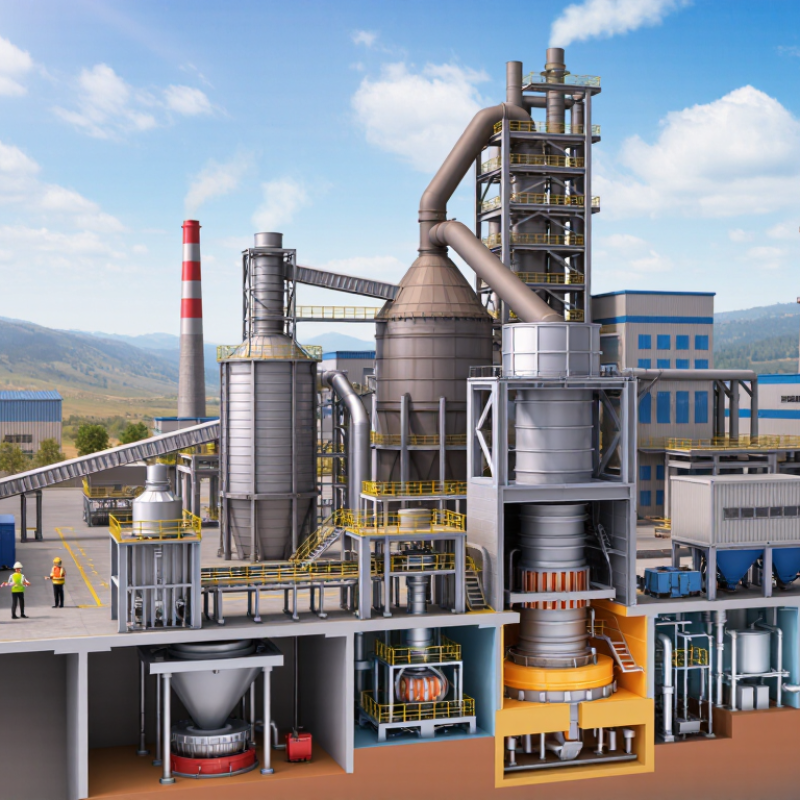
Best Cement Plant Manufacturer in China for Global Buyers

Definition and Role of a Cement Plant Manufacturer

Best Cement Plant Manufacturer in China for Global Buyers

A cement plant manufacturer is an engineering partner that develops, supplies, and supports complete cement production systems. Its role extends beyond selling machinery. It studies raw materials, production targets, site conditions, energy costs, and local regulations before proposing a plant configuration. Experienced manufacturers connect crushing, grinding, pyroprocessing, cooling, storage, and packing into one coordinated process. Small design errors can create large operating losses.

A reliable manufacturer provides measurable technical information. This may include kiln capacity, heat consumption, emission performance, equipment dimensions, and expected maintenance intervals. It should also explain how the plant performs in humid coastal areas, dry regions, or locations with unstable power supplies. On-site experience matters. Engineers who have handled commissioning can identify vibration, material flow, and dust-control problems before they become expensive failures. Practical details matter most.

Good support continues after installation. It includes operator training, commissioning guidance, spare-parts planning, safety procedures, and remote troubleshooting. Independent testing and clear quality records strengthen buyer confidence. References from comparable projects can also reveal how equipment performs after several years, not only during factory inspection. No proposal is perfect. Feedstock changes, market pressure, and local skills may challenge the original plan. A trustworthy manufacturer admits these limits and adjusts the design with evidence, rather than promising effortless production.

Best Cement Plant Manufacturer in China for Global Buyers

Definition and Role of a Cement Plant Manufacturer

A cement plant manufacturer designs, engineers, supplies, and supports the equipment and systems used to produce cement. The chart shows estimated cement production in leading producing countries in 2023, highlighting the scale and regional demand that global cement plant manufacturers serve. Data is presented in million metric tons and is based on publicly reported USGS estimates.

Key Criteria for Choosing a Chinese Cement Plant Manufacturer

Best Cement Plant Manufacturer in China for Global Buyers

Key Criteria for Choosing a Chinese Cement Plant Manufacturer

Choosing a Chinese cement plant manufacturer requires more than comparing equipment prices. Experienced buyers examine the complete project lifecycle, from process design to commissioning. The supplier should provide a clear capacity plan, realistic energy targets, and verified production data. Ask for references from plants with similar raw materials and climate conditions. Limestone hardness, moisture, and local fuel availability can change the final design significantly.

Technical competence matters at every stage. Review kiln stability, grinding efficiency, dust control, automation, and laboratory testing systems. The manufacturer should explain maintenance intervals in practical terms. Check whether critical spare parts are available near your operating region. Strong documentation also matters, especially for installation, operator training, safety procedures, and regulatory compliance. A factory visit can reveal workshop organization, quality inspections, and testing discipline. Photos alone are not enough.

Tips: Request a detailed scope table, milestone schedule, and itemized cost breakdown. Confirm performance testing methods before signing. Speak with previous customers directly.

No supplier is perfect. I once underestimated after-sales response time, and a minor delay became expensive. This is why buyers should test communication before placing an order. Ask technical questions and measure response quality. A dependable manufacturer admits design limits, records changes, and offers practical solutions instead of promising everything. Local engineering support can reduce commissioning risks, but only when responsibilities are written clearly. Experiences differ, so independent technical review remains valuable.

Cement Plant Design, Equipment, and Production Capabilities

Choosing the best cement plant manufacturer in China requires more than comparing equipment prices. Global buyers need a complete design that matches local limestone, fuel quality, climate, and power supply. An experienced manufacturer should provide process engineering, site layout, kiln selection, raw mill sizing, and dust control planning. Production capability also matters. A reliable plant should support stable clinker output, accurate dosing, efficient grinding, and consistent cement quality.

Tips: Ask for verified project records, detailed energy data, and clear equipment specifications. Request laboratory testing for local raw materials before signing technical documents. Confirm spare parts availability, operator training, installation support, and response times. These details often influence long-term production more than the initial quotation.

Modern cement plants may include automated control rooms, online quality monitoring, waste heat recovery, and low-emission filtration systems. However, automation cannot repair poor process design. I have seen projects focus heavily on capacity while overlooking maintenance access and water conditions. That mistake becomes expensive later. Buyers should review production targets under realistic operating conditions, not only ideal laboratory figures. Independent inspection, factory acceptance testing, and documented performance guarantees can improve trust. Still, every site has uncertainties. A thoughtful manufacturer should explain them clearly instead of promising perfect results.

Quality Control, Certifications, and Export Standards

Best Cement Plant Manufacturer in China for Global Buyers

Quality Control, Certifications, and Export Standards

Choosing a cement plant manufacturer requires more than comparing production capacity or equipment prices. Experienced buyers inspect quality procedures from raw material testing to final shipment. Limestone samples should be checked for chemical stability, while steel components need dimensional and hardness records.

A dependable factory uses documented inspection points throughout production. Welds may receive visual checks, ultrasonic testing, or radiographic inspection when project risks require deeper evidence. Motors, gearboxes, and control cabinets should carry serial numbers linked to inspection reports. Calibration records matter too. An inaccurate instrument can quietly distort an entire quality report.

Certifications should be current, verifiable, and relevant to the supplied equipment. ISO 9001 supports controlled production processes, while environmental and occupational standards may strengthen project credibility. However, a certificate alone proves little. Buyers should review its scope, issuing body, expiry date, and connection to the actual manufacturing site.

Export readiness includes seaworthy packing, corrosion protection, accurate customs documents, and clear marking on every crate. Electrical systems must match the destination’s voltage, frequency, and safety requirements. Technical files should include drawings, manuals, spare parts lists, and test results in a usable language.

No factory is flawless. A missed calibration or unclear drawing can create delays. Reliable manufacturers acknowledge these risks, record corrective actions, and invite reasonable third-party inspections. That practical openness often reveals more than polished sales promises.

Project Delivery, Installation, and After-Sales Support

Best Cement Plant Manufacturer in China for Global Buyers

Project delivery begins with a realistic schedule, not a glossy promise. An experienced manufacturer should provide process drawings, equipment lists, civil interface data, and a responsibility matrix. These documents help local contractors prepare foundations, utilities, and access roads before equipment arrives. The World Bank’s Logistics Performance Index 2023 shows major differences in customs, tracking, and delivery reliability across markets. Therefore, export planning must include buffer time. Delays happen.

Installation quality depends on disciplined supervision. Engineers should check anchor positions, conveyor alignment, electrical testing, and commissioning records. Factory acceptance tests can identify vibration, temperature, or control-system issues before shipment. At the site, training should use the actual control panel and maintenance tools. The International Energy Agency reports that cement production contributes about 7% of global energy-related CO2 emissions. Efficient commissioning matters because unstable operation can increase fuel use and material waste. Small errors become expensive quickly.

After-sales support should remain practical after handover. Buyers need multilingual manuals, recommended spare-parts lists, response procedures, and remote troubleshooting. Scheduled inspections can review kiln performance, grinding efficiency, dust control, and safety systems. The Global Cement and Concrete Association has identified efficiency and lower-carbon production as central industry priorities. A reliable supplier should support upgrades, not only initial operation. Some service promises still sound impressive but lack measurable response times. Buyers should request service-level targets, technician availability, and documented case evidence before signing.

Best Cement Plant Manufacturer in China for Global Buyers - Project Delivery, Installation, and After-Sales Support

Typical project reference data for new-build and upgrade cement plant projects; final values depend on site conditions, process design, local regulations, and contract scope.

Project Dimension Typical Scope Indicative Data Key Deliverables Buyer Verification Points
Plant Capacity Planning Production-line sizing for clinker and cement output 1,000–10,000+ tonnes of clinker per day Capacity study, product mix, raw-material assessment, expansion plan Confirm limestone reserves, target markets, fuel availability, electrical supply, and planned operating days
Preliminary Engineering Process configuration and site feasibility Approximately 4–12 weeks Process flow diagram, mass balance, utility estimate, plot plan, preliminary equipment list Check whether calculations reflect local climate, altitude, raw materials, fuel properties, and environmental requirements
Detailed Engineering Mechanical, civil, electrical, automation, and structural design Approximately 3–8 months Approved drawings, equipment specifications, foundation loads, cable schedules, control philosophy Verify design interfaces, local construction codes, seismic conditions, maintenance access, and spare-parts strategy
Major Process Equipment Crushing, grinding, pyroprocessing, clinker cooling, conveying, and cement grinding Equipment lead time commonly 4–12 months Manufacturing drawings, inspection records, factory acceptance documentation, packing list Review material specifications, rated capacity, motor efficiency, wear-part design, and inspection checkpoints
Environmental Control Dust collection and emissions-management systems Bag-filter outlet design often targets <30 mg/Nm³, subject to local limits Bag filters, dust-handling equipment, stack-monitoring provisions, emissions calculations Confirm the applicable national or regional limits, monitoring method, gas temperature, moisture, and dust characteristics
Manufacturing and Quality Control Fabrication, machining, assembly, inspection, and documentation Inspection points defined by equipment risk and contract requirements Quality plan, material certificates, dimensional reports, welding records, coating records, test certificates Require traceable documentation and independent inspection rights for critical components
Logistics and Export Delivery Export packing, containerization, breakbulk handling, and shipment coordination Typical shipment planning: 4–10 weeks after readiness Commercial invoice, packing list, certificate of origin, shipping documents, preservation instructions Clarify Incoterms, port responsibilities, inland transport, insurance, customs documentation, and delivery sequence
Civil Construction Foundations, buildings, silos, roads, utilities, and drainage Approximately 6–18 months, depending on project scale Foundation drawings, embedded-parts schedule, construction specifications, method statements Confirm geotechnical data, concrete standards, local labor capability, weather constraints, and inspection procedures
Mechanical Installation Equipment erection, alignment, piping, ducting, lubrication, and insulation Approximately 4–12 months after site readiness Installation supervision, alignment records, inspection checklists, punch-list management Define contractor responsibilities, lifting equipment, workforce qualifications, safety requirements, and acceptance criteria
Electrical and Automation Installation Power distribution, motor control, instrumentation, PLC, and supervisory systems Cold commissioning commonly lasts 4–10 weeks Single-line diagrams, loop checks, cable-test records, software backups, operator interfaces Verify voltage and frequency compatibility, cybersecurity controls, spare I/O capacity, and local electrical compliance
Commissioning and Performance Testing Cold tests, water tests, no-load tests, hot commissioning, and performance verification Hot commissioning commonly lasts 2–8 weeks Commissioning procedures, test reports, operator training, performance-test protocol, handover documents Agree in advance on throughput, power consumption, product quality, emissions, availability, and test conditions
Operator Training Operations, maintenance, laboratory, safety, and troubleshooting instruction Typically 1–4 weeks of classroom and field training Training manuals, standard operating procedures, maintenance schedules, emergency procedures Ensure training is delivered in the required language and includes practical shift-based operation
Spare Parts and Wear Parts Start-up spares, recommended inventory, and routine replacement parts Initial stock commonly covers 12–24 months of operation Critical-spares list, recommended inventory, part numbers, interchangeability data, storage guidelines Prioritize kiln, mill, crusher, filter, conveyor, instrumentation, and high-wear components
Warranty and Technical Support Remote assistance, site visits, troubleshooting, and warranty administration Commercial warranty periods commonly range from 12–24 months after acceptance Support contacts, response procedure, service reports, warranty terms, escalation workflow Confirm coverage exclusions, response times, travel responsibilities, software support, and documentation requirements
Long-Term After-Sales Service Preventive maintenance, upgrades, audits, optimization, and retrofit support Annual technical audits are commonly scheduled once or twice per year Maintenance plans, inspection reports, energy reviews, upgrade proposals, remote diagnostic support Evaluate lifecycle cost, local service capability, spare-parts availability, and equipment compatibility

Note: The figures shown are general industry reference ranges rather than guarantees or company-specific performance data. Project schedules and technical parameters should be confirmed through a site survey, approved technical proposal, contract specifications, and applicable local standards.

Blogs