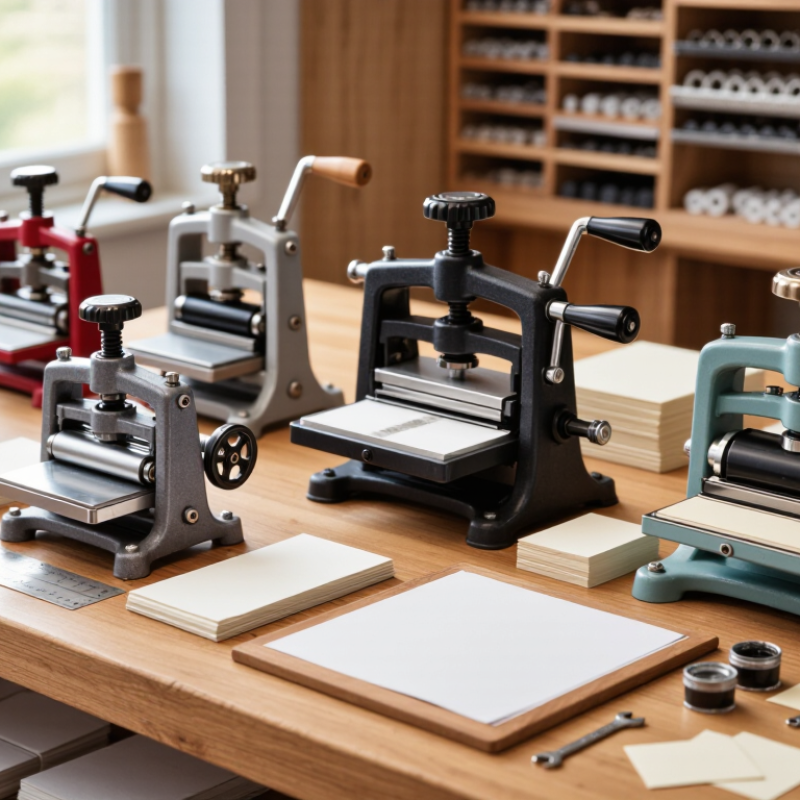
2026 Best Tabletop Letterpress Machines for Small Business

A tabletop press can bring the tactile character of letterpress into a small studio without requiring a full-size floor model. Still, choosing one is not just a matter of comparing price tags. Tabletop Letterpress machines differ in impression strength, printable area, registration controls, and the materials they can handle. A press that works well for short stationery runs may feel limiting when a shop takes on thicker stock or larger formats. Small details matter. The clearance beneath the platen, the stability of the base, and the availability of replacement parts can affect daily work.

This guide to the 2026 Best Tabletop Letterpress Machines for Small Business looks at practical factors owners can assess before buying. It considers machine footprint, setup demands, compatible type and plates, and the support offered by manufacturers or sellers. We also consider how a press may fit common jobs, from business cards to invitations, while recognizing that results depend on paper, packing, operator skill, and careful adjustment. No single model is ideal for every shop. Some specifications are easy to compare; others are harder to judge until a press is in use. That uncertainty is worth acknowledging. Use the recommendations as a starting point, then confirm current specifications, included accessories, and service options directly with the seller. A little research can prevent an expensive mismatch—and leave more room for the satisfying part: making prints.

2026 Best Tabletop Letterpress Machines for Small Business

Understanding Tabletop Letterpress Machines and Their Uses

A tabletop letterpress uses raised type or plates to press ink into paper, often leaving a visible impression. For a small business, it suits short runs of invitations, business cards, hang tags, and art prints where texture matters. The operator positions paper against guides, inks the raised surface, then applies even pressure with a platen or lever. Small shifts can spoil alignment. That detail matters. A compact machine saves floor space, but it still needs a sturdy, level worktable and room for drying sheets.

Smithers’ 2019 report, The Future of Global Printing to 2024, valued the global print market at $818.5 billion in 2019 and forecast $874 billion by 2024. This broad market figure is not a measure of tabletop letterpress sales. It does show that print remains a substantial commercial field, while the machine itself serves a specialized niche. Before buying, estimate weekly impression volume, paper size, setup time, and the cost of type, plates, and ink. A hand-fed press can make beautiful work. It can also slow a busy order schedule. I would test the heaviest paper you expect to use; the first sample may not tell the whole story.

How to Evaluate Letterpress Machines for Small Businesses

For a small business, the right tabletop letterpress machine should fit the work you actually sell, not an imagined production schedule. Measure your largest common sheet and leave room for margins, grippers, and alignment adjustments. A larger print area can be useful, but it also takes up bench space. Check the machine’s stated capacity against the paper stocks and thicknesses you plan to use.

Pressure consistency matters more than impressive specifications. Ask how evenly the platen closes and whether adjustments are practical for someone working alone. If possible, test a sample using your usual paper. Look for crisp impressions across the page, not just in the center. Small inconsistencies can mean extra setup time and wasted stock. That adds up.

Consider the full workflow: how quickly plates can be changed, how accessible replacement parts are, and whether routine cleaning feels manageable. A compact machine may suit short runs of invitations or packaging inserts, while frequent orders may demand sturdier construction. Compare the machine’s footprint and weight with your actual workspace; a crowded bench is hard to work around. I would also budget time for learning and troubleshooting. The first prints may be uneven. That’s normal, though frustrating. Choose a machine with clear operating guidance and support you can reach, rather than relying on optimistic claims alone.

2026 Best Tabletop Letterpress Machines for Small Business

How to Evaluate Letterpress Machines for Small Businesses

Suggested evaluation weighting, not measured product data: prioritize fit with your typical job size, paper and impression requirements, and repeatable registration. Adjust the percentages to match your workload, budget, and available workspace.

Comparing the Best Tabletop Letterpress Machines of 2026

Comparing the best tabletop letterpress machines of 2026 means matching the press to the work, not chasing the largest pressure rating. A compact platen press suits short runs of business cards, tags, and invitations. Its small footprint is useful on a crowded workbench, and its direct impression makes setup easy to understand. Check the chase size and available type height before buying; a press that cannot fit your plates will quickly feel limiting.

A tabletop proofing press offers a different trade-off. Its roller can produce even impressions across broader designs, but careful adjustment matters. Too much pressure may crush paper texture or emboss unevenly. Test with the stock you plan to use, not just thin sample sheets. A hand-fed platen model can be quicker for repeated small pieces, though feeding and alignment take practice. No press wins every job. Not always.

For a small business, compare repeatability, replacement parts, and the time needed between impressions. Look for a stable base, accessible pressure controls, and a clear method for securing plates. A machine that prints beautifully once but shifts during a short run is not a bargain. Keep a simple test log: paper weight, packing layers, ink coverage, and impression depth. Results can still vary with humidity and operator technique, so allow room for a few imperfect pulls. That is part of the learning curve.

Matching Press Size and Capacity to Your Business Needs

A tabletop letterpress should fit the work you actually sell, not an imagined surge in orders. Measure your largest finished piece, then allow room for registration, grippers, and trimming. If you print A5 cards, a press that barely accepts the sheet may feel cramped once you add borders or print multiple pieces at once. Check the usable printing area, not just the machine’s outside dimensions. That matters.

Capacity also depends on how your shop works. A hand-fed press may suit short runs of wedding invitations, business cards, or art prints, but each sheet still needs careful handling. Ask how quickly the press can deliver consistent impressions on your chosen paper, and test your thickest stock before buying. A machine’s advertised speed rarely includes setup, ink adjustment, cleanup, or spoiled sheets. Those take time.

A common mistake is choosing the largest press that fits the budget. Bigger equipment can take valuable bench space and may require more effort to operate. I would size for regular jobs, with modest room for growth, rather than one unusually large order. Be honest about your weekly volume; a few hundred impressions can feel very different from a few thousand. And leave space for drying racks, paper storage, and the worktable beside the press. A little extra capacity helps, but unused capacity has a cost.

Costs, Maintenance, and Essential Buying Considerations

A tabletop letterpress may look affordable until shipping, repairs, type, and accessories are included. In 2026, used machines can cost several hundred dollars, while restored or better-equipped setups may run into the thousands. Prices depend on condition and what comes with the press. Treat any estimate as imperfect; a missing chase or worn rollers can change the real cost quickly. Ask for a working demonstration, not only polished photographs.

Check for even platen contact by printing a simple test sheet. Uneven pressure can leave one side pale and the other heavily embossed. Inspect rollers for cracks, hard spots, and uneven surfaces. Ask whether replacement parts are available and whether the seller has documented recent repairs. A quiet press is useful, but not proof of sound condition.

Maintenance takes steady, modest effort. Clean ink from the rollers and type after each session, using materials recommended for the machine. Keep moving parts lightly lubricated where specified, and store type in labeled cases. Avoid forcing stiff handles; that can worsen wear. Budget for ink, paper, cleaning supplies, and occasional adjustments. Space matters, too: the press needs a stable bench, good light, and room to handle paper. A small press is not always lightweight.

2026 Best Tabletop Letterpress Machines for Small Business - Costs, Maintenance, and Essential Buying Considerations

Press or Cost Category Indicative Cost (USD) Typical Small-Business Use Maintenance and Operating Notes Essential Buying Considerations
Press Options
Used tabletop platen press, as-is $500–$2,500 Short runs of cards, invitations, tags, and small stationery; best for buyers who can inspect and repair equipment. Check for dried ink, rust, loose joints, uneven impression, and worn rollers. Budget for cleaning, adjustment, and replacement parts. Test the press under load if possible. Confirm platen alignment, safe operation, available parts, and the maximum usable sheet and forme area.
Serviced or restored tabletop platen press $1,500–$5,000+ Regular production where a tested, adjusted press is preferable to a lower-priced restoration project. Routine cleaning, lubrication at designated points, roller care, and periodic alignment checks are still required. Ask what work was completed, which parts were replaced, whether the press was test-printed, and whether setup support is included.
Small tabletop proof press $300–$1,500 Proofing, demonstrations, small relief prints, and some low-volume work; output and workflow differ from a platen press. Keep the bed and cylinder clean, inspect the roller surface, and follow the maker's instructions for lubrication and adjustment. Verify bed size, roller condition, pressure adjustment, and whether the press suits the intended printing method and substrates.
Vintage press sold as a restoration project $200–$1,000, before repairs Experienced restorers with workshop space, repair skills, and time; usually unsuitable for immediate production. Repairs can include rust removal, replacement rollers, missing hardware, alignment work, and safe transport. Inspect for cracks, missing components, seized mechanisms, and structural damage. Obtain repair estimates before committing.
Setup and Running Costs
Freight, crating, and local delivery $150–$1,000+ One-time cost that can be substantial relative to the purchase price of a heavy cast-iron press. Use suitable lifting equipment and a secure, level location. Moving a press improperly can cause injury or damage. Get a written delivery quote that states whether crating, lift-gate service, inside delivery, and placement are included.
Installation and initial setup $0–$800+ Press positioning, inspection, adjustment, and operator orientation; cost depends on distance and the work required. Follow the equipment manual and use qualified help for heavy lifting or repairs. Do not bypass guards or safety features. Clarify whether the press will be leveled, tested, and ready to print, and whether training or follow-up support is available.
Rollers or roller recovery $100–$500+ per set or service Important for even ink distribution and consistent print quality; exact cost depends on press size and roller condition. Clean rollers promptly with compatible products, store them away from heat and sunlight, and avoid cuts or flat spots. Confirm roller dimensions, cores, material compatibility, and availability before buying a press that needs replacements.
Type, photopolymer plates, and lockup materials $100–$1,000+ initial setup Varies widely with the choice of reusable metal type, custom plates, chase equipment, and the range of jobs offered. Keep type and plates clean, dry, organized, and protected from damage; replace consumables as they wear. Check plate thickness, mounting method, chase compatibility, and the supplier's requirements for the intended press.
Ink, paper, and make-ready materials $50–$300+ per initial stock order Recurring production supplies; quantities and costs depend on paper choice, job size, colors, and spoilage. Store ink and paper as directed. Allow for setup sheets and test prints when estimating job material needs. Test the chosen stock for thickness, surface, grain direction, and compatibility with the press and printing method.
Routine maintenance supplies $25–$150 per year Basic cleaning and upkeep for a press in good condition; excludes repairs and replacement parts. Use only suitable lubricants and cleaning products. Follow the equipment manual and keep a maintenance log. Ask for the maintenance history and recommended service points; avoid assuming that age alone indicates the press is ready to run.
Buying Checklist
Print area and job fit Measure before purchase Determines whether the press can accommodate the largest planned design, furniture, and margins. Keep the work area clear and check that the press can be safely operated with the intended setup. Compare the usable printing area—not just the outside dimensions—with the dimensions of your largest planned job.
Condition and print quality Inspect or request a test print Affects setup time, consistency, and the amount of repair work needed before production. Check that moving parts operate smoothly and that the press can be cleaned and adjusted as specified. Look for even impression, consistent inking, secure fasteners, and no visible cracks or severe corrosion.
Space, floor, and workflow Measure the full working area Includes room for the press, operator access, paper handling, storage, and safe movement around the machine. Place the press on a stable, level support suitable for its weight; maintain a clear path for loading and unloading. Confirm the press's weight and footprint, access through doors and stairs, and any building or floor-load restrictions.
Total first-year budget Press price plus delivery, setup, tooling, supplies, and repairs Provides a more realistic comparison than the purchase price alone. Reserve funds for consumables, routine care, and unexpected repairs. Request separate estimates for the press, transport, parts, and setup; compare the total cost of getting it production-ready.

Cost figures are broad, indicative U.S. dollar estimates for planning in 2026, not guaranteed quotations. Actual prices vary with condition, size, location, included tooling, freight, and availability. Inspect the press and confirm all specifications and repair requirements before purchase.

Blogs