2026 Best Protection Relay Options for Maximum Safety?

In today's complex electrical networks, ensuring maximum safety is paramount. Protection relays play a vital role in safeguarding equipment and personnel. They monitor electrical parameters and detect anomalies swiftly, protecting systems from potential hazards. Selecting the right protection relay is crucial for effective risk management.

There are numerous options available in the market. Each protection relay comes with unique features and capabilities. Some are more advanced, providing intricate diagnostics and communications. Others focus on simplicity and reliability. The key is to find the balance that meets specific needs.

However, no single relay is perfect for every application. It's essential to assess the unique requirements of your system. Think about the type of load, environment, and potential faults. Understanding these elements can help identify the most suitable protection relay options. Engaging in thorough research ensures better decision-making for maximum safety.

2026 Best Protection Relay Options for Maximum Safety?

Overview of Protection Relays and Their Importance in Safety

Protection relays play a crucial role in safeguarding electrical systems. They detect faults and trigger mechanisms to isolate faulty equipment. This process protects not just the machinery but also the personnel working nearby. The importance of these devices cannot be overstated in industries where safety is paramount.

In various settings, the reliability of protection relays can vary. Some relays may fail to operate under specific conditions, leading to potential hazards. Regular testing and maintenance are essential. However, many facilities overlook this aspect. Investing in more advanced technology could help reduce such risks. Yet, relying on technology alone can sometimes be misleading. It may lull users into a false sense of security.

Users also should consider the training of personnel. An untrained operator may misinterpret relay signals. This can lead to grave safety breaches. Therefore, aligning advanced tools with proper training is vital. Implementing a culture of safety and vigilance can make a significant difference in minimizing accidents. Understanding the complexities of protection relays helps businesses navigate their safety protocols effectively.

2026 Best Protection Relay Options for Maximum Safety

Relay Type Key Features Application Protection Function Communication Protocols
Electromechanical Relays Simple design, cost-effective Industrial circuits Overcurrent, earth fault N/A
Solid-State Relays Long lifespan, fast switching Automation systems Timer, under-voltage Modbus, Profibus
Microprocessor Relays Advanced functions, programmable Power systems Differential, overcurrent Ethernet, IEC 61850
Digital Protection Relays High accuracy, data logging Grid protection Overload, earth fault DNP3, IEC 60870
Distance Relays Impedance measurement Transmission lines Impedance, overcurrent POTF, RTU

Key Features to Consider When Selecting Protection Relays

When selecting a protection relay, several key features are essential for optimal safety. Look for the relay's operating speed. Quick response times can prevent equipment damage. Response times should ideally be in milliseconds, as this can be critical during fault conditions. Additionally, consider the relay's input sensing capabilities. It must accurately interpret various electrical parameters to ensure effective operation.

Another important aspect is the relay's communication interface. Modern relays often support digital communication. This allows for better integration with control systems. Having a good interface helps in monitoring performance remotely. Furthermore, assess the relay's adaptability. It should be configurable to suit different applications and settings. Customizability ensures it meets evolving operational demands.

Reliability cannot be overlooked. A protection relay must operate correctly under different conditions. Regular testing and maintenance may expose potential weaknesses. Manufacturers may not cover every possible scenario. Thus, it is crucial to evaluate how the relay performs in unpredictable situations. So, the right choice requires careful consideration and sometimes, a bit of trial and error.

Top 2026 Protection Relay Models for Enhanced Safety Performance

In today's electrical systems, protection relays play a crucial role in ensuring safety. The right model can greatly enhance performance. Recent data indicates that nearly 80% of electrical failures are due to inadequate protection systems. Thus, choosing the best relay is vital for any operation. Enhanced safety performance often stems from features like faster fault detection and improved communication protocols.

One standout feature in modern protection relays is their ability to analyze system data in real-time. About 65% of operators report fewer system interruptions when using advanced relays. This highlights the importance of investing in quality protection models. However, it’s essential to remember that not all models suit every application. What works in one setting may lead to risks in another.

Vigilance is necessary even with the best technology. Over-reliance on advanced models can lead to complacency. Ensuring that regular maintenance checks are performed is just as important. Operators sometimes overlook this, which could undermine the benefits of sophisticated protection relays. Striking a balance between technology and human oversight is crucial for maximum safety.

2026 Best Protection Relay Options for Maximum Safety

Best Practices for Installing and Maintaining Protection Relays

2026 Best Protection Relay Options for Maximum Safety?

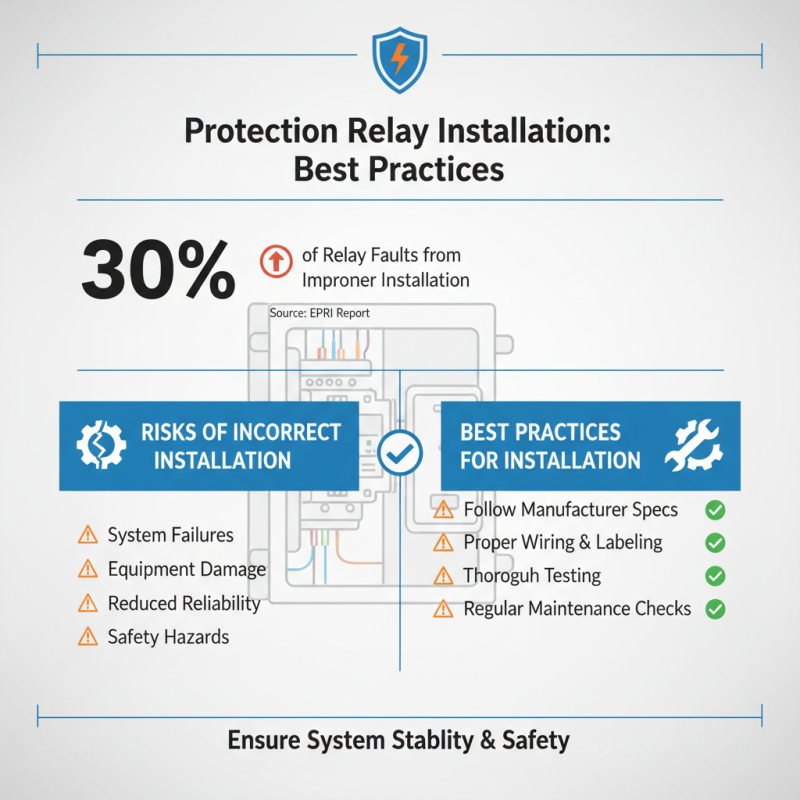
Installing and maintaining protection relays is crucial for electrical systems. If not done correctly, they can lead to system failures. A report by the Electric Power Research Institute indicates that improper installation contributes to 30% of relay-related faults. Therefore, it’s essential to follow best practices during installation.

A common mistake is failing to conduct thorough site assessments. Each installation requires a unique approach. A detailed analysis of the environment can help determine the optimal settings. Training staff on the latest relay technologies is equally important. Regular training sessions can reduce operational errors by 25%. Adopting standard procedures can lead to improved reliability and safety.

Maintenance must not be overlooked. Regular testing is necessary to ensure proper functionality. Reports suggest that 40% of relay malfunctions occur due to lack of routine checks. Moreover, outdated software can lead to vulnerabilities. Keeping firmware updated minimizes risks. Inadequate documentation can also hinder troubleshooting efforts. Regularly reviewing and updating records is vital for effective maintenance.

Future Trends in Protection Relay Technology and Safety Standards

The future of protection relay technology is promising and evolving. As industries demand higher safety standards, the protection relay systems must adapt. Enhanced accuracy and faster response times are crucial. Emphasis on digital relays is growing, integrating advanced algorithms for better fault detection. This enables higher reliability and reduced risks.

Tips: Consider regular training for staff on new technologies. Awareness can prevent mishaps. Evaluate the specific needs of your facility before selecting relays. Not every advanced feature suits every application.

Wireless communication is emerging as a vital feature. It allows real-time monitoring and analysis of protection systems. This capability enhances decision-making and emergency responses. However, reliance on technology raises concerns. Cybersecurity challenges persist, requiring constant vigilance. Firms must remain adaptive and proactive to ensure safety.

Tips: Implement robust cybersecurity practices. Regularly update software and firmware. This can protect against potential threats. Encourage a culture of safety awareness among employees. A vigilant workforce is your first line of defense.

Blogs