
Choosing a Level 3 Ev Charger is not just about finding the highest number on a product page. These direct-current fast chargers can add meaningful range during a short stop, but actual charging speed depends on the vehicle, battery temperature, charger output, and other site conditions. A car rated for a lower peak rate cannot use every charger’s full capacity. Real-world results matter.
EV charging journalist Tom Moloughney, host of State of Charge, has emphasized a useful principle in his charger reviews: charging performance depends on how the vehicle and charger work together. That practical lens helps separate impressive specifications from useful everyday performance. A display might promise hundreds of kilowatts, yet your car may draw less as its battery fills. Watch the charging curve, not just the peak.
This guide compares seven Level 3 EV chargers for fast charging in 2026, with attention to power, connector compatibility, network access, reliability, and ease of use. We’ll also consider the details drivers notice at a rest stop: clear screens, cable reach, payment steps, and whether a station is actually available. No single model fits every route or budget. And a caveat: product specifications can change, so confirm current compatibility and pricing before buying. The fastest option may not be the best fit.
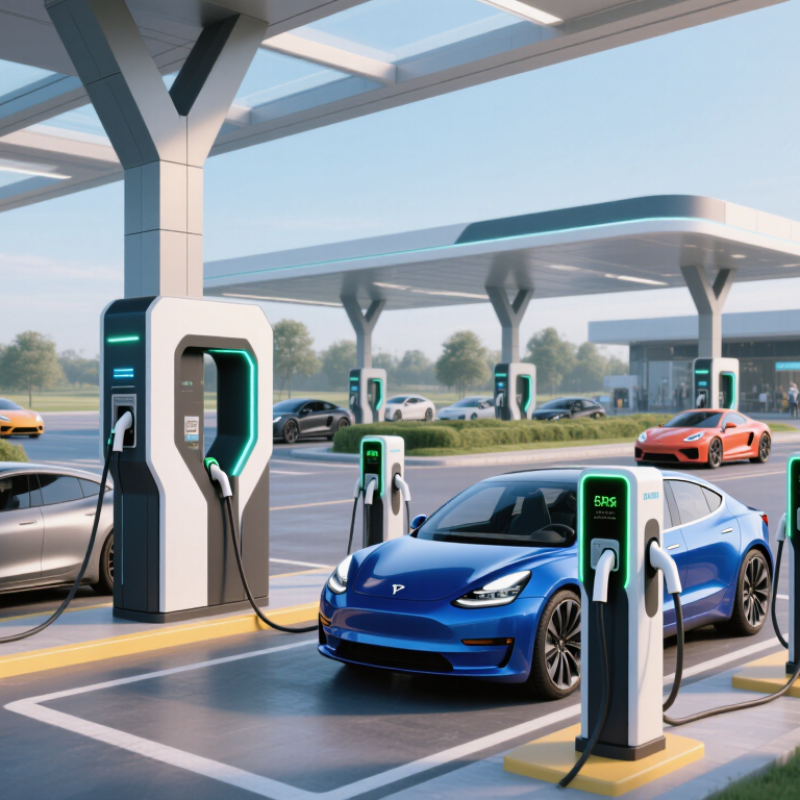
Level 3 is a common name for DC fast charging. Unlike a home AC charger, the charging unit converts grid electricity into direct current before it reaches the vehicle’s battery. This bypasses the car’s onboard AC charger. The vehicle still controls how much power the battery accepts, based on its temperature, charge level, and limits.
The U.S. Department of Energy’s Alternative Fuels Data Center says compatible vehicles can typically reach about 80% charge in 20 minutes to one hour on a DC fast charger. That number is useful, but not a promise. Near 80%, charging often slows to protect the battery. A cold battery or a busy site can also change the wait. The label “fast” can be misleading when conditions are poor.
Tips: For a quicker session, arrive with a warm battery and avoid charging to 100% unless you need the range. Check the vehicle’s stated maximum charging rate, too. The charger’s peak rating alone does not determine your actual speed.
Compare Level 3 chargers by delivered power, not the largest number printed on the cabinet. The U.S. Department of Energy’s Alternative Fuels Data Center lists DC fast chargers across a broad range, commonly about 50–350 kW. But a vehicle’s battery and charging curve limit the power it can accept. Output also tends to fall as the battery fills. A 350-kW rating does not guarantee a faster stop.
Compatibility matters. Check connector type, communication support, cable reach, and whether the charger can share power across multiple plugs. The International Energy Agency’s Global EV Outlook 2024 reported that public fast-charging points grew by 55% in 2023. More sites are appearing, but charger availability and performance still vary. Look for recent uptime data and clear pricing, not just peak output. A screen that is hard to read in bright sun is a small detail, until it is not.
Consider operating conditions, too. Cold batteries, busy sites, and high battery charge can all slow a session. Compare performance claims at realistic temperatures and ask whether maintenance records are publicly available. A tidy specification sheet can hide awkward gaps. I would treat estimated charging times as estimates, not promises.
Representative rated power classes, in kilowatts (kW)—not a brand ranking.
How to compare: Higher rated power can support faster charging, but a vehicle draws only what its battery and charging system can accept. Actual speed also varies with battery temperature, state of charge, and power sharing at the station.
Seven leading Level 3 EV chargers in 2026 stand out through different strengths, rather than one universal winner. A 150-kW dual-port unit suits busy public stops where two cars may arrive together. A 350-kW cabinet serves vehicles built to accept very high charging power. Modular equipment lets site owners add capacity as demand increases. Battery-buffered systems can help locations with limited grid capacity. Each answers a different need.
Liquid-cooled cables support high current while keeping handles manageable during long sessions. Fleet depot chargers pair scheduled charging with load management, reducing unnecessary power peaks. Solar-assisted stations with battery storage can draw on locally generated energy, though output varies by weather and site design. These are distinct approaches, not a promise of a fixed charging time.
Before choosing, check connector compatibility, vehicle charging limits, electrical service, and uptime support. A car rated for 150 kW will not gain speed from a 350-kW unit. Cold batteries, high state of charge, and shared power can slow charging. Peak numbers can mislead. Compare session data and service records where available; advertised output alone is not enough.
| Rank | Charger class | Maximum rated output | Typical use | Illustrative 10–80% time* | Key consideration |
|---|---|---|---|---|---|
| 1 | 50 kW DC fast charger | Up to 50 kW | Destinations and locations where vehicles are parked longer | About 63 minutes | Lower power can be a practical fit where installation capacity is limited. |
| 2 | 100 kW DC fast charger | Up to 100 kW | Retail, workplace, and urban public charging | About 32 minutes | Actual speed depends on the vehicle’s maximum DC charging rate. |
| 3 | 150 kW DC fast charger | Up to 150 kW | Busy public charging sites and highway stops | About 21 minutes | A vehicle may not reach peak power throughout a charging session. |
| 4 | 180 kW DC fast charger | Up to 180 kW | High-turnover public charging locations | About 18 minutes | Check the vehicle’s charging curve, not just its advertised peak rate. |
| 5 | 240 kW DC fast charger | Up to 240 kW | Highway corridors serving compatible vehicles | About 13 minutes | Higher output is most useful when the vehicle can accept it. |
| 6 | 300 kW DC fast charger | Up to 300 kW | Very high-throughput sites and compatible EVs | About 11 minutes | Vehicle battery temperature and state of charge can limit charging power. |
| 7 | 350 kW DC fast charger | Up to 350 kW | Maximum-speed highway charging for compatible EVs | About 9 minutes | The highest rating does not guarantee the fastest session for every vehicle. |
*Illustrative idealized estimates use a 75 kWh battery and a 10–80% charge (52.5 kWh added), divided by the charger’s full rated output. Real charging usually takes longer because power varies with the vehicle, battery temperature, state of charge, and site conditions. These are generic power classes, not branded product rankings. Connector availability and voltage compatibility vary by market, station, and vehicle.
A Level 3 unit, commonly called a DC fast charger, can add substantial range during a short stop. Yet its listed kilowatt rating does not predict every session. Your vehicle’s maximum DC intake, battery temperature, and current charge level all shape real speed. Charging often tapers as the battery fills, so a 20-to-70-percent stop may be quicker than reaching 100 percent. Cold batteries charge slowly. Check the connector standard and vehicle manual before choosing equipment.
Compatibility also includes site details. A charger may support a plug your car uses, but still deliver less power than expected if the vehicle has a lower charging limit. For operating costs, compare the price per kilowatt-hour with per-minute fees, idle charges, and possible peak-demand costs at the site. Hardware is only part of the bill: electrical upgrades, networking, repairs, and downtime affect the cost per delivered session. I would treat advertised savings cautiously; utilization is hard to forecast.
Tips: Plan around your usual route and stop length, not the highest number on a spec sheet. Ask for an installation quote and local tariff estimate. Test with your vehicle from a low state of charge, then note the charging power and total cost. Keep a little margin; one test is not a reliable average.
Choosing a Level 3 charger starts with your vehicle, not the biggest number on the cabinet. Check its connector, maximum DC charging rate, and charging curve. A 350-kW unit may sound impressive, but a car limited to 100 kW cannot use its full output. Fit comes first.
Next, match the charger to where and how you drive. For a home or workplace site, confirm that the electrical service can support the equipment and installation. For a busy public stop, consider cable reach, weather protection, payment options, and room for vehicles to queue. The U.S. Department of Energy’s Alternative Fuels Data Center notes that DC fast charging can add substantial range quickly, but actual charging time depends on the vehicle and conditions. Cold batteries and high states of charge can slow charging. Annoying, but important.
Compare usable power, not just advertised peak power. The International Energy Agency reported that public charging points grew by about 40% worldwide in 2023, while fast chargers grew by 55% (Global EV Outlook 2024). That expansion makes site reliability and service support worth checking. Ask about uptime, warranty coverage, and repair response times. A lower-cost unit may suit a quieter site; a high-traffic location may need more capacity.
There is no perfect pick. Your daily routine is the better test.