
7 Best Heavy Wall Seamless Pipe SCH80 Factories

Finding the right Heavy wall seamless pipe SCH80 factory takes more than comparing price lists. Buyers need consistent dimensions, traceable material, and inspection records they can review. Those details matter. Under pressure. Schedule 80 defines a wall-thickness schedule, but the actual thickness varies by pipe size. That distinction is easy to miss when specifications are reduced to a product label.

Quality expert Joseph M. Juran captured a useful principle: “Quality is fitness for use.” Applied to SCH80 pipe, this means matching the grade, dimensions, manufacturing route, and required tests to the project specification. A capable mill should explain its quality controls clearly. Ask how it tracks heat numbers, checks wall thickness, and documents inspections. Ask again if the answers are vague.

This guide introduces seven factories for consideration, with attention to production capability, quality systems, product range, and customer support. A ranking can help narrow the field, but it cannot replace a technical review. Catalogs may look convincing. Records tell more. Buyers should confirm current certifications, mill test documentation, delivery terms, and whether the offered pipe matches the applicable standard and purchase order. No factory is the best choice for every project. The right partner is the one whose verified capabilities fit the service conditions—and whose evidence stands up to scrutiny.
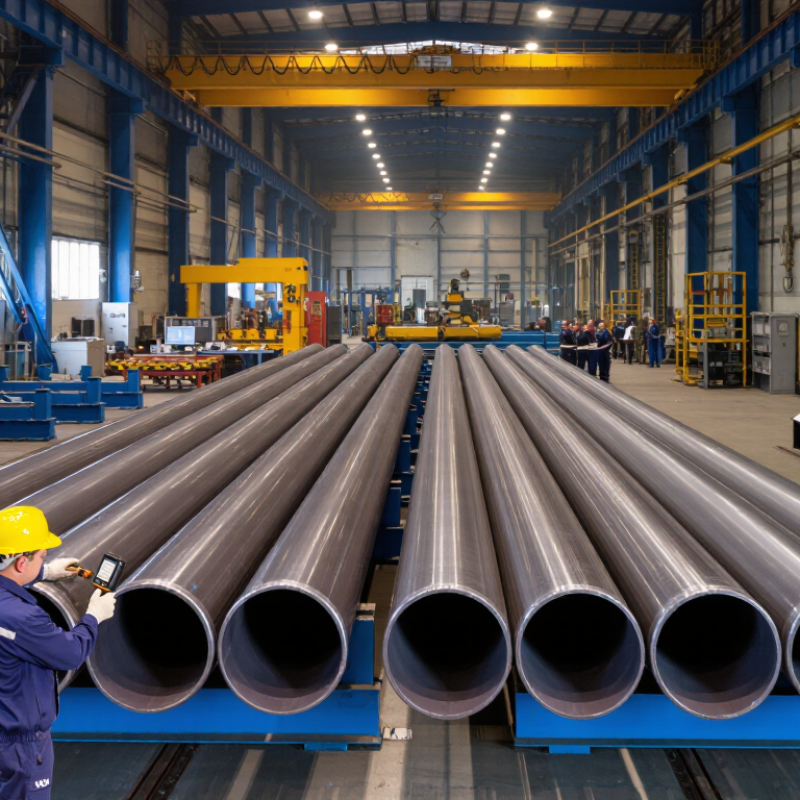
7 Best Heavy Wall Seamless Pipe SCH80 Factories

What Heavy Wall Seamless Pipe SCH80 Means

What Heavy Wall Seamless Pipe SCH80 Means

Heavy wall seamless pipe SCH80 refers to pipe made without a longitudinal weld. SCH80 describes wall thickness, not one universal thickness. The actual wall changes with nominal pipe size. For example, ASME B36.10M-2022 lists NPS 2 SCH80 at 0.218 inches thick. NPS 6 SCH80 measures 0.432 inches. That difference matters during design, bending, and installation.

The label sounds precise, but it is only a starting point. Pressure capacity also depends on steel grade, operating temperature, corrosion allowance, outside diameter, and allowable stress. ASTM A106/A106M Grade B requires at least 60,000 psi tensile strength and 35,000 psi yield strength. These figures support engineering checks, but they do not replace them. Seamless construction removes a welded seam, yet it does not guarantee flawless material. Mill certificates, ultrasonic inspection, hydrostatic testing, and dimensional checks remain important. In practice, specifications are sometimes copied incorrectly. That deserves a second review.

Tips: Confirm NPS, schedule, grade, length, and end finish separately. Request certificates traceable to the heat number. Check minimum wall thickness after corrosion allowance, not only the catalogue value. For high-temperature service, verify the design code and impact requirements with a qualified engineer.

Manufacturing Standards and Quality Requirements

For heavy-wall seamless pipe, SCH80 is a dimensional designation, not a complete material specification. Its wall thickness changes with nominal pipe size, so buyers should verify the required dimensions against ASME B36.10M. Material requirements may reference standards such as ASTM A106 or another specification suited to the service. The correct choice depends on temperature, pressure, and intended use.

Good factories connect production controls to documented requirements. Ask for heat-number traceability, material test reports, and records showing chemical composition and mechanical properties. Inspectors should check outside diameter, wall thickness, straightness, end preparation, and surface condition. A calibrated ultrasonic gauge can reveal local wall variation. Small details matter. Hydrostatic testing or permitted nondestructive examination should follow the applicable product specification and purchase order, rather than a generic checklist.

Quality is also visible in how a factory handles exceptions. If a measurement falls outside tolerance, the cause and disposition should be recorded, not quietly overlooked. I would compare a sample report with the pipe markings and shipment documents; mismatches deserve questions. Paperwork is useful, but it cannot replace consistent process control. Even experienced buyers can miss a detail when schedules, grades, and project requirements are crowded into one order.

How the Seven Factories Were Selected

The seven factories were assessed against the requirements of heavy-wall seamless pipe in Schedule 80, not promotional claims alone. Selection focused on whether each facility could document its manufacturing route, available steel grades, size range, and production controls. Schedule numbers do not describe one fixed wall thickness across every pipe size, so dimensional tables and purchase specifications matter.

Evidence mattered. We looked for traceable material records, clear inspection procedures, and practical quality checks, such as ultrasonic examination or hydrostatic testing where specified. Heat-treatment capability, dimensional measurement, and batch identification also helped distinguish repeatable production from a convincing brochure. Short lead times were considered, but not as proof of quality. They can change with order size and mill capacity.

Some details are difficult to compare from public information alone. A factory may describe its inspection system well yet provide little batch-level evidence. That is a limitation. Buyers should request current test reports, confirm tolerances against the exact order, and ask how nonconforming pipe is handled. No ranking is perfect. The selected factories offer useful starting points for evaluation, but a buyer’s grade, dimensions, end use, and inspection needs should guide the final choice.

7 Best Heavy Wall Seamless Pipe SCH 80 Factories — How the Seven Factories Were Selected

Representative SCH 80 Wall Thickness by Nominal Pipe Size

These representative dimensions follow ASME B36.10M. Factory selection should consider the ability to supply the required sizes, verified seamless-pipe manufacturing capability, quality documentation, material traceability, and delivery support. The chart shows standardized dimensional benchmarks, not factory-specific ratings.

Profiles of Seven Heavy Wall Seamless Pipe SCH80 Factories

These seven profiles show how heavy-wall seamless pipe SCH80 factories can differ in equipment, inspection, and order handling. They describe factory capabilities, not named suppliers. Factory 1 integrates billet heating, piercing, rolling, and sizing. Buyers can trace the pipe’s route through production. Factory 2 focuses on controlled heat treatment, with furnace records tied to each production batch. Factory 3 specializes in dimensional checks. Its inspectors measure outside diameter, wall thickness, and straightness at several points.

Factory 4 emphasizes material testing and documented chemical analysis. Ask how test results connect to individual pipe lots.

Factory 5 handles varied lengths and smaller production runs. That flexibility may help, though changeovers can affect delivery schedules.

Factory 6 prioritizes surface inspection and end preparation. Look for clear procedures for identifying seams, scale, and handling marks.

Factory 7 coordinates cutting, marking, and protective packaging for shipment.

A useful comparison goes beyond a catalog entry. Request sample inspection records, production tolerances, and an explanation of how nonconforming pieces are managed. SCH80 does not mean one fixed wall thickness for every pipe size; confirm the applicable dimensions against the order specification. Small details matter. Paperwork can look complete, yet still leave gaps in traceability. A factory visit or technical discussion may reveal how consistently its written procedures are followed.

Factors to Consider When Choosing a Factory

Choosing a heavy wall seamless pipe SCH80 factory requires more than comparing prices. Start by checking whether the mill controls steel chemistry, piercing, heat treatment, and sizing in-house. Ask for current mill test certificates, dimensional records, and hydrostatic or ultrasonic testing results. Ask for evidence. Documents should match the heat number stamped on the pipe.

Factory experience matters when wall thickness creates tighter process demands. Review production capacity, outside diameter ranges, schedule control, and tolerance management. A reliable supplier can explain how it prevents eccentric walls, surface laps, and cracking after heat treatment. Visit the facility if possible. Observe storage yards, calibration tags, inspection areas, and rejected pipe separation. Clean records are useful, but real production details are stronger.

Quality certification can support trust, but it is not a substitute for independent verification. Check whether the quality system covers traceability, nonconformance handling, and final release approval. Confirm packing methods, marking, export documents, and delivery planning before placing an order. Communication also reveals technical maturity; vague answers may signal weak control. I once focused too heavily on a competitive quotation and overlooked response time. That mistake delayed clarification of tolerances. Price still matters, yet cheaper pipe can cost more through rework, testing, or installation delays.

Blogs