
10 Best Conductivity Meters for Accurate Water Testing

Choosing a reliable Conductivity Meter starts with a simple question: what will the reading help you decide? A meter can reveal how well water carries an electrical current, offering a quick view of dissolved ions. It cannot identify every substance in the sample. That distinction matters when testing drinking water, aquariums, hydroponic solutions, or process water.

Physicist Lord Kelvin’s famous reminder applies to water testing: “When you can measure what you are speaking about, and express it in numbers, you know something about it.” A number is useful, though, only when the method behind it is sound. Check the meter’s range, resolution, temperature compensation, and calibration requirements. Rinse the probe between samples. A small droplet left behind can affect the next reading. Small details count.

The 10 meters in this guide are compared for accuracy, ease of calibration, durability, and practical value. Some suit quick checks at a sink; others are better for repeated measurements in a lab or field kit. Look for clear instructions and accessible calibration standards, not just a bright display. Even a well-made instrument needs care. And conductivity alone is not a complete water-quality assessment. Use the reading as one useful clue, then consider what the sample and testing purpose require. There is no perfect meter for every job.
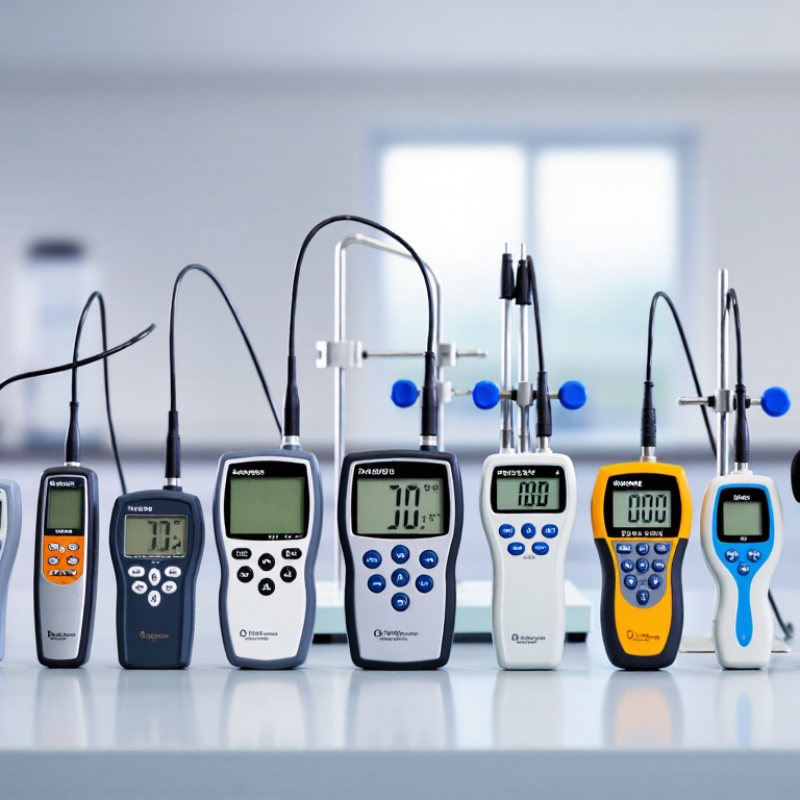
10 Best Conductivity Meters for Accurate Water Testing

What Conductivity Meters Measure in Water

Conductivity meters estimate how readily water carries an electrical current. They apply a small signal through electrodes and measure the response. Dissolved ions, including sodium, chloride, calcium, and bicarbonate, help carry that current. Higher ion levels generally mean higher conductivity, reported in microsiemens per centimeter (µS/cm) or millisiemens per centimeter (mS/cm). It is a useful snapshot.

But conductivity does not identify which substances are present. A high reading may reflect ordinary minerals, while some harmful substances may not raise it enough to stand out. That distinction matters. Temperature also affects results, so many meters adjust readings to a reference temperature. Check that setting, and rinse the probe between samples to limit residue from one cup affecting the next. Small details count.

For a dependable comparison, calibrate the meter as its instructions specify and test samples at similar temperatures. A reading can look reassuring yet leave important questions unanswered. Conductivity is best used to track changes or screen water, alongside tests suited to the specific concern. I would not treat one number as proof of safety; even careful measurements have limits.

Key Criteria for Selecting an Accurate Conductivity Meter

An accurate conductivity meter should match the water, not just the number on its display. Check its measurement range and resolution against your samples: low-mineral drinking water needs different sensitivity from concentrated process water. The USGS reports that pure water at 25°C has a specific conductance of about 0.055 µS/cm, while seawater is roughly 50,000 µS/cm. That spread makes range selection practical, not cosmetic. A meter can still mislead.

Temperature control matters because conductivity changes as water warms or cools. Choose a model with automatic temperature compensation, but confirm the reference temperature and correction method. USGS field guidance reports specific conductance standardized to 25°C; readings without a consistent reference are difficult to compare. Look for a stated accuracy specification, a suitable cell constant, and calibration options using traceable conductivity standards. EPA Method 120.1 and ASTM D1125 provide established methods for measuring water conductivity, useful benchmarks when reviewing instrument specifications.

Consider the probe as carefully as the meter. A glass beaker, a narrow sample cup, or bubbles trapped between electrodes can affect contact and readings. Select a probe suited to your sample volume and expected contamination, and check whether it is easy to rinse and inspect. Calibration frequency should reflect use and sample variability; a fixed schedule may not fit every lab. I would verify performance with a standard near the working range, then record temperature, calibration results, and any drift. Those notes make odd readings easier to question.

Ten Conductivity Meters Compared by Features and Applications

Comparing ten conductivity meters means matching measurement range, sample conditions, and workflow—not simply choosing the largest screen. Pocket testers are convenient for quick checks in a water tank, while pen-style meters suit occasional classroom or field readings. Waterproof handheld meters better withstand wet sampling sites. Handheld conductivity-and-TDS combination meters add a useful estimate, though TDS is calculated rather than directly measured. Benchtop meters offer steadier controls and larger displays for routine laboratory work. Small details matter.

For low-conductivity water, a sensitive meter with a suitable cell can reveal changes that basic models may miss. High-range industrial meters are designed for concentrated process water, while multiparameter units combine conductivity with pH or temperature readings. Inline meters track changing conditions in pipes, reducing manual sampling but requiring careful installation. Portable laboratory-grade meters can support field studies when paired with a stable probe and calibration solutions. Compare temperature compensation, cell constants, stated accuracy, and calibration options before selecting. A meter’s range may look impressive, yet poor probe care can undermine readings. In practice, rinsing the cell between samples and allowing the temperature reading to stabilize are easy steps to overlook. No type fits every site; even useful comparisons leave room for trial and adjustment.

How to Calibrate and Use a Conductivity Meter

Calibration starts with clean equipment and a suitable standard solution. Choose a standard near the conductivity range you expect in your water. Rinse the probe with distilled or deionized water, then gently shake off excess drops. Do not wipe the sensing surfaces; cloth can leave residue or create static. Pour a small amount of standard into a clean cup, immerse the probe, and wait for the reading to stabilize. Small details matter. Adjust the meter only as its instructions specify, and record the standard value and temperature.

For a sample, rinse the probe again and collect water in a clean container. Keep the sensor fully submerged without letting it touch the cup’s sides or bottom. Stir gently, then pause until the display settles. Temperature affects conductivity, so use automatic compensation when available, or measure and note the temperature. Rinse between samples to prevent carryover, especially when testing water with very different readings. A few drops from the previous sample can distort a result.

Recalibrate at the interval recommended in the meter’s manual, and whenever readings seem inconsistent. Use fresh standard solution rather than returning used liquid to its bottle. If the display drifts, check for bubbles, residue, or a damaged probe before assuming the water changed. I have found that rushing the stabilization step is an easy mistake; repeating the reading can reveal it. Calibration improves reliability, but it cannot correct a contaminated sample or poor sampling technique.

10 Best Conductivity Meters for Accurate Water Testing — How to Calibrate and Use a Conductivity Meter

Meter Type Best For Typical Conductivity Range Typical Accuracy Temperature Compensation Calibration Guidance Practical Use Notes
Basic Pocket Conductivity Tester Quick checks of tap, aquarium, and general-purpose water 0–2,000 µS/cm Typically about ±2% of reading Usually automatic; verify the model’s stated reference temperature Use a fresh standard near the expected sample range, commonly 1,413 µS/cm Compact and simple; limited range and replaceable probes may affect long-term cost.
Wide-Range Pocket Tester Field checks across low- and moderately high-conductivity water 0–20 mS/cm Typically about ±1–2% of reading Often automatic Choose a standard that falls within the range of the samples; use a second point when supported A wider range is useful for varied samples, but does not replace a high-range instrument for concentrated solutions.
Portable Handheld Meter Routine field sampling and on-site water-quality checks 0–20 mS/cm Typically about ±1% of reading Usually automatic, with temperature displayed separately Calibrate with one or more appropriate conductivity standards before a measurement session A clear display and a stable probe connection help when measuring multiple samples in the field.
High-Accuracy Laboratory Meter Laboratory measurements requiring better repeatability 0–200 mS/cm Typically about ±0.5–1% of reading Usually automatic; selectable temperature coefficient may be available Use fresh standards that bracket the expected sample range; follow the instrument’s calibration procedure Pair with a compatible cell constant and keep the probe clean to support consistent results.
Low-Conductivity Water Meter Deionized, distilled, or purified water monitoring Approximately 0–200 µS/cm Typically about ±1–2% of reading; performance is probe-dependent Often automatic, but compensation settings should be checked carefully Use a low-range standard appropriate to the instrument; avoid contamination of the standard and sample Low-conductivity readings are easily affected by dissolved carbon dioxide, container residue, and sample handling.
High-Range Conductivity Meter Saline water, brines, and concentrated process samples 0–200 mS/cm or higher, depending on probe Typically about ±1% of reading Usually automatic; confirm the specified temperature range Use a high-conductivity standard within the meter and probe operating range, such as 12.88 mS/cm where suitable Check that both the probe and meter are rated for the sample’s conductivity and temperature.
Conductivity Meter with Replaceable Probe Users who need to replace a worn or application-specific sensor Commonly 0–20 mS/cm; depends on the selected probe Typically about ±1% of reading Usually automatic when a compatible temperature sensor is fitted Recalibrate after replacing the probe and whenever readings drift or fail a check standard Confirm probe compatibility, cell constant, connector type, and temperature-sensor support before purchase.
Multiparameter Water-Quality Meter Field work that also requires measurements such as pH or dissolved oxygen Commonly 0–100 mS/cm; configuration-dependent Typically about ±1% of reading for conductivity Usually automatic through the conductivity probe Calibrate the conductivity channel with a suitable standard; calibrate other sensor channels separately Convenient for combined testing, but sensor maintenance and calibration are required for each measurement channel.
Benchtop Meter with Data Logging Repeatable laboratory workflows and recorded measurements Often 0–200 mS/cm, depending on probe Typically about ±0.5–1% of reading Usually automatic; some instruments allow manual settings Use documented standards and record calibration results, date, and temperature Data storage can improve traceability; confirm that export and reporting features meet workflow needs.
Inline or Process Conductivity Meter Continuous monitoring in treatment or industrial water systems Application-dependent; ranges may extend from µS/cm to hundreds of mS/cm Typically about ±1–2% of reading, depending on sensor and installation Often built in or configured through the transmitter Verify against a suitable reference standard or check procedure recommended for the installed system Installation, flow, fouling, and sensor placement can affect readings; inspect and maintain the sensor regularly.

Specifications are typical examples for instrument classes, not guaranteed values for a particular meter. Actual range, accuracy, temperature compensation, and calibration options vary by instrument and probe. For calibration, rinse the probe with clean water, blot gently, place it in fresh conductivity standard, and follow the meter’s instructions. Allow the reading to stabilize and avoid returning used standard to its container.

Factors That Can Affect Water Conductivity Readings

Factors That Can Affect Water Conductivity Readings

A conductivity meter measures how readily dissolved ions carry electrical current. Temperature is a major influence: the USGS Water Science School reports that conductivity commonly changes by about 2–3% for each 1°C shift. A cool sample can therefore read noticeably differently from the same water after warming. USGS field guidance recommends reporting specific conductance at 25°C, so check whether the meter compensates for temperature and whether that setting is enabled. Compensation is useful, but it cannot correct every difference in water chemistry.

The dissolved substances matter, too. Water containing more salts may conduct better than water with fewer ions, while different ions can produce different readings at similar concentrations. The USGS National Field Manual treats specific conductance as a field measurement that should be interpreted alongside other water-quality information—not as a stand-alone measure of purity. Residue on the probe, trapped air bubbles, an incorrect cell constant, or a poorly calibrated meter can also skew results. Small shifts matter. EPA Method 120.1 specifies conductivity measurement procedures, underscoring the need for consistent technique and suitable calibration standards.

Tips: Rinse the probe with the sample, gently remove bubbles, and wait for the reading to stabilize. Measure samples at a consistent temperature, and record that temperature with each result. Recheck calibration if readings drift; field conditions are rarely perfect.

Blogs