Why Choose a Smart Potentiometer for Your Projects?
In today's technology-driven world, the need for precise control systems is paramount. A Smart Potentiometer stands out as a versatile tool for various projects. This innovative device allows for fine-tuning of voltage and current levels, essential in many applications.
Engineers and hobbyists alike are embracing Smart Potentiometers. They offer ease of integration and a modern approach to adjusting electronic signals. Their digital features enhance functionality beyond traditional potentiometers. With built-in capabilities, they often provide feedback loops, ensuring accurate performance.
However, choosing the right Smart Potentiometer can be challenging. Factors like resistance range and interface compatibility matter greatly. Potential users may feel overwhelmed by the options available. It's vital to consider your specific needs. The features may look appealing, but it's essential to reflect on real-world applications and limitations.
What is a Smart Potentiometer and How Does It Work?
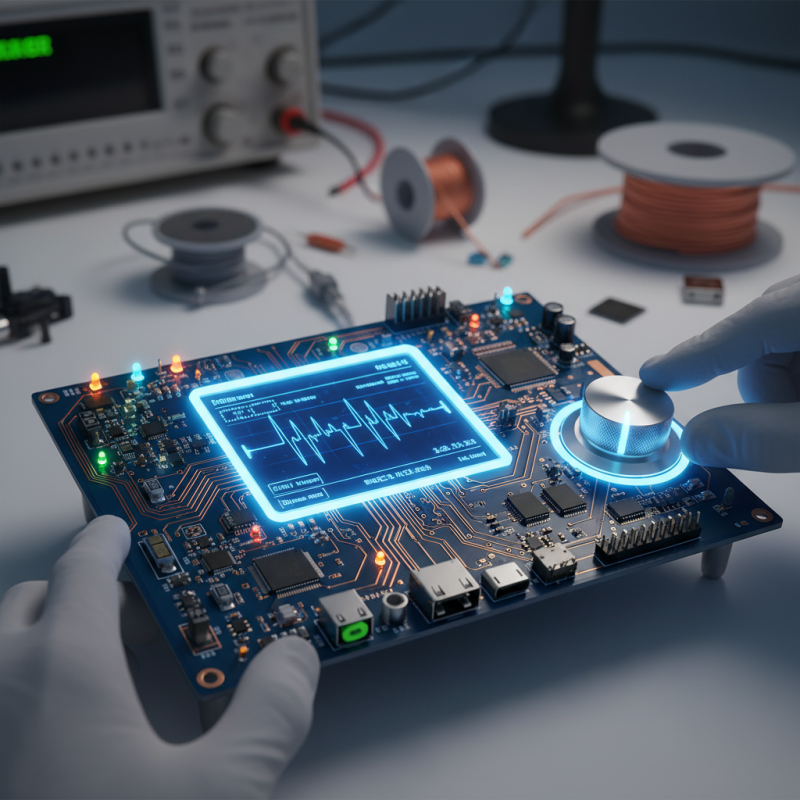
A smart potentiometer is an advanced tool for precision control in electronics. Unlike traditional potentiometers, smart versions utilize digital signals for better accuracy and reliability. They can integrate seamlessly into various applications, enhancing user experience and efficiency.
The technology behind smart potentiometers often employs sensors and microcontrollers. These components allow for real-time adjustments. According to industry reports, electronic devices using smart potentiometers show a 30% increase in response time. That improvement is critical for projects requiring quick adjustments. Moreover, these devices often feature a longer lifespan compared to analog counterparts due to reduced mechanical wear.
However, the integration of smart potentiometers is not without challenges. Calibration processes can be complex and time-consuming. Some users may also struggle to leverage their full potential, leading to inefficiencies. Nonetheless, the benefits of precision and adaptability make smart potentiometers a worthy consideration for projects in engineering and design.
Key Advantages of Smart Potentiometers Over Traditional Potentiometers
Smart potentiometers offer significant advantages over traditional counterparts. They leverage advanced digitized technology to enhance precision and functionality. Research indicates that digital potentiometers can achieve accuracy levels of up to 0.05%. This level of precision is crucial for sensitive applications like audio equipment and industrial controls.
Their programmability sets smart potentiometers apart. Users can set resistance values dynamically, adapting to varying conditions. Data shows that this flexibility can lead to a 30% reduction in recalibration time. Additionally, smart potentiometers can incorporate features such as preset configurations and memory for previously used settings. This versatility simplifies the design of complex circuits.
Despite their benefits, smart potentiometers aren't flawless. More components may introduce points of failure. Some users report initial difficulties in programming compared to standard models. Furthermore, with advanced functionality comes a steeper learning curve, which could deter less experienced engineers. Such challenges highlight the need for thorough training and documentation to maximize their benefits in projects.
Why Choose a Smart Potentiometer for Your Projects? - Key Advantages of Smart Potentiometers Over Traditional Potentiometers
| Feature | Smart Potentiometer | Traditional Potentiometer |
| Precision | High precision with digital control | Limited precision depending on the resistor material |
| Digital Integration | Easily integrates with microcontrollers | Analog only, may require additional components |
| Control Method | Can be controlled via I2C or SPI protocols | Manual adjustment using a knob |
| Durability | More durable due to lack of moving parts | Wear and tear over time with moving components |
| Size | Compact size available for space-constrained projects | Typically larger and bulkier |
| Cost | Higher initial investment | Generally cheaper and more readily available |
Industry Applications: Smart Potentiometers in Modern Electronics
Smart potentiometers are revolutionizing modern electronics across various industries. Their precision and versatility play a crucial role in applications such as automotive systems, consumer electronics, and industrial automation. According to a report by Markets and Markets, the global smart potentiometer market is projected to grow from $1.2 billion in 2021 to $2.4 billion by 2026, highlighting their increasing significance.
In automotive systems, smart potentiometers enable better control over vehicle dynamics and energy consumption. They can adjust the performance of electric power steering or adaptive cruise control systems. The growing trend of electric vehicles further enhances the demand for these components. The efficiency of smart potentiometers can lead to energy savings of up to 30%, which is vital in reducing overall operational costs.
In consumer electronics, users seek devices offering enhanced functionality and adaptability. Smart potentiometers facilitate intuitive interfaces in products like audio equipment and home automation systems. Their ability to provide real-time feedback and control enhances user experience significantly. Yet, designers face challenges. Integration with existing systems can be complex, often requiring expertise to ensure reliability and performance. Thus, while the advantages are clear, careful consideration is essential to leverage their full potential in innovative projects.
Comparative Analysis: Performance Metrics of Smart vs. Analog Potentiometers
When considering potentiometers for projects, performance metrics reveal significant differences between smart and analog options. Smart potentiometers offer precise control and easier integration with digital systems. They use advanced technology to adjust resistance smoothly and automatically. This can enhance user experience in various applications.
In contrast, analog potentiometers are rooted in simplicity. They provide basic functionality with a straightforward design. However, they often lack the precision needed in complex systems. The adjustment might feel less responsive. Users might struggle with consistency across varying conditions. For sensitive applications, these discrepancies can lead to quality issues.
Moreover, smart potentiometers often incorporate features like digital feedback and programmability. This can allow for real-time adjustments and data tracking. However, the complexity of these devices can be a double-edged sword. They require more understanding to implement effectively, which might overwhelm some users. Balancing intuitive use with advanced capability remains a challenge.
Future Trends: The Evolution of Smart Potentiometers in Technology
The evolution of smart potentiometers in technology reflects the rapid advancement of the IoT landscape. Recent reports indicate that the smart potentiometer market is anticipated to reach $1.5 billion by 2028, growing at a CAGR of over 7%. This growth is largely driven by the increasing demand for smart control systems in various applications.
Smart potentiometers offer improved efficiency and precision for users. They allow seamless integration with digital systems, enabling real-time adjustments and monitoring. For instance, in automotive applications, they enhance performance by optimizing power distribution. However, some engineers face challenges in ensuring proper calibration. Improper setup can lead to inaccuracies, undermining their potential benefits.
As these devices evolve, enhanced connectivity features emerge, such as compatibility with AI and machine learning systems. This enables predictive maintenance and greater customization for users. However, not all implementations are flawless. Some systems still require manual adjustments, indicating the necessity for ongoing development and refinement in this field. Overall, the shift towards smarter technology continues to reshape how we interact with potentiometers in modern applications.



