Top Air Circuit Breaker Protection Relay Features You Need to Know
When it comes to ensuring the safety and reliability of electrical systems, the role of an air circuit breaker protection relay cannot be understated. This crucial device is designed to monitor and protect electrical circuits from overloads and short circuits, ensuring smooth operation and minimizing the risk of electrical failures. In the evolving landscape of electrical engineering, understanding the essential features of an air circuit breaker protection relay is vital for engineers and technicians alike.
This article delves into the top features of air circuit breaker protection relays that professionals must be aware of to make informed decisions regarding their implementation and management. From advanced monitoring capabilities to user-friendly interfaces, these features enhance the efficiency and effectiveness of power distribution systems. By exploring these key aspects, readers will gain insights into how to optimize protection strategies within their electrical networks and ensure compliance with safety standards. Ultimately, a thorough understanding of air circuit breaker protection relay features contributes significantly to the overall resilience and robustness of electrical infrastructure.
Key Functions of Air Circuit Breaker Protection Relays
Air circuit breaker (ACB) protection relays play a crucial role in ensuring the safe and efficient operation of electrical systems. One of the key functions of these relays is overload protection, which monitors the current flowing through the circuit and disconnects the breaker when it detects excessive current levels. This function prevents damage to the circuit components and reduces the risk of fire hazards, making it an essential feature for maintaining system integrity.
Another significant function of ACB protection relays is short-circuit protection. These relays are designed to react swiftly to short-circuit conditions, isolating affected parts of the system almost instantaneously. This rapid response minimizes the impact of short circuits, which can lead to equipment failures and safety issues. Additionally, many modern protection relays come equipped with ground fault protection, which detects ground faults and further enhances the safety of the electrical system by ensuring immediate disconnection to prevent electrocution and equipment damage. Together, these features form a comprehensive protection scheme, essential for reliable power distribution and electrical safety.
Essential Features of Air Circuit Breaker Protection Relays
Air circuit breaker (ACB) protection relays play a crucial role in ensuring the safety and reliability of electrical systems. One of the essential features to consider is the advanced monitoring capabilities these relays offer. They can provide real-time data on current and voltage levels, allowing for immediate detection of abnormalities that could indicate potential faults. According to a report by the International Electrotechnical Commission, 60% of electrical failures in industrial settings are linked to improper circuit protection. Thus, the ability to monitor and respond to electrical anomalies is critical in mitigating risks.
Another key feature of ACB protection relays is their programmable settings that allow for customizable protection schemes. This flexibility is particularly vital for diverse applications across industries, from manufacturing to renewable energy sectors. A study from the Institute of Electrical and Electronics Engineers highlights that around 75% of facility managers prefer equipment that can be tailored to specific operational parameters. The versatility of these relays not only enhances operational efficiency but also ensures compliance with industry standards, which can vary significantly by region and application type.
Moreover, integration with communication protocols such as Modbus and Ethernet enhances the functionality of ACB protection relays, allowing for seamless integration into smart grid systems. A recent market analysis indicates that the adoption of smart grid technology is projected to grow at a compound annual growth rate of 20.5% through 2025. By leveraging communication capabilities, ACB protection relays can contribute to improved fault detection, remote monitoring, and overall energy management, ensuring that organizations can respond promptly to electrical issues while maintaining service continuity.
Top Air Circuit Breaker Protection Relay Features You Need to Know
| Feature |
Description |
Importance |
| Overcurrent Protection |
Monitors current flow to prevent overheating and damage. |
Critical |
| Earth Fault Protection |
Detects ground faults to prevent electrical shock and equipment damage. |
Very Important |
| Short Circuit Protection |
Provides rapid disconnection of the circuit in response to short circuits. |
Essential |
| Communication Protocol Support |
Enables integration with other systems for automation and monitoring. |
Beneficial |
| User Interface |
Intuitive controls and display for easy operation and monitoring. |
Important |
| Settings and Customization |
Allows users to customize protection settings based on specific needs. |
Highly Useful |
| Real-Time Monitoring |
Tracks performance metrics and alerts users of potential issues. |
Critical |
| Data Logging |
Records historical data for analysis and troubleshooting. |
Helpful |
Importance of Sensitivity and Selectivity in Protection Relays
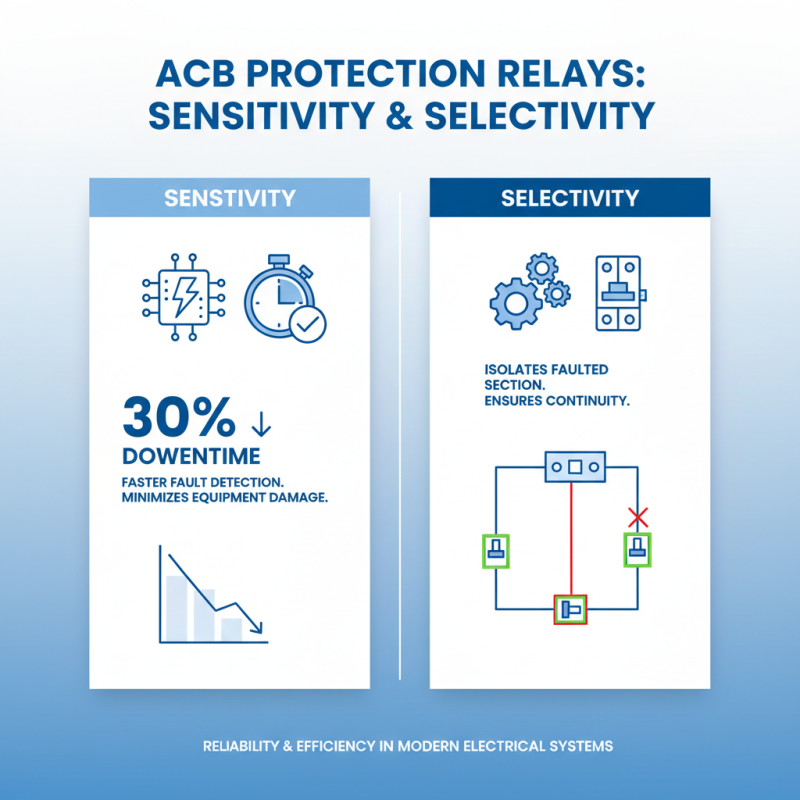
In modern electrical systems, the sensitivity and selectivity of protection relays are critical features that define the reliability and efficiency of air circuit breaker (ACB) operations. Sensitivity refers to the relay's ability to detect fault conditions swiftly, allowing for prompt disconnection of the affected circuit. This rapid response is essential in minimizing damage to equipment and ensuring safety. Statistical data indicates that systems equipped with high-sensitivity relays experience up to a 30% reduction in downtime during fault conditions, compared to those with less sensitive protection measures.
Selectivity, on the other hand, pertains to the relay’s ability to isolate only the faulty section of the network without disrupting the overall system. This is crucial in complex electrical networks where multiple circuits are interlinked. Enhanced selectivity can lead to improved system stability and reduces the risk of cascading failures. Industry studies show that implementing selective protection strategies can cut down operational disruptions by more than 20%, providing substantial benefits for industrial and commercial applications alike.
Tips: When selecting a protection relay, ensure that its sensitivity and selectivity align with your system’s specific requirements. Regular testing and calibration of relays can maintain optimal functionality, preventing potential failures. Additionally, consider integrating advanced relay technologies that offer adjustable settings to cater to varying operational conditions for more efficient protection management.
Common Types of Air Circuit Breaker Protection Relays
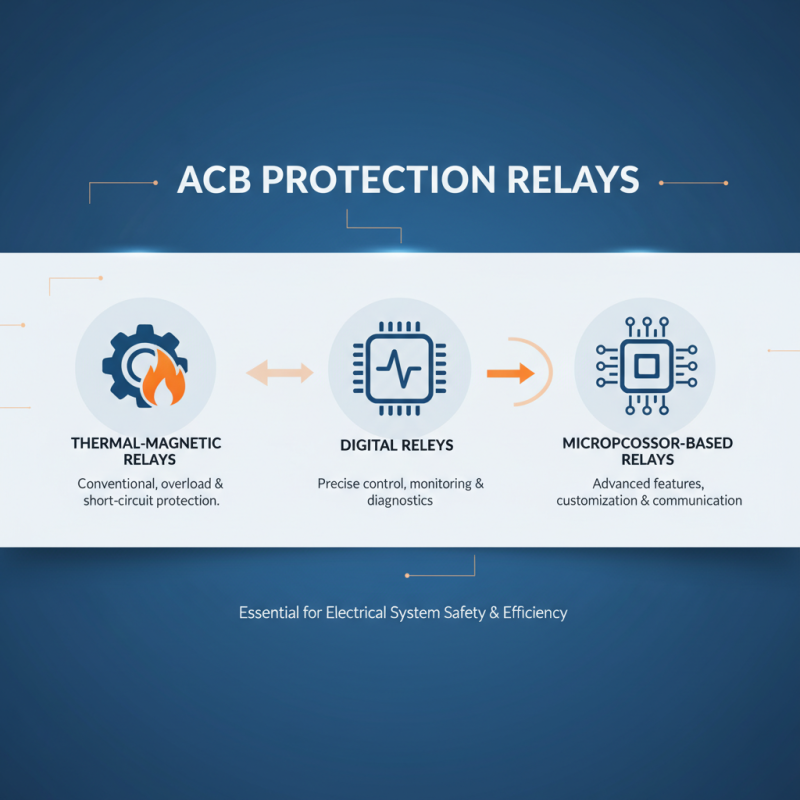
Air circuit breaker (ACB) protection relays are essential components used to ensure the safety and efficiency of electrical systems. These relays come in various types, each designed to cater to specific needs within industrial applications. The most common types include thermal-magnetic relays, digital relays, and microprocessor-based relays. Thermal-magnetic relays utilize both thermal and magnetic principles to trip during overload or short-circuit conditions, making them reliable for conventional applications. On the other hand, digital relays offer precise control and monitoring capabilities, allowing for enhanced diagnostics and system performance.
Microprocessor-based relays represent a significant advancement in ACB protection technology. According to the latest industry reports, the adoption of microprocessor relays has increased by over 30% in the past five years due to their ability to integrate with smart grid technologies and provide real-time data analytics. These relays are capable of performing complex functions, such as monitoring voltage levels and fault currents, thereby improving system reliability and minimizing downtime.
Tips: When selecting an ACB protection relay, consider the specific application requirements, such as load characteristics and fault current levels. It's also crucial to evaluate the relay's integration capabilities with existing electrical infrastructure. Proper calibration and regular maintenance will enhance the lifespan and efficacy of the protection relay, ensuring optimum performance in safeguarding electrical systems.
Best Practices for Installing and Maintaining Protection Relays
Installing and maintaining protection relays for air circuit breakers is critical for enhancing the reliability and safety of electrical systems. According to a report by the International Electrotechnical Commission (IEC), improper installation or maintenance of protective devices can lead to operational inefficiencies and increased risk of failure. It is essential to ensure that relay settings are calibrated correctly, as inaccurate settings can result in insufficient protection or unnecessary tripping, potentially damaging equipment and affecting system performance. A routine check on relay programming and functionality is recommended every six months to ensure optimal operation.
Another vital aspect of maintaining protection relays involves regular testing and commissioning. The IEEE Power and Energy Society suggests implementing a test plan that includes functional tests, trip time assessment, and insulation resistance measurements. These tests, conducted at least annually, help identify any deterioration in relay performance due to environmental factors such as temperature fluctuations and moisture, which can significantly affect relay operation. Utilizing advanced testing technologies, such as primary injection testing and secondary injection testing, is recommended to verify the performance of the relays under different operational scenarios, thus ensuring the system remains robust against faults and interruptions. Adhering to these best practices will create a safer working environment and extend the lifespan of critical electrical infrastructure.