
2026 Top Spindle Hub Bearing Assembly Suppliers?
Choosing a reliable Spindle Hub Bearing Assembly supplier in 2026 requires more than comparing catalog prices. Vehicle manufacturers, repair networks, and distributors need evidence of consistent engineering quality. That evidence may include dimensional inspection, preload verification, seal testing, and documented material controls. A polished website is not enough. Real performance is found inside the hub, where heat, vibration, road salt, and uneven loading meet.
Thomas R. Keller, an independent wheel-end engineering consultant with more than two decades of field experience, states, “A bearing assembly earns trust through repeatable testing, not impressive promises.” His point deserves attention. Leading suppliers should explain their manufacturing process, ABS encoder compatibility, grease specification, corrosion protection, and traceability system. They should also provide clear information about vehicle fitment and installation requirements. Small details matter. A slightly incorrect preload can create noise, heat, or premature wear.
This guide examines the 2026 supplier landscape through practical purchasing criteria. It considers production capacity, quality certifications, testing equipment, warranty support, delivery reliability, and technical communication. Supplier rankings can still be imperfect. Public data may be incomplete, and regional performance can vary. Buyers should verify samples, audit records, and current certifications before placing large orders. The strongest choice is not always the cheapest one. It is the supplier that can repeatedly deliver a safe, well-documented Spindle Hub Bearing Assembly under real operating conditions.
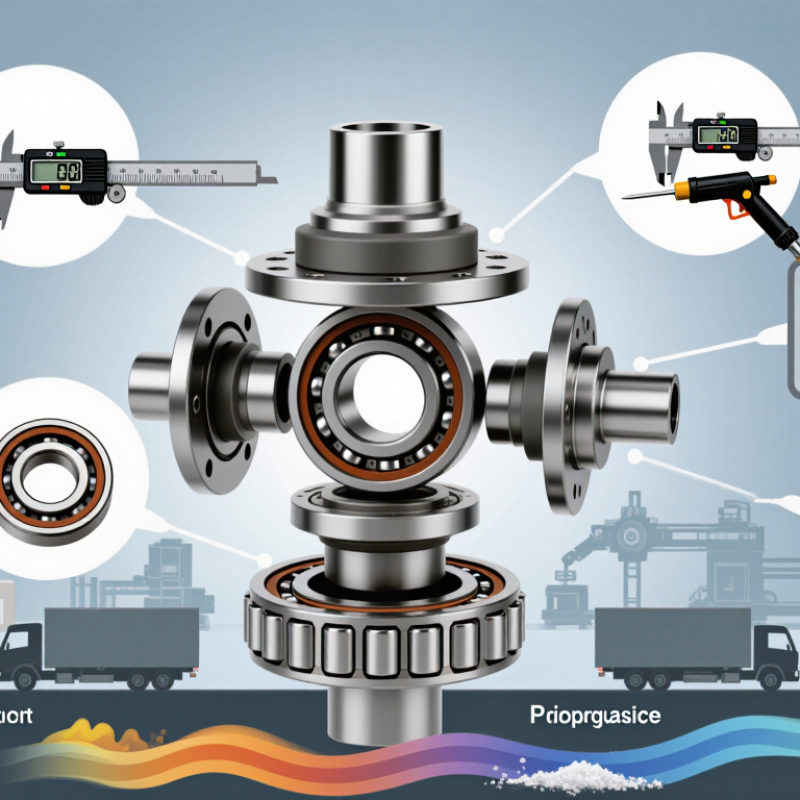
What Is a Spindle Hub Bearing Assembly?
A spindle hub bearing assembly combines the wheel hub, spindle interface, bearings, seals, and fastening hardware. It supports the vehicle’s weight while allowing the wheel to rotate smoothly. The bearing carries radial loads from the road and axial loads during cornering. Precise fit matters.
Many assemblies use tapered roller bearings or sealed double-row bearings. Seals retain grease and block water, dust, and road grit. Some designs also include an integrated tone ring for the wheel speed sensor. A damaged ring can trigger warning lights, even when the bearing feels quiet. The assembly must match the spindle diameter, wheel pattern, brake position, and sensor arrangement.
A practical inspection begins with wheel movement, rough rotation, and seal condition. Listen for a low growl that changes during turns. Do not treat every noise as a bearing failure. Tires, brakes, and loose suspension parts can create similar symptoms. This is where diagnosis can become imperfect.
Installation requires clean contact surfaces and the correct tightening procedure. Excessive torque may overheat a serviceable bearing. Insufficient torque may create play and uneven wear. Use a calibrated torque wrench and follow the vehicle’s repair data. Never hammer directly on a sealed bearing or contaminate its sealing lip. I would recheck sensor clearance and fastener seating after a short road test. Small oversights often become expensive repairs.
2026 Top Spindle Hub Bearing Assembly Suppliers? - What Is a Spindle Hub Bearing Assembly?
A spindle hub bearing assembly is a preassembled wheel-end component that supports the wheel and hub, allows controlled rotation around the steering spindle or axle, and may integrate an ABS encoder, wheel-speed sensor interface, flange, mounting bolts, or a wheel-stud system. The table below presents supplier categories and practical evaluation criteria without displaying company or brand names.
| Evaluation Dimension | Realistic Technical or Commercial Benchmark | Recommended Supplier Profile for 2026 | Buyer Verification Points |
|---|---|---|---|
| Product Definition | An integrated wheel-end unit combining a bearing, hub or flange, seals, and mounting hardware. Some assemblies also include an ABS magnetic encoder or tone ring. | A manufacturer with dedicated wheel-end engineering and assembly capabilities. | Confirm the supplied assembly matches the vehicle spindle, axle, flange, sensor, and mounting configuration. |
| Bearing Architecture | Common designs include double-row angular-contact ball bearings and double-row tapered roller bearings. The correct design depends on radial load, axial load, stiffness, speed, and vehicle application. | A supplier able to provide application-specific bearing selection rather than a single universal design. | Review load ratings, internal clearance or preload, contact angle, bearing arrangement, and design drawings. |
| Vehicle Coverage | A strong catalog normally covers passenger cars, sport utility vehicles, light commercial vehicles, trailers, and selected agricultural or industrial applications. | An aftermarket specialist or original-equipment manufacturing partner with a documented application catalog. | Check vehicle make, model, production year, axle position, engine type, drivetrain, and cross-reference accuracy. |
| Load and Durability Capability | The assembly must withstand combined radial and axial loads, cornering forces, braking loads, vibration, temperature cycling, contamination, and repeated shock loading. | A supplier with validated durability testing and application-specific simulation or bench-test capability. | Request test methods, test duration, load conditions, failure criteria, and representative validation reports. |
| Material and Heat Treatment | Bearing rings and rolling elements commonly use high-carbon chromium bearing steel. Hub flanges may use forged or machined steel, with heat treatment selected for strength, fatigue life, and dimensional stability. | A manufacturer with controlled steel sourcing, heat-treatment records, and traceable batch management. | Verify material certificates, hardness ranges, metallurgical inspection, dimensional stability, and lot traceability. |
| Sealing and Lubrication | Integrated seals and factory-filled grease protect the bearing from water, dust, road salt, and loss of lubricant. Seal performance is application-dependent. | A supplier with in-house or validated seal design, grease selection, and contamination testing. | Review seal material, temperature range, water-ingress testing, grease specification, and contamination-control procedures. |
| ABS and Sensor Compatibility | Assemblies may use a passive tone ring or an active magnetic encoder. Encoder pole count, orientation, air gap, and sensor compatibility must match the vehicle control system. | A supplier experienced in sensor-integrated wheel-end assemblies and electronic compatibility testing. | Confirm encoder type, pole count, rotation direction, connector position, output behavior, and diagnostic compatibility. |
| Dimensional and Runout Control | Critical characteristics include bore or spindle fit, flange position, bolt-circle dimensions, mounting-hole accuracy, flange runout, bearing preload, and endplay. | A precision manufacturer using automated measurement and statistical process control for critical dimensions. | Request control plans, capability data, inspection frequency, calibrated equipment records, and dimensional reports. |
| Quality Management | Automotive programs commonly require ISO 9001 quality management, while vehicle-production supply chains frequently require IATF 16949 and structured production-part approval processes. | A certified automotive supplier with formal change control, corrective-action procedures, and production traceability. | Validate current certificates, audit status, process flow, control plan, failure-mode analysis, and production-part approval documentation. |
| Testing and Inspection | Relevant checks may include noise and vibration, rotational torque, preload, grease leakage, seal integrity, hardness, dimensional accuracy, and endurance testing. | A supplier with laboratory equipment, end-of-line inspection, and retained test records for each production lot. | Ask whether inspection is 100% or sample-based, which characteristics are tested, and how nonconforming parts are controlled. |
| Supply Capacity | Capacity should be evaluated by monthly production volume, tooling availability, lead time, minimum order quantity, and capacity during demand peaks. | A supplier with multiple qualified production lines, documented capacity planning, and a stable component supply chain. | Compare standard lead time, emergency replenishment capability, forecast requirements, minimum order quantity, and safety-stock policy. |
| Packaging and Logistics | Packaging should prevent flange damage, corrosion, seal deformation, contamination, and impact during international transportation and warehouse storage. | An export-capable supplier with tested packaging specifications and serialized or batch-based labeling. | Inspect packaging tests, corrosion protection, pallet configuration, carton labeling, barcode format, and shipping documentation. |
| Regulatory and Environmental Compliance | Depending on the destination market, buyers may require compliance with applicable chemical, material, recycling, conflict-minerals, and restricted-substance requirements. | A supplier able to provide material declarations and maintain controlled environmental and substance-compliance records. | Request applicable declarations, restricted-substance statements, material composition data, and change-notification procedures. |
| After-Sales Support | Professional support should include installation guidance, technical drawings, failure analysis, warranty handling, and corrective-action response. | A supplier with dedicated engineering and customer-service contacts for technical claims and field issues. | Confirm warranty terms, response time, return-material process, root-cause analysis format, and technical-document availability. |
| Best-Fit Supplier Category | The best choice depends on whether the buyer prioritizes original-equipment validation, broad aftermarket coverage, low-volume customization, or cost-sensitive volume production. | OE-oriented manufacturer Aftermarket specialist Custom engineering supplier High-volume producer | Score technical capability, verified quality, total landed cost, delivery reliability, application coverage, and support before final selection. |
Note: Performance requirements, dimensions, bearing type, encoder configuration, test limits, and service life vary by vehicle and application. Always approve the final assembly against the applicable drawing, vehicle specification, and validated test requirements.


