
2026 Best Vape Manufacturer for Global Buyers?

Choosing a Vape Manufacturer in 2026 requires more than comparing unit prices. Global buyers must examine production consistency, component traceability, quality controls, and the supplier’s ability to document its processes. A polished sample matters. So does the batch behind it.

Grand View Research estimated the global e-cigarette and vape market at USD 28.17 billion in 2023, projecting a 30.6% compound annual growth rate from 2024 to 2030. These figures describe a broad market, not guaranteed demand for any product or supplier. They do, however, show why buyers need evidence rather than confident sales claims. Ask for current audit records, material specifications, test documentation, and clear procedures for handling defects. Check that documents match the exact product and production site.

Expert insight also matters, but quotations should be verifiable. Dr. Konstantinos Farsalinos, a physician and researcher who studies e-cigarettes, has discussed the importance of evaluating product evidence carefully. His research perspective is relevant to due diligence, though it should not be mistaken for an endorsement of any manufacturer. A quotation without a traceable source would add little.

This guide compares manufacturers through practical criteria: manufacturing transparency, quality systems, communication, and documented capacity. No supplier is perfect. Even a strong factory may have limits in customization, lead time, or reporting. Buyers should verify claims independently and confirm that products meet the requirements applicable in their intended markets.
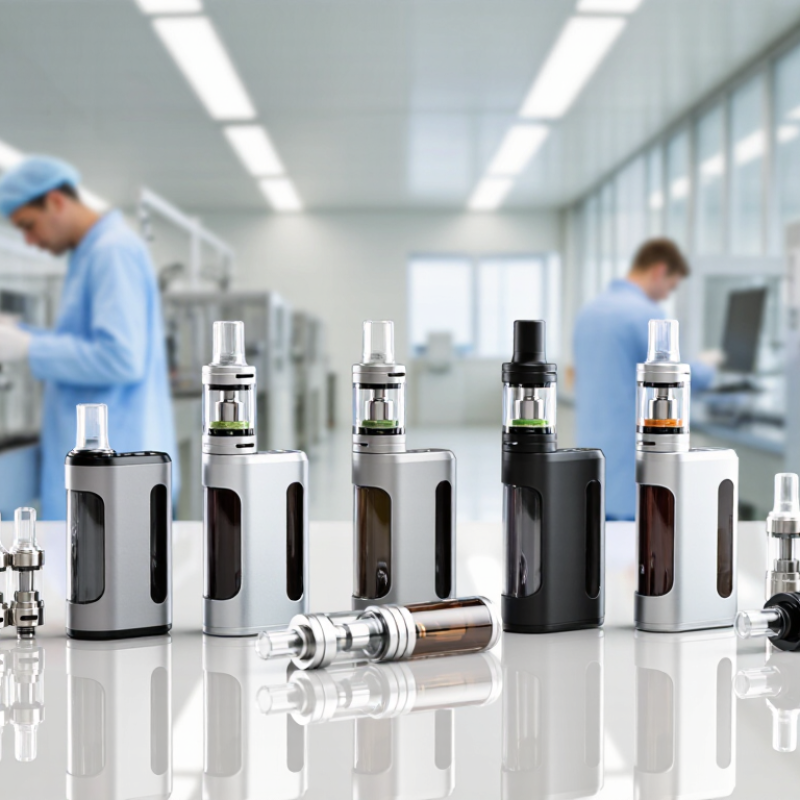
2026 Best Vape Manufacturer for Global Buyers?

Vape Manufacturing Industry Overview for Global Buyers in 2026

Vape Manufacturing Industry Overview for Global Buyers in 2026

Global vape manufacturing is becoming more regulated, traceable, and quality-driven. Grand View Research valued the global e-cigarette market at about USD 26.6 billion in 2023. Its report projects strong growth through 2030. However, market estimates vary widely. Definitions and regional data are not consistent.

The World Health Organization reports more than 100 million e-cigarette users worldwide. This creates demand for reliable hardware, clear labeling, and consistent product performance. In 2026, serious buyers should examine factory audits, battery safety tests, material certificates, and batch-level records. ISO 9001 systems can support process control, but certification alone proves little. Ask for recent audit evidence. Review it carefully.

Tips: Request samples from several production batches. Test leakage, charging behavior, airflow, and packaging accuracy. Confirm age-control procedures and destination-market rules before ordering. Avoid suppliers that promise unusually low prices without test reports. That shortcut can become expensive. Regulatory requirements also change quickly, so legal review remains necessary. A practical weakness exists here: public market reports often combine different device categories. Buyers should compare definitions before trusting growth figures.

Key Criteria for Evaluating International Vape Manufacturers

2026 Best Vape Manufacturer for Global Buyers?

International buyers should judge a vape manufacturer by evidence, not polished sales materials. During factory evaluations, I look for consistent batch records, trained quality staff, and clear production controls. The manufacturer should provide verifiable testing from independent laboratories. Reports should cover battery safety, materials, emissions, and product consistency where legally required.

Regulatory knowledge is equally important. A reliable supplier checks each destination’s rules before accepting an order. Requirements may differ for labeling, packaging, ingredients, recycling, and age restrictions. Ask for product specifications, safety data, traceability records, and change-control procedures. A serious manufacturer can explain what happens when a batch fails inspection. Vague answers are a warning sign. I have also learned that attractive samples can hide weak after-sales systems. Confirm lead times, replacement policies, complaint handling, and secure data practices. Perfect suppliers are rare, so document every concern before signing.

Tips: Request a small, lawful trial order before scaling. Compare samples from different production dates. Check labels with local compliance specialists. Inspect cartons, seals, serial codes, and battery protection. Avoid suppliers promising sales success or guaranteed health outcomes. Independent verification costs time, but rushed decisions cost more.

Product Quality, Safety Standards, and Compliance Requirements

For global buyers, manufacturer selection should begin with documented controls, not polished product photos. Request batch-level test reports for nicotine concentration, ingredient identity, leakage, and aerosol consistency. The European Commission’s Tobacco Products Directive 2014/40/EU sets measurable limits for covered products: nicotine liquid may not exceed 20 mg/ml, and refill containers are limited to 10 ml. These figures apply in the EU, not worldwide. A capable supplier should map each product to its destination market’s rules and provide current evidence, not a generic “compliant” certificate.

Battery & factory controls
Battery and factory controls matter too. Ask for applicable IEC 62133-2 battery test evidence and UN 38.3 transport test summaries. Check that report models match the exact battery and product version being purchased. ISO 9001 certification can indicate a quality management system, but it does not prove each device is safe. Small details count: a legible batch code, sealed packaging, and a reachable complaint contact make recalls and investigations more practical. I would still inspect samples independently; paperwork can lag behind production.

Tips: Compare test reports with production samples, verify certificate numbers with the issuing body, and keep written approval records. Ask how failed batches are isolated and how corrective actions are tracked. A vague answer is a warning sign. Even good audits miss things sometimes. Recheck documents when components, suppliers, or manufacturing sites change.

Supply Chain, Customization, and Global Distribution Capabilities

A capable vape manufacturer is more than a factory with a polished catalog. Global buyers need evidence that materials, production records, and shipping plans remain consistent across orders. Ask how incoming components are checked, how batch records are stored, and what happens when a shipment fails inspection. Specific answers matter. A sample can look excellent while a later production run differs in finish or fit.

Customization also needs practical limits. Request clear drawings, approved material specifications, and written sample sign-off before production begins. Confirm which design changes affect tooling, lead time, or minimum order quantities. Small details count: connector dimensions, packaging strength, and label placement can cause delays at a distribution center. Test samples under realistic handling conditions. Then test them again. Some buyers skip that second check, and regret it.

For global distribution, compare documented capacity with actual delivery records, not optimistic estimates. Ask about production scheduling, export paperwork, shipment tracking, and contingency plans for component shortages. Verify that products and documentation meet the requirements of each destination market, using qualified local advisers where needed. A single supplier may simplify communication, but it can also concentrate risk. Maintain a backup plan, even if it feels unnecessary. Reliability is built through checks, not promises.

How to Select the Best Vape Manufacturer for Your Market

Selecting the best vape manufacturer starts with your market, not a glossy catalogue. WHO’s 2023 global tobacco report estimated 1.25 billion adult tobacco users in 2022. GSTHR’s 2024 estimates placed global vaping at roughly 114 million users. These figures show scale, but not identical demand. Each country differs in age rules, product limits, labeling, recycling duties, and permitted ingredients. Build a market-by-market compliance checklist before requesting samples.

Ask for complete technical evidence. Request ingredient specifications, battery safety tests, leak testing, emissions screening, and batch-level certificates from independent laboratories. Testing laboratories should demonstrate ISO/IEC 17025 competence. A manufacturer should also provide traceability from component supplier to finished carton. Check quality systems, corrective-action records, production capacity, and recall procedures. Request a pilot batch before signing a large order. Small defects become expensive at container scale.

Do not rely on certificates alone. Verify certificate numbers, laboratory identities, and report dates. Visit the facility when possible, or use an independent factory auditor. Ask how rejected units are isolated and recorded. Good answers are specific. Perfect answers deserve questions. My own weakness would be overvaluing polished documentation; production behavior matters more. A strong supplier can adapt packaging and formulas to lawful local requirements without hiding uncertainty. Confirm every specification with local counsel and qualified regulatory professionals before distribution.

2026 Best Vape Manufacturer for Global Buyers? - How to Select the Best Vape Manufacturer for Your Market

A practical, evidence-based evaluation framework for comparing vape manufacturing partners across international markets

Evaluation Dimension Verified Market Requirement or Benchmark Evidence Buyers Should Request Suggested Weight Recommended Score
Regulatory Readiness Products should be assessed against the destination market’s current rules before production. Requirements may cover ingredients, labeling, emissions, packaging, advertising, notification, and age restrictions. Market-specific compliance checklist, legal review, product dossiers, notification records where applicable, and change-control procedures. 20% 0–5
European Union Product Fit For nicotine-containing products covered by the EU Tobacco Products Directive, commonly applied limits include a maximum nicotine concentration of 20 mg/mL, a maximum tank or cartridge capacity of 2 mL, and a maximum refill-container capacity of 10 mL. Technical specifications, capacity measurements, nicotine-strength records, packaging artwork, and applicable submission documentation. 8% 0–5
United States Market Readiness Products marketed in the United States generally require authorization under the applicable tobacco-product framework. Marketing authorization is product-specific and is not guaranteed by general manufacturing certification. Product authorization status, submission history where relevant, ingredient information, manufacturing records, and regulatory correspondence. 8% 0–5
Quality Management System A documented quality system should control incoming materials, production processes, testing, nonconformities, corrective actions, and release decisions. Current quality certificates, audit reports, standard operating procedures, batch-release records, and corrective-action logs. 12% 0–5
Independent Product Testing Testing should be performed by qualified laboratories using methods appropriate to the product and destination market. Testing may include nicotine content, emissions, contaminants, electrical safety, battery performance, and packaging. Recent third-party laboratory reports, method details, sample identification, detection limits, and laboratory accreditation information. 12% 0–5
Battery and Electrical Safety Battery-powered products should be evaluated for overcharge, short-circuit, abnormal charging, overheating, mechanical stress, and transport-related risks using applicable electrical and transport requirements. Battery specifications, protection-circuit data, safety test reports, transport test documentation, and incident-response procedures. 10% 0–5
Nicotine and E-Liquid Control The manufacturer should control raw-material identity, purity, concentration, flavoring documentation, contamination risks, and batch traceability from receipt through finished-product release. Certificates of analysis, supplier qualification records, formulation controls, stability data, and batch traceability samples. 10% 0–5
Consistency and Defect Control A reliable partner should define measurable acceptance criteria for leakage, coil performance, draw activation, fill volume, labeling, packaging, and device functionality. Inspection plans, sampling standards, historical defect data, warranty analysis, and documented root-cause investigations. 8% 0–5
Production Capacity and Lead Time Capacity should be evaluated against forecast demand, seasonal peaks, minimum order quantities, sampling time, production time, and release time—not only advertised monthly output. Capacity plan, production schedule, confirmed lead-time ranges, minimum order quantities, and contingency arrangements. 7% 0–5
Supply-Chain Resilience Critical components should have qualified suppliers, documented alternatives, safety-stock policies, and formal change notification to reduce disruption and unauthorized substitutions. Bill of materials, supplier approval process, component change-control policy, continuity plan, and inventory strategy. 5% 0–5
Packaging, Labeling and Traceability Packaging should support child-resistant requirements where applicable, required warnings, ingredient or nicotine disclosures, batch identification, authenticity controls, and recycling or disposal information required by the market. Approved artwork, packaging test records, barcode or serial-number system, batch coding examples, and market-specific label review. 6% 0–5
Customization and Product Development The supplier should be able to adapt specifications, packaging, formulations, hardware, firmware, and documentation without weakening safety or regulatory controls. Development workflow, prototype records, engineering-change process, tooling ownership terms, and sample approval procedure. 5% 0–5
Commercial Transparency A dependable quotation should separate product cost, tooling, testing, packaging, logistics, taxes, payment terms, warranty coverage, and costs caused by specification changes. Itemized quotation, sample invoice, warranty terms, payment schedule, tooling agreement, and total landed-cost calculation. 4% 0–5
After-Sales and Recall Support The manufacturer should maintain complaint handling, incident escalation, corrective-action, recall, customer communication, and record-retention procedures. Service-level agreement, complaint-response targets, recall procedure, warranty claims process, and post-market monitoring reports. 5% 0–5
Scoring guide: 5 = fully documented and independently verified; 4 = strong evidence with minor gaps; 3 = acceptable but requires follow-up; 2 = limited evidence or material risks; 1 = largely unverified; 0 = unavailable or non-compliant.
Selection rule: Prioritize regulatory readiness, quality controls, independent testing, battery safety, and traceability before comparing price or production volume. Market requirements can change, so all specifications and legal obligations should be confirmed with the relevant authority or qualified regulatory adviser before purchase.
Blogs