
2026 Best High Mast Lighting Suppliers for Global Buyers?

Choosing a High Mast Lighting supplier in 2026 is not simply a contest for the highest lumen-per-watt figure. Buyers need dependable optics, documented testing, corrosion-resistant poles, and serviceable components. A 30-meter installation beside a wet port behaves differently from a stadium apron or an inland logistics yard. Details matter. So does the supplier’s ability to explain them clearly.

The U.S. Department of Energy’s 2022 U.S. Lighting Market Characterization estimated that lighting used about 208 terawatt-hours of electricity in the United States in 2020. That broader figure is not specific to high-mast systems, but it shows why efficiency claims deserve scrutiny. Lighting researcher Mark S. Rea is widely quoted as saying, “Light is the most powerful drug we have.” For high-mast projects, the practical lesson is that light affects more than energy bills: distribution, glare, and nighttime visibility shape how a site works.

This guide compares suppliers through product evidence, project experience, customization, warranty terms, and after-sales support. It also considers whether published specifications match real operating conditions, including mounting height, beam angles, and maintenance access. A polished datasheet can still leave a blind spot. Buyers should request photometric files, test documentation, and references for comparable installations before shortlisting vendors. No single supplier fits every market, and rankings can hide important trade-offs. The aim here is a useful starting point for global buyers—not a substitute for project-specific engineering review.
2026 Best High Mast Lighting Suppliers for Global Buyers?

Understanding High Mast Lighting Systems and Their Global Applications

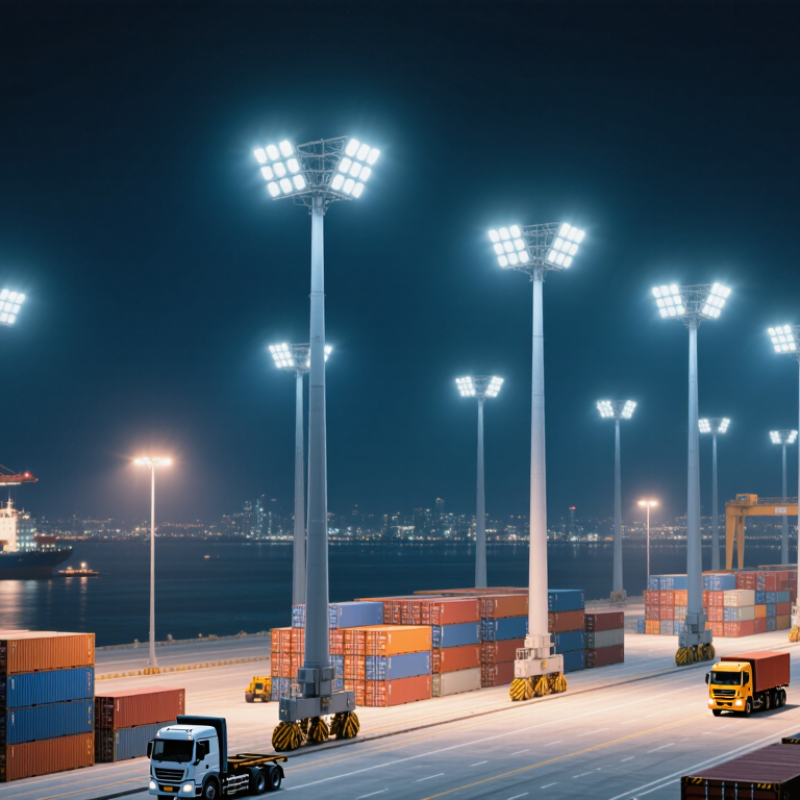
High mast lighting uses a tall pole carrying several luminaires to illuminate wide outdoor areas. Airports, ports, stadiums, and logistics yards use these systems when many separate poles would obstruct movement. A well-designed layout distributes light across the ground while limiting harsh glare for drivers and workers. The required height and fixture arrangement depend on site dimensions, activities, and local conditions.

For global projects, buyers should review photometric plans, wind-load calculations, corrosion protection, and maintenance access. Coastal sites may need stronger protection against salt exposure. In cold regions, ice and difficult access can affect inspections. Ask how luminaires can be lowered or serviced safely, and confirm that electrical details suit the project location. The first layout is rarely perfect. A site survey can reveal dark patches near fences, loading bays, or ramps.

Tips: Check light levels at ground level, not just pole height. Request clear drawings and maintenance instructions. Small details matter. Compare glare control and spare-part availability before choosing a supplier.

How to Identify Leading High Mast Lighting Suppliers in 2026

How to Identify Leading High Mast Lighting Suppliers in 2026

A capable high mast lighting supplier should explain how its fixtures perform at your site, not just quote wattage. Ask for photometric files and a proposed layout showing pole height, spacing, and target illumination. Review wind-load assumptions, corrosion protection, heat management, and access for maintenance. Details matter. A polished brochure alone proves little.

Check whether the supplier can provide relevant project references, clear warranty terms, and realistic production and delivery schedules. Request test reports and confirm that their methods match your project requirements. For a large installation, discuss spare parts and service support before placing an order. If answers stay vague, pause. I would also question any supplier promising performance without seeing site conditions; even good equipment can be poorly matched.

Tips: Compare proposals using the same lighting targets and site information. Ask for a sample fixture or a documented quality inspection when practical. Check that drawings, product specifications, and warranty documents agree. Keep a record of open questions. A few gaps may be normal, but they should be addressed clearly before purchase.

Comparing Supplier Product Range, Customization, and Manufacturing

For global buyers, a high mast lighting supplier should offer more than one standard fixture. Compare ranges by wattage, beam angle, mounting options, and compatible control systems. A broad catalogue helps, but only when its specifications are clear. Request photometric files and check whether stated output suits the actual mounting height and area. Small details matter. A narrow optic can leave dark patches between poles.

Customization is useful when site conditions differ. Ask whether the supplier can adjust optics, cable lengths, surge protection, or housing finishes. Share pole height, wind conditions, ambient temperatures, and corrosion exposure before requesting a quotation. Drawings should show dimensions and connection points, not just an attractive rendering. Some projects need changes late in the process; that can happen, though it may affect cost and delivery.

Manufacturing capability deserves the same attention as product range. Ask how components are inspected, how batches are identified, and whether finished fixtures undergo electrical and thermal checks. A factory visit is helpful when practical, but clear inspection records can also reveal a lot. Compare realistic lead times, spare-part availability, and warranty conditions. A polished brochure is reassuring, not proof. Even a capable supplier may have limits, so confirm the details that matter for your installation in writing.

2026 Best High Mast Lighting Suppliers for Global Buyers? — Comparing Supplier Product Range, Customization, and Manufacturing
Supplier Profile Typical Product Range Customization Options Manufacturing Scope Best Fit For Checks for Global Buyers
Large lighting manufacturer LED floodlights, optical distributions, drivers, and lighting controls; some offer complete high-mast packages or coordinate with pole suppliers. Optics, lumen output, color temperature, dimming and control interfaces, mounting arrangements, and electrical configurations, subject to the product platform. May manufacture luminaires and assemble or test products in-house; mast poles and foundations may be supplied by separate specialists. Buyers seeking a broad lighting portfolio, established product documentation, and support for multi-site projects. Confirm the exact factory and country of origin, product test reports, warranty terms, spare-part availability, and whether pole engineering is included.
Project-focused OEM / ODM supplier Configurable LED floodlight assemblies, selected optics and drivers, brackets, and project-specific lighting packages; pole supply varies. May offer tailored beam angles, housing or bracket details, electrical components, labeling, and control options. Changes depend on minimum order quantities and engineering approval. Typically focuses on luminaire assembly and project configuration. Ask whether critical components are made in-house or sourced from third parties. Importers, contractors, and distributors with defined technical requirements or repeat orders. Request drawings, photometric files, sample approval, component traceability, production lead times, and written confirmation of any customized specifications.
High-mast pole and steelwork fabricator Steel or other specified pole structures, base plates, brackets, access systems, and—where offered—raising-and-lowering equipment. Luminaires may be sourced separately. Pole height and section design, mounting arrangements, access provisions, finish, and foundation interface can be engineered for project loads and site conditions. Usually concentrates on structural fabrication and finishing rather than LED optical design. Structural calculations and fabrication capacity should be verified for each project. Projects where pole design, wind loading, installation logistics, or maintenance access are major concerns. Check applicable structural and coating standards, material certificates, design loads, corrosion protection, inspection records, and responsibility for foundations and installation.
Regional turnkey lighting contractor May combine luminaires, poles, controls, cabling, installation, commissioning, and maintenance through its own team and subcontractors. Can coordinate equipment and layout around local site conditions, utility requirements, operating schedules, and maintenance needs. Often integrates products from multiple manufacturers rather than manufacturing every component. Delivery capability depends on local engineering and subcontractor coverage. Owners seeking a single project interface for design, supply, installation, and service in a specific region. Clarify the scope split, named component manufacturers, local permits, commissioning tests, service response times, and who holds warranty responsibility.

Buyer note: These are representative supplier profiles, not named companies or a ranked list. High-mast projects require site-specific pole, foundation, wind-load, lighting, and maintenance design. Specify measurable requirements and verify current certifications, test reports, and local-code compliance directly with each bidder. For luminaires, IEC 60598-2-5 covers floodlights; an IP rating should be checked against the stated test standard and the project environment.

Evaluating Quality Standards, Certifications, and Project Support

A high mast supplier should make quality claims easy to verify. Ask for the evidence. Review test reports for the exact luminaire model, not just a similar product family. Photometric files can help confirm beam distribution, while ingress and impact ratings matter in exposed sites. Check that certificates are current and issued by recognized, independent bodies. Their scope should match the products and markets under consideration.

Paperwork is not performance. For a real project, examine sample components, wiring details, surge protection, and thermal management. A well-made housing still needs a suitable finish for coastal air or industrial dust. Ask how the supplier handles design changes, spare parts, and installation questions. Clear drawings and prompt technical replies can prevent costly delays, especially when cranes and road closures must be scheduled. Project support should continue after delivery.

References from comparable sports grounds, ports, or transport sites offer useful context. Request practical details, such as pole height, operating hours, and maintenance history. A polished case study may leave out problems. That matters. Suppliers cannot predict every site condition, and no certificate replaces a careful engineering review. Look for honest answers about limitations, lead times, and what the warranty actually covers.

Choosing a Supplier Based on Cost, Delivery, and Lifecycle Value

For global buyers, the lowest unit price rarely tells the full story. Compare the complete delivered cost: poles, luminaires, controls, freight, installation, and replacement parts. Ask suppliers for a firm production schedule and a realistic shipping estimate, not just a factory lead time. A shipment delayed by port handling can disrupt crane bookings and site work. Small details matter. Request wind-load calculations, corrosion-protection specifications, photometric files, and warranty terms before comparing bids.

Lifecycle value deserves equal weight. The U.S. Department of Energy’s outdoor-lighting guidance reports that LED upgrades can reduce energy use by about 50% compared with conventional lighting. Actual savings depend on the existing system, operating hours, and controls. Estimate energy and maintenance costs across the expected service period, then check whether replacement drivers and other critical parts will remain available. A low-cost fixture can become expensive if repairs require full-unit replacement. Even good projections have uncertainty; operating conditions vary from site to site.

Tip: Compare suppliers using the same specification and delivery terms. Ask for a sample maintenance plan, documented test results, and spare-parts pricing. Check references for projects with similar pole heights and weather exposure. A short delay or unclear warranty may outweigh a small purchase-price saving.

Blogs