
2026 Best Heavy Duty Cantilever Racking System for Sale
Choosing a Heavy Duty Cantilever Racking System in 2026 starts with the loads, not the product photo. Long steel tubes, timber packs, and oversized panels place different demands on arms, columns, and bases. Measure the heaviest bundle, its length, and how loads will be handled before comparing prices. Small details matter.
A practical system should match the load data supplied by the manufacturer, including arm capacity, column capacity, and the effects of uneven loading. Ask how the stated ratings apply to your proposed layout. Confirm floor condition, anchoring requirements, aisle width, and forklift access with qualified professionals. A rack that fits the warehouse sketch may still obstruct turning space or leave stock difficult to reach.
This guide to the 2026 best Heavy Duty Cantilever Racking System for sale explains what buyers should compare before requesting a quote. It covers single- and double-sided layouts, adjustable arms, finishes, accessories, and supplier support. Request drawings and written specifications for the exact configuration, rather than relying on a broad capacity claim. Conditions vary. Temperature, moisture, impact exposure, and future load changes can affect the choice. There is no universal best. A lower upfront price may look attractive, but installation, maintenance, and usable storage space deserve a place in the comparison too. Some decisions will remain uncertain until a site survey confirms them. That is worth acknowledging. A careful buying process is not perfect, but it can make the final choice safer, clearer, and easier to justify.
What Is a Heavy-Duty Cantilever Racking System?
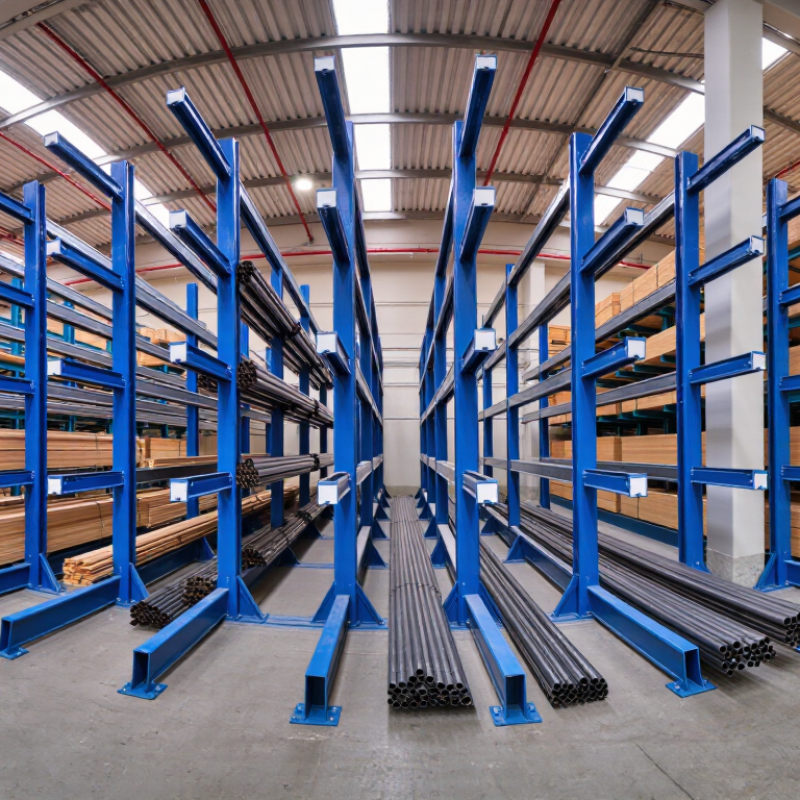
A heavy-duty cantilever racking system stores long, bulky items on horizontal arms extending from vertical columns. Unlike pallet racks, it has no front uprights blocking access, making it practical for timber, steel tubes, sheet goods, and furniture components. Forklifts can approach from the aisle and place loads along the arms. The open face also makes picking easier. But “heavy-duty” is not a universal capacity rating; each design must match the load, arm spacing, and floor conditions.
The system’s strength comes from engineered columns, bracing, bases, and arms working together. Loads should be distributed as specified, not concentrated at an arm’s tip. MHI’s 2024 Annual Industry Report found that 55% of surveyed supply chain professionals planned to increase technology investment. That figure is not specific to racking, but it reflects growing attention to warehouse efficiency. Good layout still matters. A small measurement error can waste aisle space or create awkward handling.
Tips: Record each item’s length, weight, and shape before choosing arm dimensions. Check floor anchoring and load limits with a qualified rack designer. Keep labels visible, inspect for bent arms, and train forklift operators on placement. Real warehouses get messy; loading plans need regular review.
2026 Best Heavy Duty Cantilever Racking System for Sale - What Is a Heavy-Duty Cantilever Racking System?
| Data Dimension | Description / Typical Information | Planning Notes |
|---|---|---|
| What it is | A storage rack with vertical columns and horizontal arms projecting outward, rather than front-facing shelf beams. The open front provides access to long or bulky loads. | “Heavy-duty” describes the intended load class; it is not one universal capacity rating. Confirm the engineered capacity for the specific rack configuration. |
| Main components | Upright columns, cantilever arms, base legs, bracing, connectors, and floor anchors. Optional features can include arm restraints and end stops. | Component dimensions and connections must be compatible and designed as one system. |
| Suitable load types | Long, bulky, or irregular items such as steel sections, pipes, timber, sheet goods, and selected furniture components. | Assess load length, weight, shape, support points, packaging, and handling method before selecting the layout. |
| Rack arrangement | Single-sided racks have arms on one side of the columns; double-sided racks have arms on both sides. Systems may be configured in rows or as individual bays. | Aisle width and equipment turning space depend on the load and the truck or handling equipment used. |
| Arm length | Selected to suit the load’s depth and required support. Arm lengths vary by design; there is no single standard size for all heavy-duty racks. | The load should be supported adequately without excessive overhang. Longer arms can change the load capacity and deflection. |
| Arm levels and spacing | Arms are installed at levels that fit the stored products. Many systems allow arm positions to be adjusted within the limits of the rack design. | Allow clearance for the tallest load, lifting equipment, and safe placement and removal. |
| Capacity information | Capacity may be specified per arm, per column, or per rack bay. These values are not interchangeable and depend on the rack geometry and loading conditions. | Use the manufacturer’s or engineer’s rated-load documentation and posted capacity signs. Do not estimate capacity from appearance. |
| Floor and anchoring | Upright bases are generally anchored to a suitable concrete floor. Required anchors and floor capacity depend on the system, loads, and site conditions. | Check slab condition, thickness, concrete strength, anchor requirements, and local building requirements before installation. |
| Material and finish | Structural steel is commonly used. Finishes may include painted or powder-coated surfaces; the appropriate finish depends on the operating environment. | For damp, corrosive, or outdoor locations, specify suitable corrosion protection and verify environmental suitability. |
| Safety and inspection | Loads should be stable, evenly supported as designed, and kept within rated capacities. Racks should be checked for impact damage, loose anchors, and visibly bent or damaged members. | Follow applicable local regulations, installation instructions, inspection procedures, and safe material-handling practices. |
| Information to provide when purchasing | Load type and dimensions, maximum weight, number of storage levels, required rack height and length, single- or double-sided layout, handling equipment, and installation location. | Request a layout drawing, rated-load details, anchoring requirements, installation guidance, and any applicable compliance documentation. |
Note: Specifications and capacities vary by design and site conditions. Have the proposed system assessed for the actual loads, floor, handling equipment, and applicable local requirements.


